Culture Ark · D-0355 · Film and TV · Browse the gallery · The full 2,000-pick list
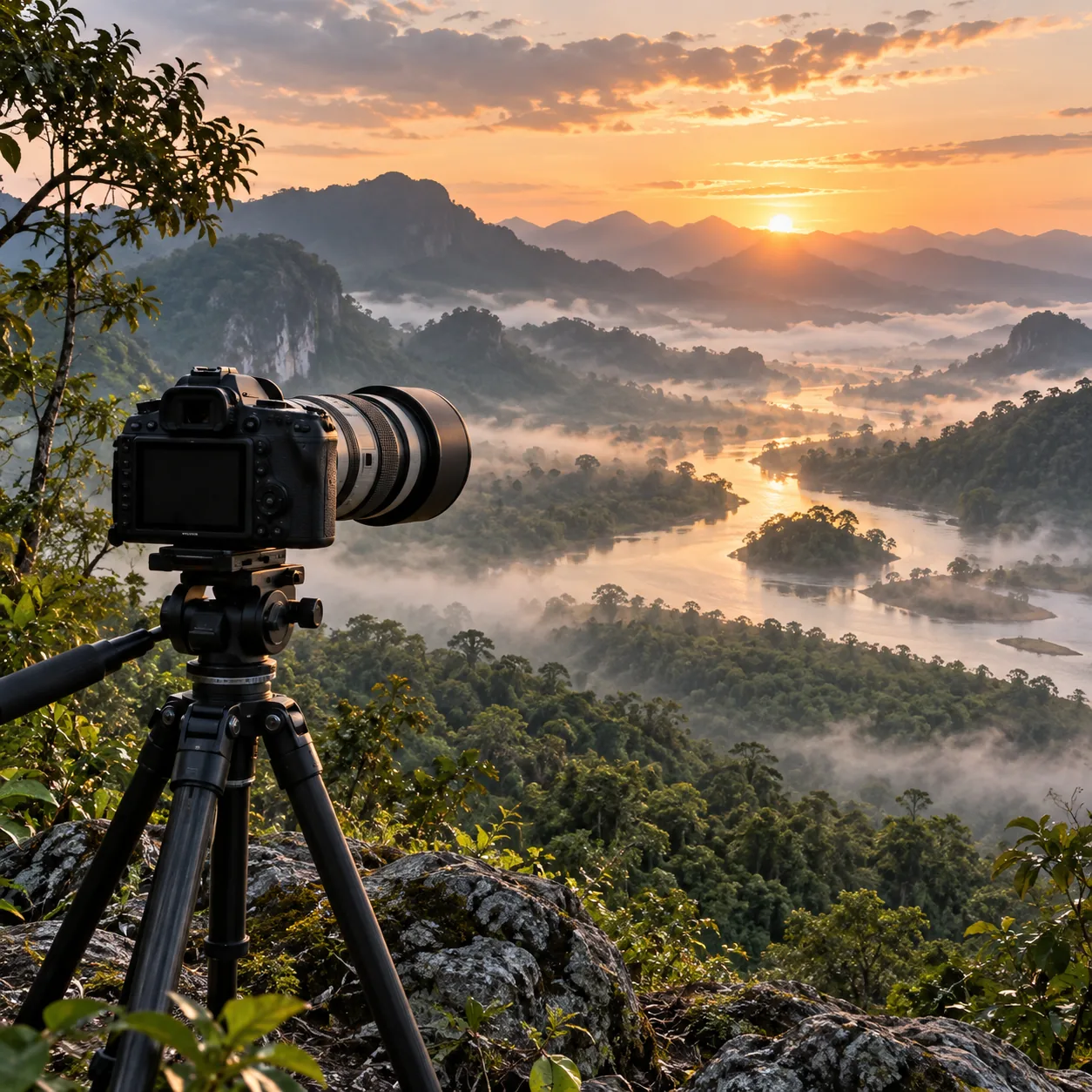
Generated interpretation, not documentary evidence. An imagined camera overlooking a misty green valley evokes nature-documentary work, not footage or equipment from Planet Earth.
Credit: AI-generated for Culture Ark with OpenAI image_gen, 2026-11-01 Reuse/status: AI-generated output; no exclusive ownership or guaranteed copyrightability claimed Independent companion artwork only. Underlying works, performer and trademark rights remain separate. No exclusive ownership or public-domain claim.
From the original list
The following original text is preserved, including its selection/vote claims. Preservation is not independent verification of every assertion.
Why: Wildlife filmed in HD.
What to preserve: Episodes
Year and origin: 2006 · United Kingdom
Vote: 5/9 (historian 2 · future kid 2 · curator 1)
Learn more: Planet Earth (2006 TV series) on Wikipedia
Supplemental context
The selected Planet Earth is the 2006 nature-documentary series, rather than its later sequels or the planet itself. The BBC’s 2006/2007 annual report highlights the production as a combination of technical innovation and artistry, illustrating how wildlife television was understood as both factual programming and a major public spectacle. Future viewers could study not only the environments recorded but the decisions that make nature legible on television: framing, selection, editing and narration. The cultural object is therefore the produced series, with its credits and edition history, not an unmediated window onto every ecosystem. Behind-the-scenes material and scientific context would make the preserved episodes more intelligible without confusing a memorable sequence with a comprehensive ecological survey.
Creator/community: BBC Natural History Unit and international production collaborators Place/era: United Kingdom-led production; 2006 television series
Context and limits
Keep the 2006 series distinct from Planet Earth II and III. Narration and packaging may differ between territories. The generated landscape and camera are invented; they identify no filming site, species record or equipment used by the production.
Where to learn more
- https://apiarybee.com/community/reading/biggie-nu-series-008-noahs-ark-set-d-culture-2000
- https://downloads.bbc.co.uk/annualreport/pdf/2006-07/bbcexec_eng_200607.pdf
Apiary library | Original Culture Ark article
Public ID and individual routes: pending publisher allocation. Internal source ID: D-0355
Part of the Culture Ark: 2,000 things people should still be able to see in 2,000 years, picked by AI research teams. This page keeps the original list entry for D-0355 word for word and adds context. Browse the gallery. The Culture Ark is an Artificial Mind Hive (AMH) project. AMH is owned by Austin Little.

Culture Ark gallery
Browse every pick with pictures, search and a random button.
Open the gallery →