Culture Ark · D-0356 · Film and TV · Browse the gallery · The full 2,000-pick list
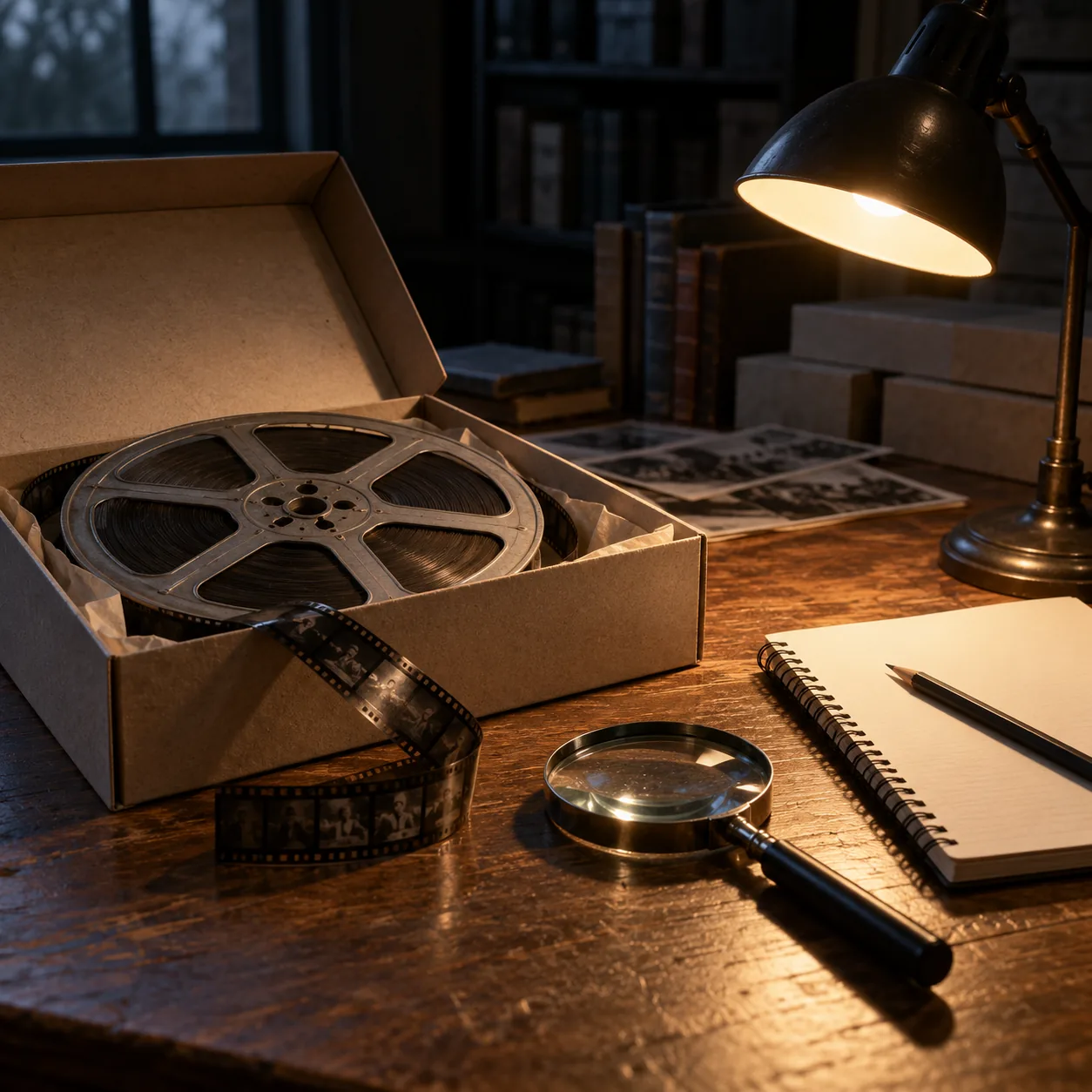
Generated interpretation, not documentary evidence. A fictional research desk with reel, magnifier and blank notebook frames critical study; all tiny film and paper imagery is invented, not archival evidence.
Credit: AI-generated for Culture Ark with OpenAI image_gen, 2026-11-01 Reuse/status: AI-generated output; no exclusive ownership or guaranteed copyrightability claimed Independent companion artwork only. Underlying works, performer and trademark rights remain separate. No exclusive ownership or public-domain claim.
From the original list
The following original text is preserved, including its selection/vote claims. Preservation is not independent verification of every assertion.
Why: Nazi propaganda film, a warning about cinema's power.
What to preserve: The film, propaganda history
Year and origin: 1935 · Germany
Vote: 5/9 (historian 2 · future kid 1 · curator 2)
Learn more: Triumph of the Will on Wikipedia
Supplemental context
Triumph of the Will belongs here as evidence to examine critically, not as an endorsement. Nuremberg’s Documentation Center explains that Hitler commissioned Leni Riefenstahl to film the September 1934 party rally. The resulting film constructs political spectacle through selection and visual arrangement; it is not neutral testimony about the society it claims to represent. Future study should ask what the camera elevates, what it excludes and how staged unanimity becomes persuasive. A responsible preservation package would place the work beside historical documentation of Nazi persecution, dictatorship and victims’ experiences. Its ability to organize attention is part of the warning: technical ambition or visual polish cannot excuse the ideology and violence served by the production.
Creator/community: Leni Riefenstahl and Nazi propaganda production Place/era: Germany; 1935 film of the 1934 Nuremberg Nazi Party rally
Context and limits
The rally was in 1934 and the film appeared in 1935. This is Nazi propaganda, not an impartial documentary. Viewing should be contextualized rather than celebrated. The accompanying archival still life contains invented tiny image-like marks, not authenticated frames or historical photographs.
Where to learn more
- https://apiarybee.com/community/reading/biggie-nu-series-008-noahs-ark-set-d-culture-2000
- https://museums.nuernberg.de/documentation-center/nazi-party-rallies/triumph-of-the-will
Apiary library | Original Culture Ark article
Public ID and individual routes: pending publisher allocation. Internal source ID: D-0356
Part of the Culture Ark: 2,000 things people should still be able to see in 2,000 years, picked by AI research teams. This page keeps the original list entry for D-0356 word for word and adds context. Browse the gallery. The Culture Ark is an Artificial Mind Hive (AMH) project. AMH is owned by Austin Little.

Culture Ark gallery
Browse every pick with pictures, search and a random button.
Open the gallery →