Culture Ark · D-0360 · Film and TV · Browse the gallery · The full 2,000-pick list
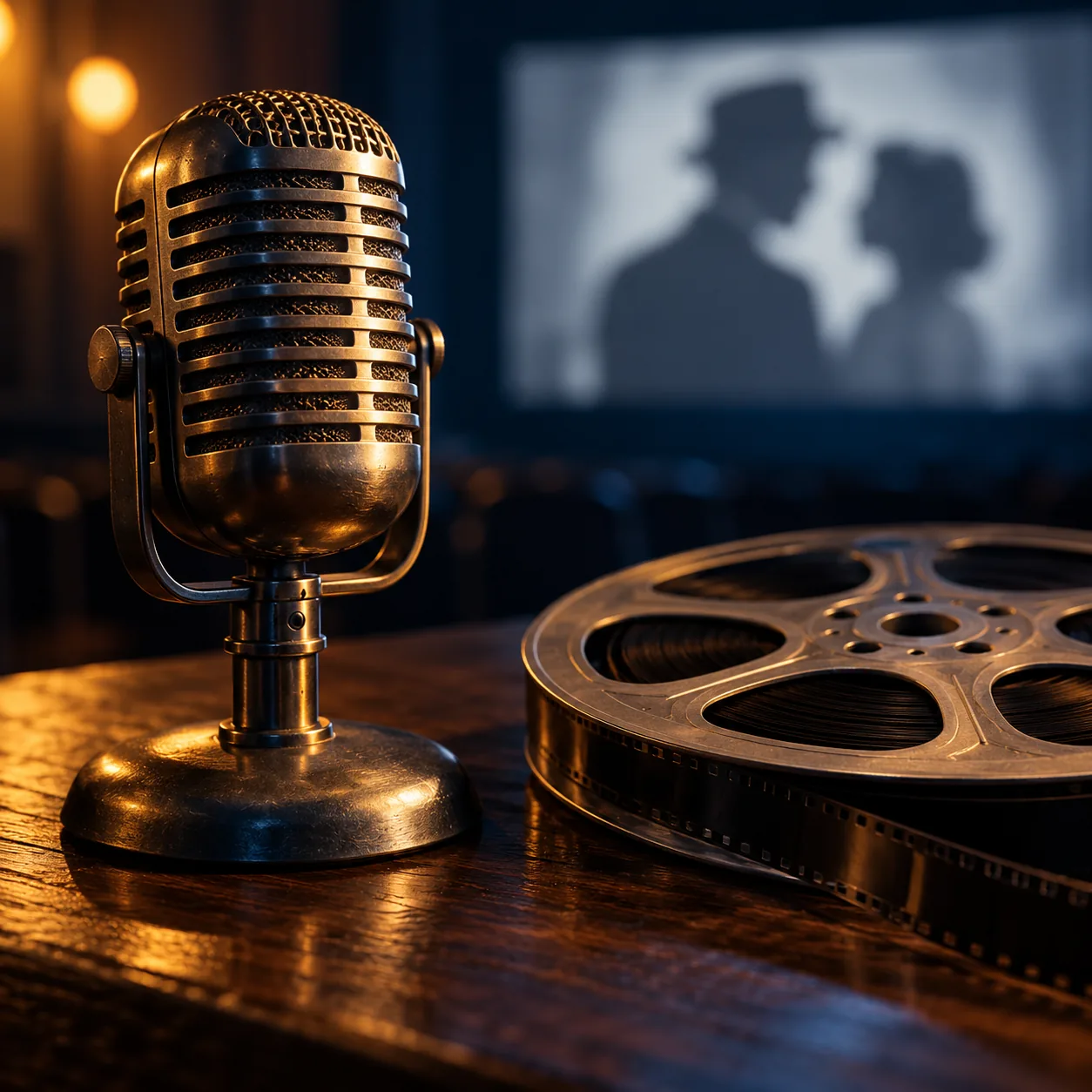
Generated interpretation, not documentary evidence. An imagined microphone and reel face a screen with invented blurred silhouettes; not a film frame, authentic apparatus or technical diagram.
Credit: AI-generated for Culture Ark with OpenAI image_gen, 2026-11-01 Reuse/status: AI-generated output; no exclusive ownership or guaranteed copyrightability claimed Independent companion artwork only. Underlying works, performer and trademark rights remain separate. No exclusive ownership or public-domain claim.
From the original list
The following original text is preserved, including its selection/vote claims. Preservation is not independent verification of every assertion.
Why: The arrival of talkies.
What to preserve: History
Year and origin: 1920s · Worldwide
Vote: 5/9 (historian 2 · future kid 1 · curator 2)
Learn more: Sound film on Wikipedia
Supplemental context
Sound film means moving images presented with recorded synchronized sound, not only spoken dialogue. BFI’s account traces experiments, sound-on-disc systems and optical tracks, showing why a neat story of one overnight invention is misleading. Its examples distinguish Don Juan in 1926 from The Jazz Singer in 1927 and explain that early releases did not necessarily carry synchronized speech throughout. For future people, this transition can illuminate changes in acting, musical performance, exhibition and audiences’ expectations of realism. Preserving sound requires attention to which track belongs with which picture version. A modern restoration can make a work accessible while also introducing decisions that should be recorded, rather than mistaken for an untouched original experience.
Creator/community: Many inventors, studios, performers, sound workers and exhibitors Place/era: International cinema; experiments before commercial expansion in the 1920s
Context and limits
The 1920s mark major commercial expansion, not the beginning of every sound experiment worldwide. “Talkie” is narrower than all synchronized sound. The generated microphone, reel and shadowy figures are a metaphor, not period-correct working equipment or an actual movie frame.
Where to learn more
- https://apiarybee.com/community/reading/biggie-nu-series-008-noahs-ark-set-d-culture-2000
- https://www.bfi.org.uk/features/all-about-film-sound-how-we-restore-it
Apiary library | Original Culture Ark article
Public ID and individual routes: pending publisher allocation. Internal source ID: D-0360
Part of the Culture Ark: 2,000 things people should still be able to see in 2,000 years, picked by AI research teams. This page keeps the original list entry for D-0360 word for word and adds context. Browse the gallery. The Culture Ark is an Artificial Mind Hive (AMH) project. AMH is owned by Austin Little.

Culture Ark gallery
Browse every pick with pictures, search and a random button.
Open the gallery →