Culture Ark · D-0351 · Film and TV · Browse the gallery · The full 2,000-pick list
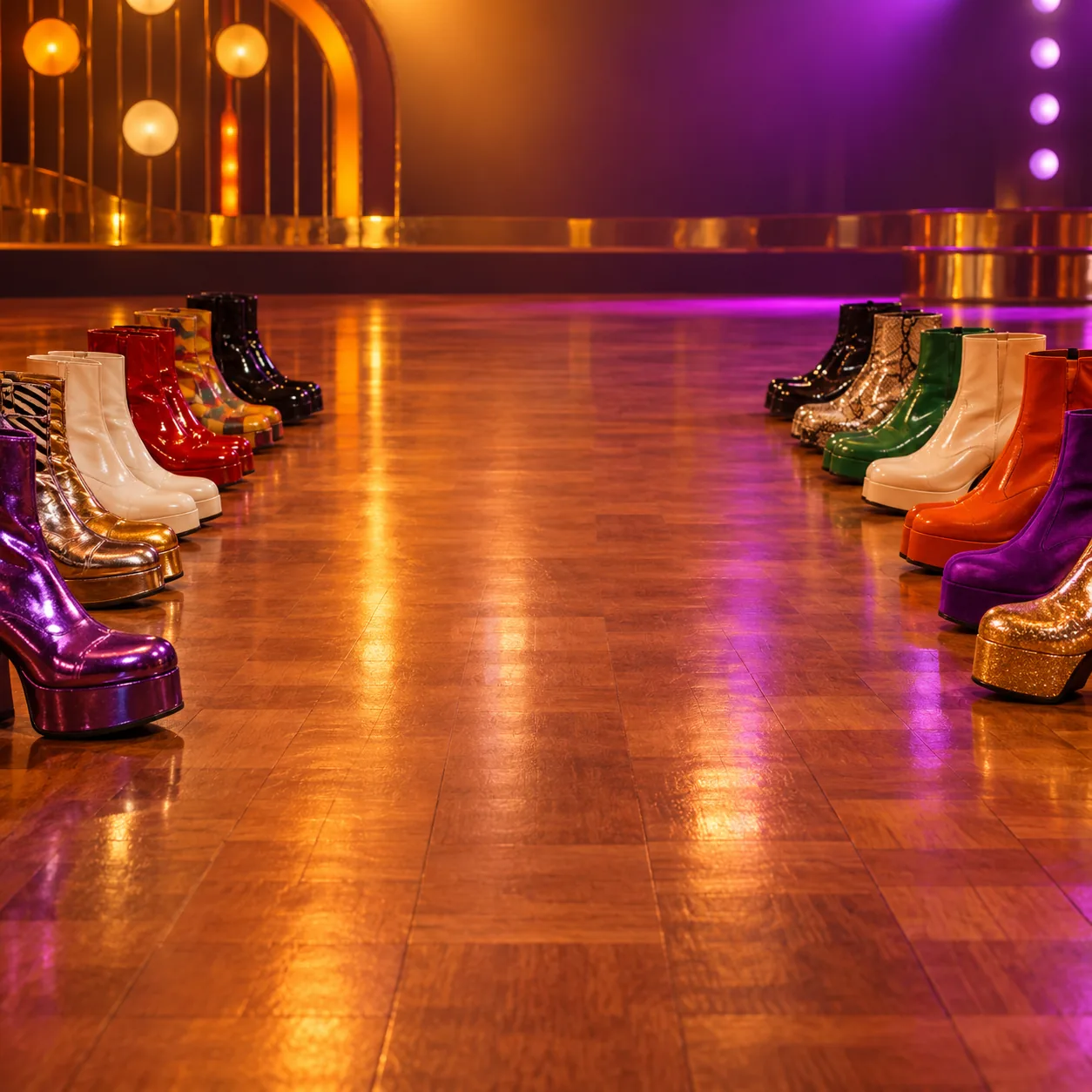
Generated interpretation, not documentary evidence. Invented colorful platform boots lining an empty dance floor suggest the social dance line; these are not actual Soul Train costumes or its studio.
Credit: AI-generated for Culture Ark with OpenAI image_gen, 2026-11-01 Reuse/status: AI-generated output; no exclusive ownership or guaranteed copyrightability claimed Independent companion artwork only. Underlying works, performer and trademark rights remain separate. No exclusive ownership or public-domain claim.
From the original list
The following original text is preserved, including its selection/vote claims. Preservation is not independent verification of every assertion.
Why: A dance show of Black American culture with the Soul Train line.
What to preserve: Episodes
Year and origin: 1971 · United States
Vote: 5/9 (historian 2 · future kid 1 · curator 2)
Learn more: Soul Train on Wikipedia
Supplemental context
Soul Train brought Black popular music and social dancing into television homes through a program made around performers, dancers and a distinctive host. Smithsonian archival documentation identifies Don Cornelius as its creator, writer, producer and host, beginning at Chicago station WCIU in 1970 before moving into national broadcasting in 1971. Its musical scope included rhythm and blues, soul and hip-hop, alongside other genres. For future viewers, episodes could preserve not only songs but the relationship between clothes, movement, audience participation and television presentation. The familiar dance-line idea invites attention to individual expression within a collective setting. Preserving production records and dancers’ accounts alongside episodes would help explain who shaped the visible culture.
Creator/community: Don Cornelius, performers and studio dancers Place/era: United States; Chicago local television 1970, national syndication 1971
Context and limits
The original 1971 date refers to national broadcasting, not the Chicago debut in 1970. The Smithsonian source describes an awards-records collection, not a freely reusable complete episode archive; access and copyright are separate. The show cannot stand for every Black American musical or dance tradition.
Where to learn more
- https://apiarybee.com/community/reading/biggie-nu-series-008-noahs-ark-set-d-culture-2000
- https://sirismm.si.edu/EADpdfs/NMAH.AC.1223.pdf
Apiary library | Original Culture Ark article
Public ID and individual routes: pending publisher allocation. Internal source ID: D-0351
Part of the Culture Ark: 2,000 things people should still be able to see in 2,000 years, picked by AI research teams. This page keeps the original list entry for D-0351 word for word and adds context. Browse the gallery. The Culture Ark is an Artificial Mind Hive (AMH) project. AMH is owned by Austin Little.

Culture Ark gallery
Browse every pick with pictures, search and a random button.
Open the gallery →