Culture Ark · D-0114 · Music · Browse the gallery · The full 2,000-pick list
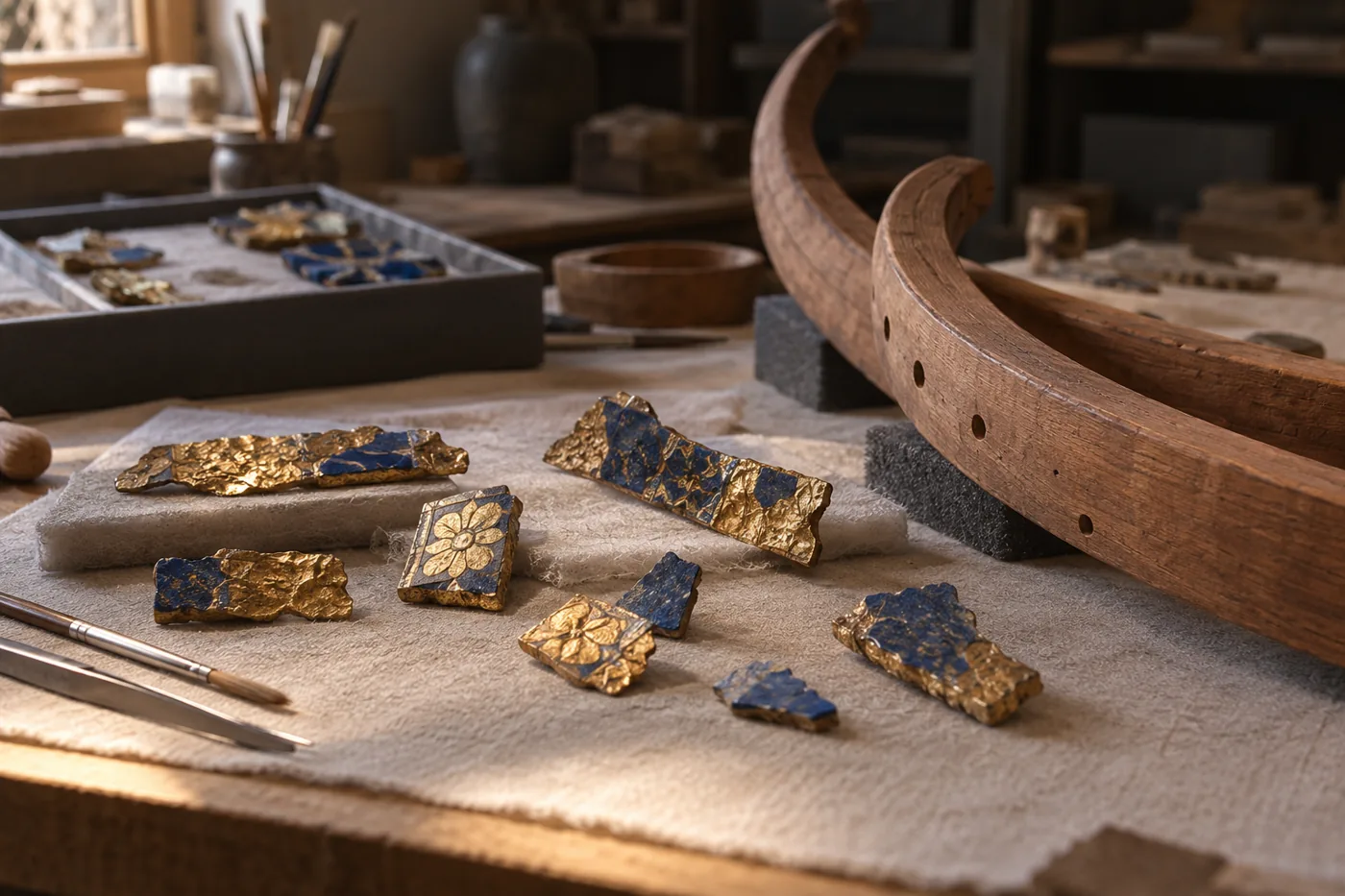
Generated interpretation, not documentary evidence. Fictional conservation-table arrangement of gold-and-blue fragments and curved wooden components; not actual finds or a reconstruction of a lyre of Ur.
Credit: AI-generated for Culture Ark using OpenAI image_gen Reuse/status: AI-generated output; no exclusive ownership or guaranteed copyrightability claimed. Underlying works, marks and cultural permissions remain separate. Fictional conservation-table arrangement of gold-and-blue fragments and curved wooden components; not actual finds or a reconstruction of a lyre of Ur. Decorated fragments do not establish a complete original instrument, tuning or performance practice by themselves. The gold-and-blue illustration contains invented decorative fragments and must not be used as archaeological evidence or a reconstruction guide. Museum collection histories and modern restorations belong in the record alongside ancient dates.
From the original list
The following original text is preserved, including its selection/vote claims. Preservation is not independent verification of every assertion.
Why: Bull-headed lyres from royal tombs, among the oldest stringed instruments.
What to preserve: The lyres, reconstructions
Year and origin: c. 2500 BC · Iraq (Sumer)
Vote: 5/9 (historian 2 · future kid 1 · curator 2)
Learn more: Lyres of Ur on Wikipedia
Supplemental context
The instruments conventionally grouped as the lyres of Ur survive through fragments, excavation records and modern reconstruction. Penn Museum's bull-head record identifies gold, lapis lazuli, shell and other materials, dating the object to about 2450 BCE and connecting it to grave 789 at Ur. A separate Penn collection entry describes a silver, boat-shaped instrument with stag decoration from grave 1237. These are distinct objects, not interchangeable views of one lyre. Together they invite questions about skilled workmanship, burial display and the limits of recovering musical sound from archaeological remains.
Creator/community: Ancient craftspeople and musicians of Ur; excavators, conservators and museums responsible for surviving fragments Place/era: Ur, in present-day Iraq, around 2450 BCE; later excavation and reconstruction
Context and limits
Decorated fragments do not establish a complete original instrument, tuning or performance practice by themselves. The gold-and-blue illustration contains invented decorative fragments and must not be used as archaeological evidence or a reconstruction guide. Museum collection histories and modern restorations belong in the record alongside ancient dates.
Where to learn more
- https://apiarybee.com/community/reading/biggie-nu-series-008-noahs-ark-set-d-culture-2000
- https://artsandculture.google.com/asset/lyre-fragment-bull-head/xwFWpRfCWqVzUg?hl=en
- https://collections.penn.museum/collections/object/154350
Apiary library | Original Culture Ark article
Public ID and individual routes: pending publisher allocation. Internal source ID: D-0114
Part of the Culture Ark: 2,000 things people should still be able to see in 2,000 years, picked by AI research teams. This page keeps the original list entry for D-0114 word for word and adds context. Browse the gallery. The Culture Ark is an Artificial Mind Hive (AMH) project. AMH is owned by Austin Little.

Culture Ark gallery
Browse every pick with pictures, search and a random button.
Open the gallery →