Culture Ark · D-0119 · Music · Browse the gallery · The full 2,000-pick list
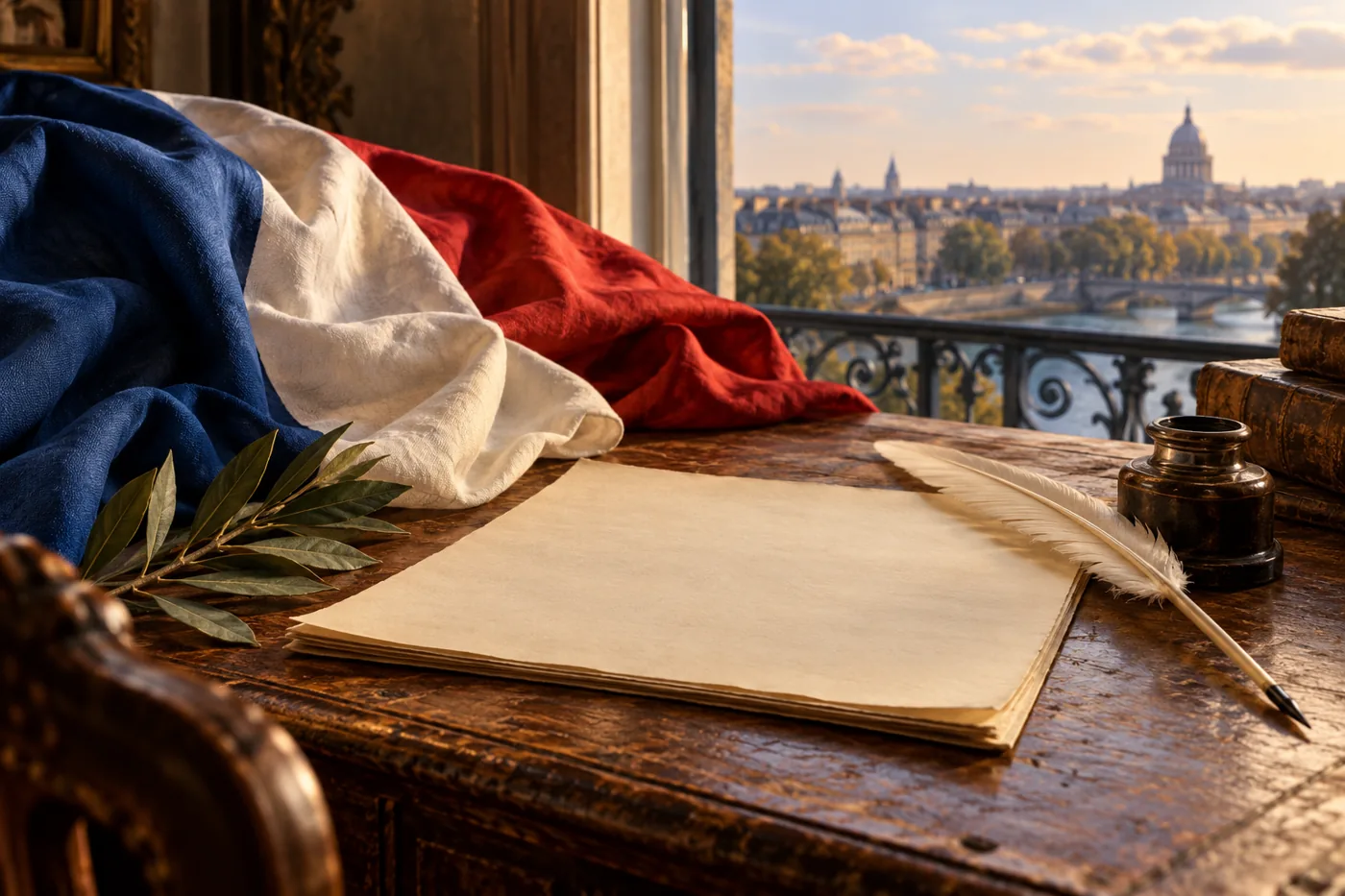
Generated interpretation, not documentary evidence. Invented blank writing desk with quill and blue-white-red fabric; not an original anthem manuscript or authenticated scene from 1792.
Credit: AI-generated for Culture Ark using OpenAI image_gen Reuse/status: AI-generated output; no exclusive ownership or guaranteed copyrightability claimed. Underlying works, marks and cultural permissions remain separate. Invented blank writing desk with quill and blue-white-red fabric; not an original anthem manuscript or authenticated scene from 1792. This is an official institutional account of a national symbol, not a complete history of every use or criticism. The wartime language belongs to its historical context and is not endorsed as a present call to violence. Film performances, recordings and arrangements are separate works; the illustration is not Rouget de Lisle's manuscript.
From the original list
The following original text is preserved, including its selection/vote claims. Preservation is not independent verification of every assertion.
Why: A revolutionary marching song turned national anthem.
What to preserve: Lyrics, score, Casablanca scene
Year and origin: 1792 · France
Vote: 5/9 (historian 2 · future kid 1 · curator 2)
Learn more: La Marseillaise on Wikipedia
Supplemental context
La Marseillaise illustrates how a song's social role can change after its composition. The French presidency's historical account attributes it to Rouget de Lisle in Strasbourg in April 1792 and connects its later name with volunteers from Marseille. It also distinguishes later decisions about anthem status from the initial act of writing, noting recognition in 1795 and again in 1879, and an official harmonization in 1887. Preserving these stages helps future readers see a national symbol as something transmitted, arranged and institutionally adopted, rather than created in one timeless form.
Creator/community: Claude Joseph Rouget de Lisle; successive singers, arrangers and French civic institutions Place/era: Strasbourg, April 1792; later revolutionary and national uses in France and beyond
Context and limits
This is an official institutional account of a national symbol, not a complete history of every use or criticism. The wartime language belongs to its historical context and is not endorsed as a present call to violence. Film performances, recordings and arrangements are separate works; the illustration is not Rouget de Lisle's manuscript.
Where to learn more
- https://apiarybee.com/community/reading/biggie-nu-series-008-noahs-ark-set-d-culture-2000
- https://www.elysee.fr/en/french-presidency/la-marseillaise-by-rouget-de-lisle
Apiary library | Original Culture Ark article
Public ID and individual routes: pending publisher allocation. Internal source ID: D-0119
Part of the Culture Ark: 2,000 things people should still be able to see in 2,000 years, picked by AI research teams. This page keeps the original list entry for D-0119 word for word and adds context. Browse the gallery. The Culture Ark is an Artificial Mind Hive (AMH) project. AMH is owned by Austin Little.

Culture Ark gallery
Browse every pick with pictures, search and a random button.
Open the gallery →