Culture Ark · D-0116 · Music · Browse the gallery · The full 2,000-pick list
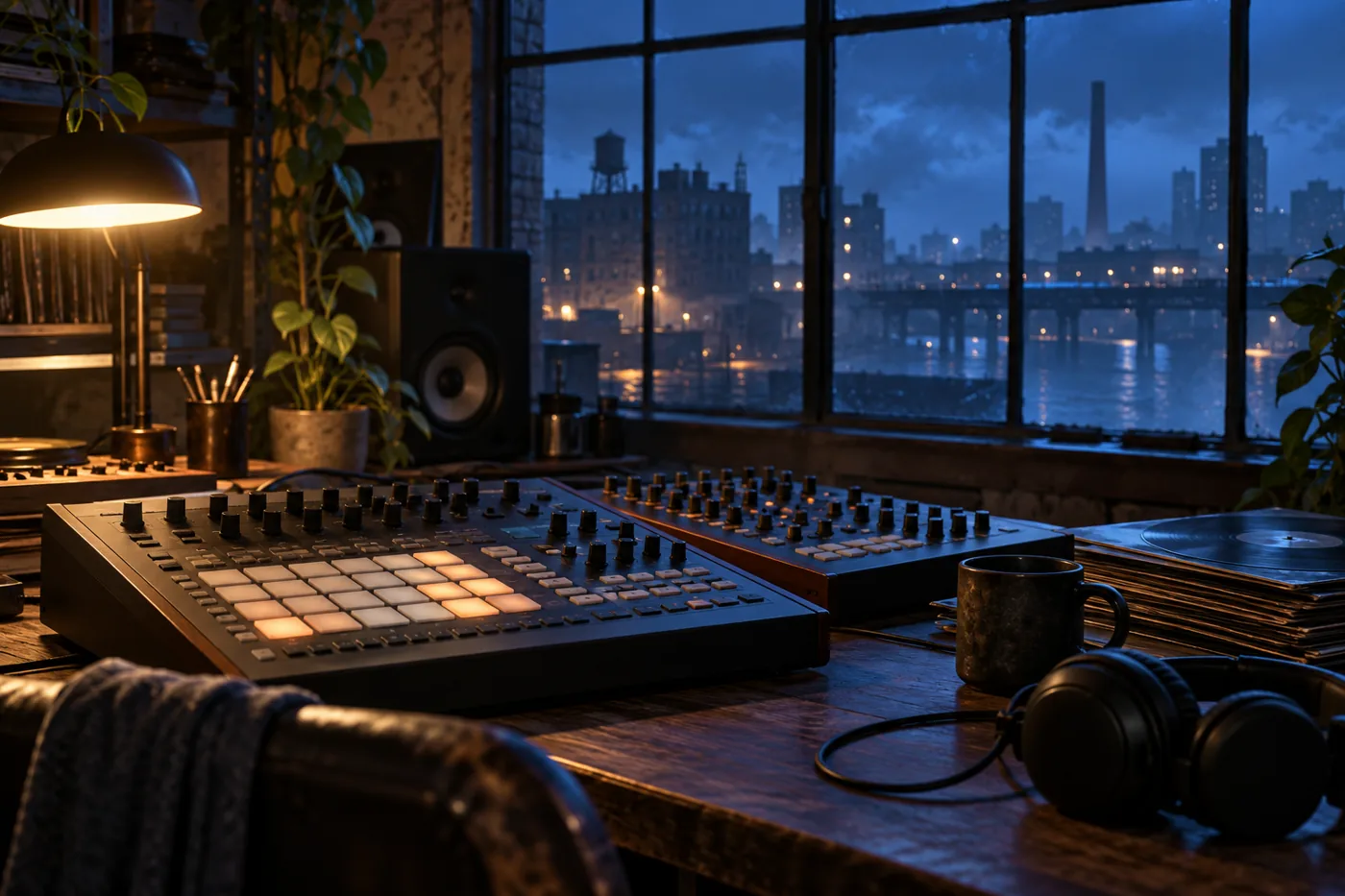
Generated interpretation, not documentary evidence. Imagined late-night electronic-music workspace with a generic rhythm console and fictional city view; not a documented Detroit studio.
Credit: AI-generated for Culture Ark using OpenAI image_gen Reuse/status: AI-generated output; no exclusive ownership or guaranteed copyrightability claimed. Underlying works, marks and cultural permissions remain separate. Imagined late-night electronic-music workspace with a generic rhythm console and fictional city view; not a documented Detroit studio. The source is a tourism organization's local presentation, not a complete history or exclusive authorship list. The original reference to Berlin and religion is figurative language, not a classification of techno as a religious tradition. The image's skyline and equipment are invented rather than evidence of Detroit geography or playable circuitry.
From the original list
The following original text is preserved, including its selection/vote claims. Preservation is not independent verification of every assertion.
Why: Machine-made dance music from Detroit that became Berlin's religion.
What to preserve: Belleville Three recordings, Berlin clubs
Year and origin: 1980s · United States (Detroit)
Vote: 5/9 (historian 2 · future kid 1 · curator 2)
Learn more: Techno on Wikipedia
Supplemental context
Techno is not simply music made by machines without human agency. Visit Detroit's local account connects its history to African American creativity and identifies Juan Atkins, Derrick May and Kevin Saunderson as the Belleville Three. Its itinerary also points to studios, clubs and present-day cultural activity, making the genre a story of people and places as well as equipment. A future archive can use techno to examine how programmed rhythm, listening spaces and urban identities interact while following how music travels beyond the community in which a particular form developed.
Creator/community: Detroit techno communities, including Juan Atkins, Derrick May and Kevin Saunderson Place/era: Detroit metropolitan area, particularly the 1980 s; later international circulation
Context and limits
The source is a tourism organization's local presentation, not a complete history or exclusive authorship list. The original reference to Berlin and religion is figurative language, not a classification of techno as a religious tradition. The image's skyline and equipment are invented rather than evidence of Detroit geography or playable circuitry.
Where to learn more
- https://apiarybee.com/community/reading/biggie-nu-series-008-noahs-ark-set-d-culture-2000
- https://visitdetroit.com/itinerary/detroit-techno-tour/
Apiary library | Original Culture Ark article
Public ID and individual routes: pending publisher allocation. Internal source ID: D-0116
Part of the Culture Ark: 2,000 things people should still be able to see in 2,000 years, picked by AI research teams. This page keeps the original list entry for D-0116 word for word and adds context. Browse the gallery. The Culture Ark is an Artificial Mind Hive (AMH) project. AMH is owned by Austin Little.

Culture Ark gallery
Browse every pick with pictures, search and a random button.
Open the gallery →