Culture Ark · D-0117 · Music · Browse the gallery · The full 2,000-pick list
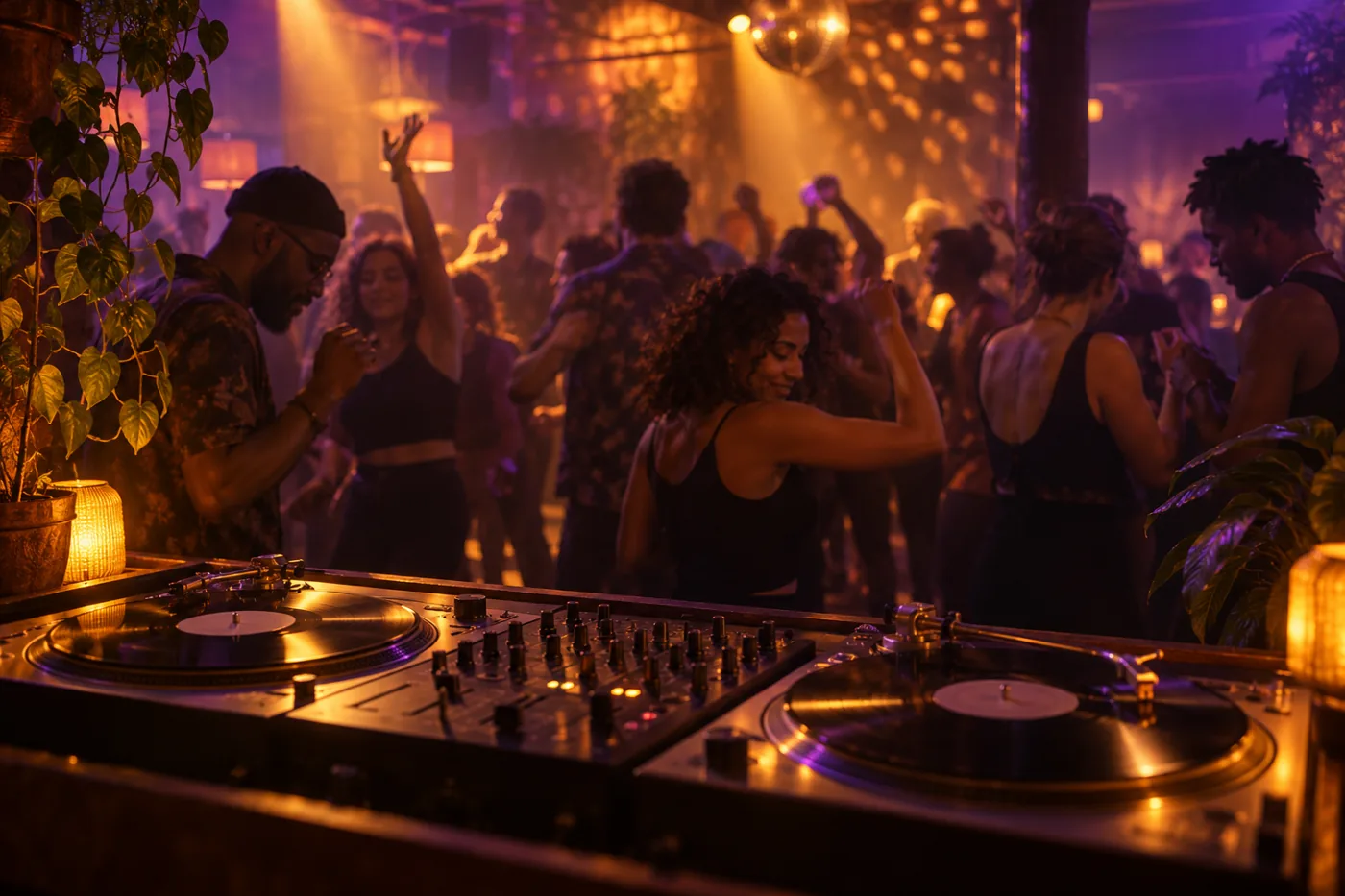
Generated interpretation, not documentary evidence. Invented welcoming dance-club scene with generic turntables and fictional adults; not a photograph of the Warehouse or identifiable historical patrons.
Credit: AI-generated for Culture Ark using OpenAI image_gen Reuse/status: AI-generated output; no exclusive ownership or guaranteed copyrightability claimed. Underlying works, marks and cultural permissions remain separate. Invented welcoming dance-club scene with generic turntables and fictional adults; not a photograph of the Warehouse or identifiable historical patrons. Participant memories are valuable situated testimony, not a complete census of the scene. Identifying Black gay foundations does not imply that every participant shared the same identity. The generated club is fictional: no depicted person's sexuality is inferred, and no actual Warehouse interior or historical crowd is reconstructed.
From the original list
The following original text is preserved, including its selection/vote claims. Preservation is not independent verification of every assertion.
Why: Four-on-the-floor dance music from Chicago's gay Black clubs.
What to preserve: Frankie Knuckles recordings, The Warehouse
Year and origin: 1980s · United States (Chicago)
Vote: 5/9 (historian 2 · future kid 1 · curator 2)
Learn more: House music on Wikipedia
Supplemental context
House music's history includes the social work of creating spaces where people could gather as well as the work of DJs and producers. WTTW's participant-based account describes the Warehouse, Frankie Knuckles's arrival in Chicago in 1977 and the mix of disco, funk, soul and R&B heard there. Organizers and clubgoers appear alongside the famous DJ, helping preserve a community rather than only a celebrity narrative. The Black gay context is especially important to understanding why a dance floor could be a place of belonging, experimentation and collective expression.
Creator/community: Chicago house-music communities, including Black gay clubgoers, organizers and DJs such as Frankie Knuckles Place/era: Chicago club culture from the late 1970 s into the 1980 s; later international development
Context and limits
Participant memories are valuable situated testimony, not a complete census of the scene. Identifying Black gay foundations does not imply that every participant shared the same identity. The generated club is fictional: no depicted person's sexuality is inferred, and no actual Warehouse interior or historical crowd is reconstructed.
Where to learn more
- https://apiarybee.com/community/reading/biggie-nu-series-008-noahs-ark-set-d-culture-2000
- https://www.wttw.com/chicago-stories/house-music/foundation-for-the-house-music-movement
Apiary library | Original Culture Ark article
Public ID and individual routes: pending publisher allocation. Internal source ID: D-0117
Part of the Culture Ark: 2,000 things people should still be able to see in 2,000 years, picked by AI research teams. This page keeps the original list entry for D-0117 word for word and adds context. Browse the gallery. The Culture Ark is an Artificial Mind Hive (AMH) project. AMH is owned by Austin Little.

Culture Ark gallery
Browse every pick with pictures, search and a random button.
Open the gallery →