Culture Ark · D-0111 · Music · Browse the gallery · The full 2,000-pick list
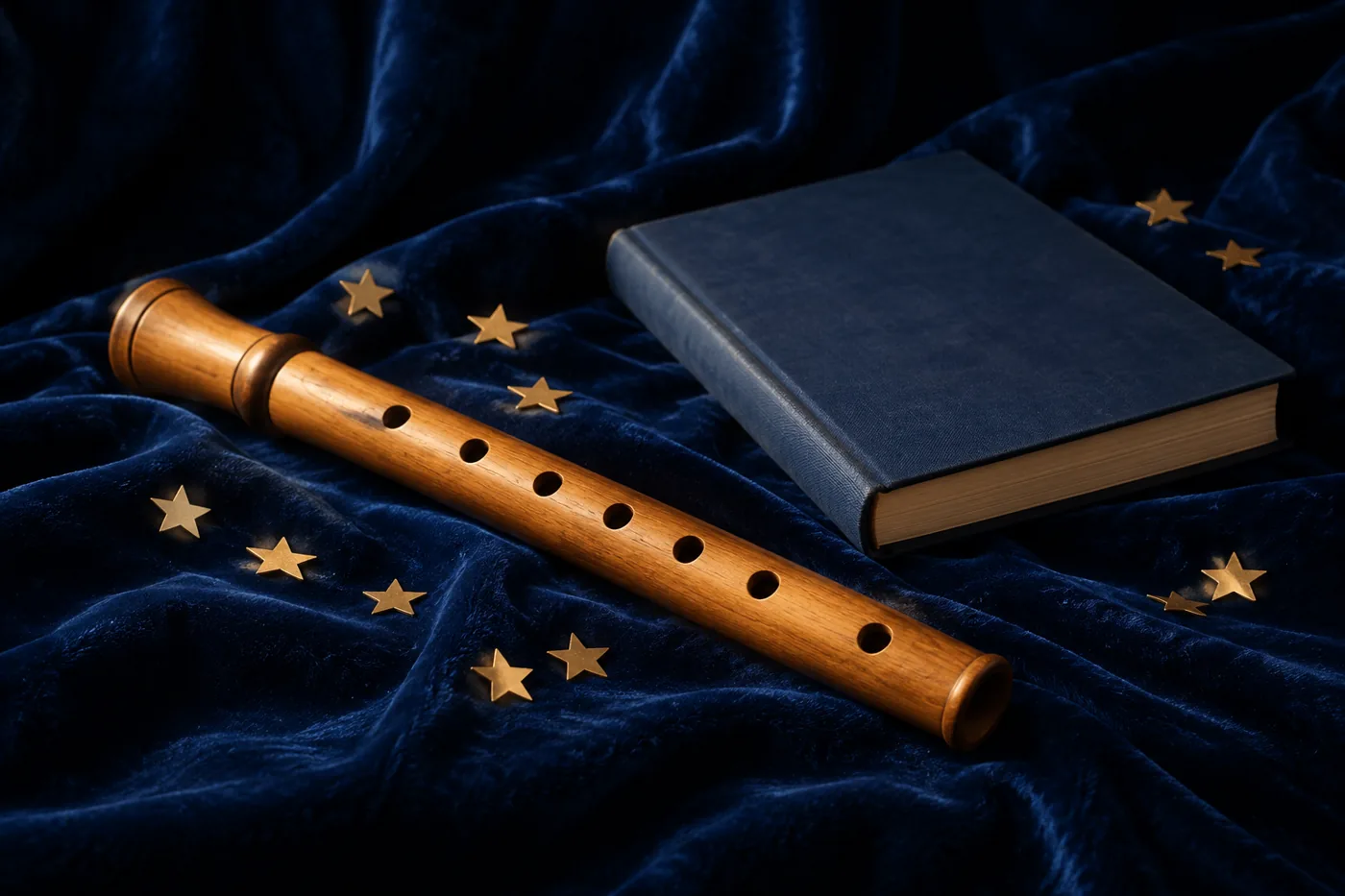
Generated interpretation, not documentary evidence. Invented theatrical still life with a wooden flute, blank libretto book and paper stars; not an actual production or instrument diagram.
Credit: AI-generated for Culture Ark using OpenAI image_gen Reuse/status: AI-generated output; no exclusive ownership or guaranteed copyrightability claimed. Underlying works, marks and cultural permissions remain separate. Invented theatrical still life with a wooden flute, blank libretto book and paper stars; not an actual production or instrument diagram. The fantasy setting is not a documentary picture of eighteenth-century Vienna. A score, translation, stage production and sound recording are different objects with separate credits and rights. The generic flute illustration is neither a historical instrument reconstruction nor a prop from a named production.
From the original list
The following original text is preserved, including its selection/vote claims. Preservation is not independent verification of every assertion.
Why: Mozart's fairy-tale opera with the Queen of the Night's dazzling aria.
What to preserve: Libretto, score, Queen of the Night aria
Year and origin: 1791 · Austria
Vote: 5/9 (historian 1 · future kid 2 · curator 2)
Learn more: The Magic Flute on Wikipedia
Supplemental context
The Magic Flute joined Mozart's music to Emanuel Schikaneder's theatrical storytelling. English National Opera places its first production in a suburban Viennese theatre on 30 September 1791 and describes a mixture of popular entertainment, fairy tales and Masonic symbolism. Schikaneder also performed Papageno. This makes the work useful evidence of collaboration rather than solitary genius: words, music, acting, stagecraft and audience expectations meet in one evening. A future listener could compare the printed work with different productions to hear how an apparently stable opera keeps acquiring new interpretations.
Creator/community: Wolfgang Amadeus Mozart, composer; Emanuel Schikaneder, librettist; successive performers and production teams Place/era: Vienna, 1791; later international performance traditions
Context and limits
The fantasy setting is not a documentary picture of eighteenth-century Vienna. A score, translation, stage production and sound recording are different objects with separate credits and rights. The generic flute illustration is neither a historical instrument reconstruction nor a prop from a named production.
Where to learn more
- https://apiarybee.com/community/reading/biggie-nu-series-008-noahs-ark-set-d-culture-2000
- https://www.eno.org/engage/eno-the-magic-flute-the-context/
Apiary library | Original Culture Ark article
Public ID and individual routes: pending publisher allocation. Internal source ID: D-0111
Part of the Culture Ark: 2,000 things people should still be able to see in 2,000 years, picked by AI research teams. This page keeps the original list entry for D-0111 word for word and adds context. Browse the gallery. The Culture Ark is an Artificial Mind Hive (AMH) project. AMH is owned by Austin Little.

Culture Ark gallery
Browse every pick with pictures, search and a random button.
Open the gallery →