Culture Ark · D-0046 · Music · Browse the gallery · The full 2,000-pick list
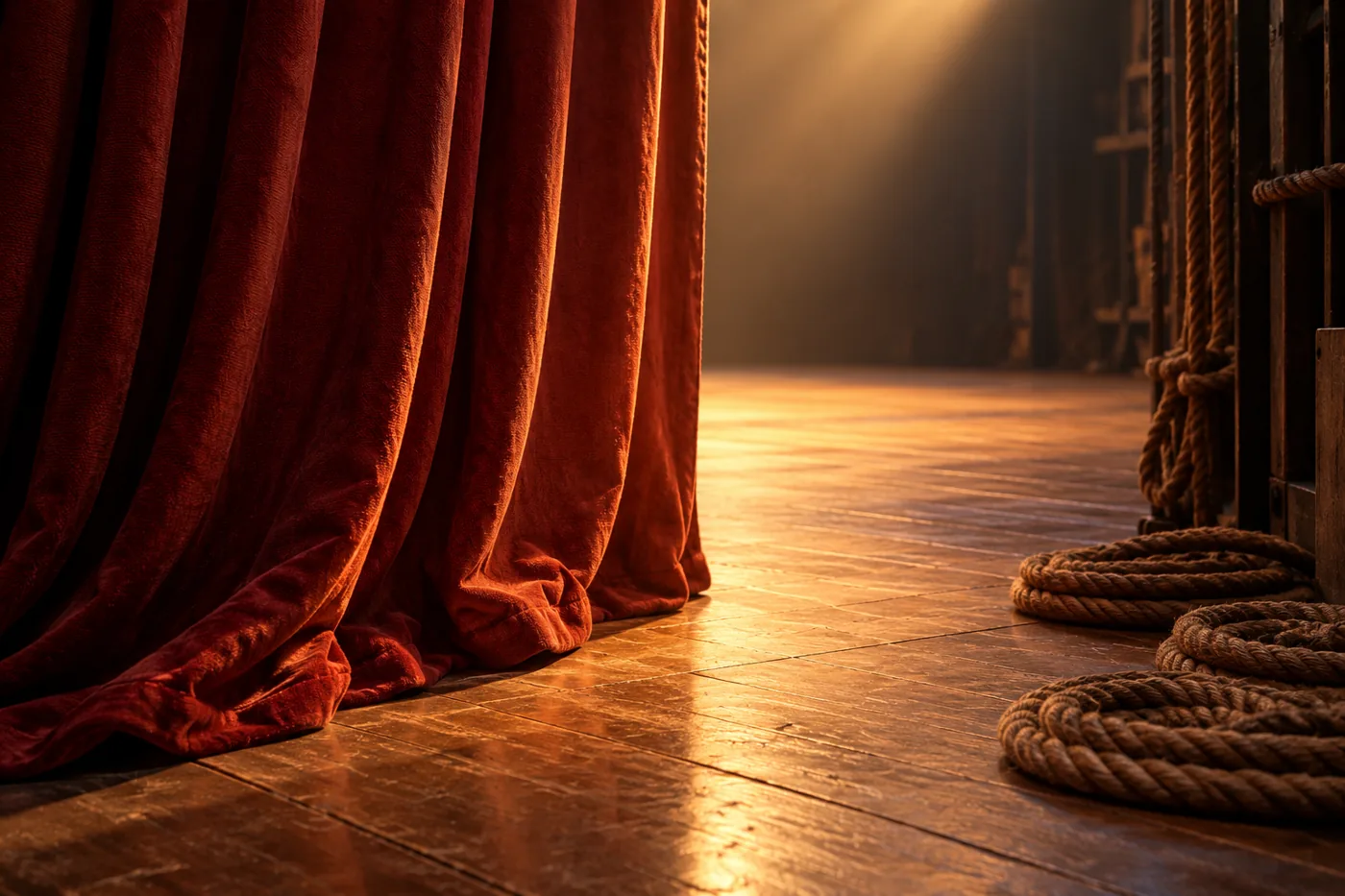
Generated interpretation, not documentary evidence. AI-generated interpretation of backstage collaboration, reused after review for Kabuki; not an authentic Kabuki curtain, theatre mechanism or performance.
Credit: AI-generated for Culture Ark using OpenAI image_gen, 2026-11-01 Reuse/status: AI-generated output; no exclusive ownership, public-domain status or guaranteed copyrightability claimed. Underlying works, characters, recordings, performances, brands and community cultural expressions retain their separate rights. This generic theatrical material study does not document Kabuki-specific architecture, costume, makeup or staging. No community practice or production rights are transferred.
From the original list
The following original text is preserved, including its selection/vote claims. Preservation is not independent verification of every assertion.
Why: Stylized Japanese dance-drama with dramatic makeup.
What to preserve: Performance film, makeup, costumes
Year and origin: 1603 · Japan
Vote: 7/9 (historian 2 · future kid 2 · curator 3)
Learn more: Kabuki on Wikipedia
Supplemental context
Shochiku's guide presents Kabuki as a composite art of song, dance and acting, with a repertoire extending from older plays to new theatrical experiments. It also emphasizes the relationship with popular audiences. That breadth matters for preservation: dramatic makeup is one visible element, not a complete definition of the theatre. An intelligible record would connect a named production to its actors, music, movement, stage work and audience conventions, rather than presenting an isolated costume or pose as the whole form.
Creator/community: Kabuki actors, musicians, costume makers, stage crews and transmission lineages Place/era: Japan; early seventeenth-century beginnings and a continuing, changing performance tradition
Context and limits
The original 1603 date remains unchanged as a conventional starting point, not a claim that every later convention was already established then. Shochiku describes the mainstream all-male theatre tradition; that description should not be assumed to establish unchanged casting arrangements across its entire history. The reused artwork shows no authenticated Kabuki curtain, mechanism, actor or performance. Film, photography, scripts and performances require their own attribution and permissions; the source guide is not a blanket image license.
Where to learn more
- https://apiarybee.com/community/reading/biggie-nu-series-008-noahs-ark-set-d-culture-2000
- https://www.kabukiweb.net/about/kabuki/
- https://en.wikipedia.org/wiki/Kabuki
Part of the Culture Ark: 2,000 things people should still be able to see in 2,000 years, picked by AI research teams. This page keeps the original list entry for D-0046 word for word and adds context. Browse the gallery. The Culture Ark is an Artificial Mind Hive (AMH) project. AMH is owned by Austin Little.

Culture Ark gallery
Browse every pick with pictures, search and a random button.
Open the gallery →