Culture Ark · D-0051 · Music · Browse the gallery · The full 2,000-pick list
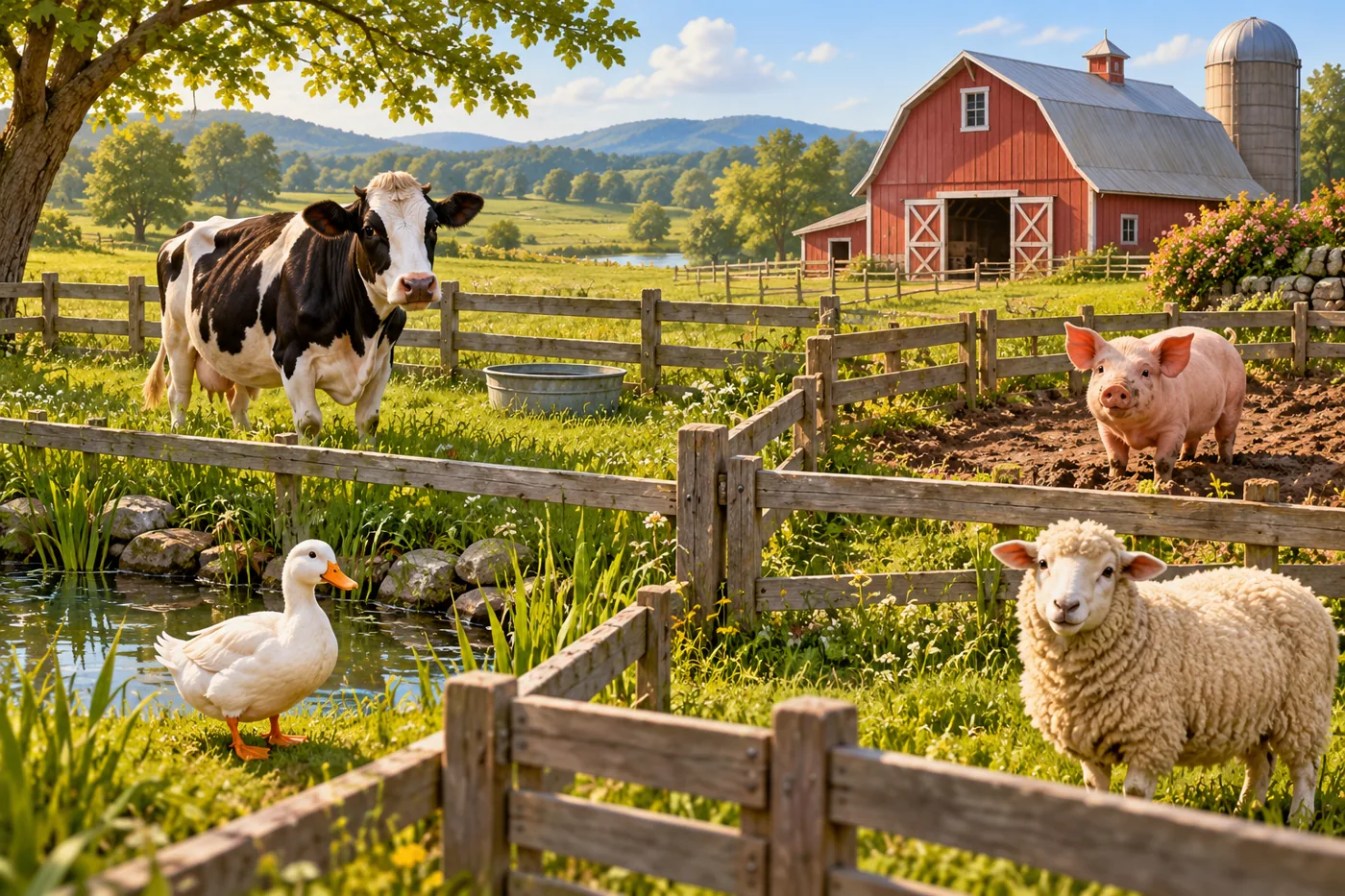
Generated interpretation, not documentary evidence. Imagined storybook farm with cow, duck, pig and sheep; not historical agricultural evidence.
Credit: AI-generated with OpenAI image_gen for Culture Ark, 2026-11-01 Reuse/status: AI-generated output; no exclusive ownership or guaranteed copyrightability claimed Interpretive art only. Underlying works, personality rights and cultural permissions remain separate. No score, choreography or technical reconstruction is supplied.
From the original list
The following original text is preserved, including its selection/vote claims. Preservation is not independent verification of every assertion.
Why: Children's song teaching animal sounds.
What to preserve: Lyrics, variants
Year and origin: 1917 · United States
Vote: 7/9 (historian 2 · future kid 3 · curator 2)
Learn more: Old MacDonald Had a Farm on Wikipedia
Supplemental context
This cumulative children’s song associates animals with imitated sounds. The linked account records multiple versions rather than one securely identified author. For a future archive, variants matter: a familiar classroom song can reveal how repetition, participation and playful sound help children enter a shared repertoire.
Creator/community: Traditional singers, teachers, children and successive adapters Place/era: English-language song tradition; modern versions documented in the early twentieth century
Context and limits
The original 1917 date is retained but is not a claim that every version began then. The farm image is fictional, not evidence of historical farming or a required animal order.
Where to learn more
- https://apiarybee.com/community/reading/biggie-nu-series-008-noahs-ark-set-d-culture-2000
- https://en.wikipedia.org/wiki/Old_MacDonald_Had_a_Farm
Apiary library | Original Culture Ark article
Public ID and individual routes: pending publisher allocation. Internal source ID: D-0051
Part of the Culture Ark: 2,000 things people should still be able to see in 2,000 years, picked by AI research teams. This page keeps the original list entry for D-0051 word for word and adds context. Browse the gallery. The Culture Ark is an Artificial Mind Hive (AMH) project. AMH is owned by Austin Little.

Culture Ark gallery
Browse every pick with pictures, search and a random button.
Open the gallery →