Culture Ark · D-0050 · Music · Browse the gallery · The full 2,000-pick list
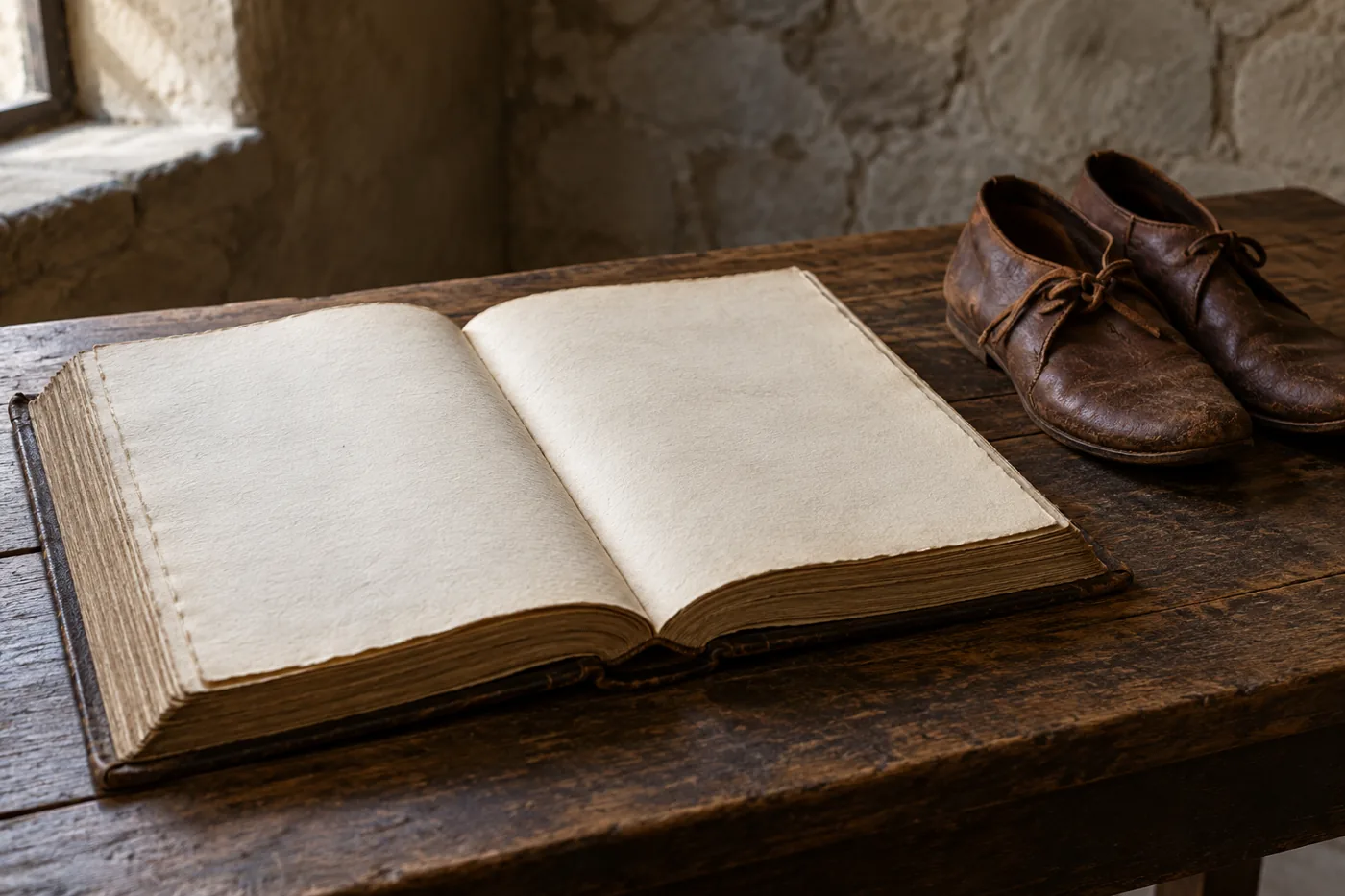
Generated interpretation, not documentary evidence. AI-generated archival metaphor for examining the 1518 accounts; the blank book and shoes are fictional, not historical evidence.
Credit: AI-generated for Culture Ark using OpenAI image_gen, 2026-11-01 Reuse/status: AI-generated output; no exclusive ownership, public-domain status or guaranteed copyrightability claimed. Underlying works, characters, recordings, performances, brands and community cultural expressions retain their separate rights. No sufferer, symptom, authentic manuscript or reconstructed event is shown. The scene must not be used as evidence for dress, objects or circumstances in Strasbourg in 1518.
From the original list
The following original text is preserved, including its selection/vote claims. Preservation is not independent verification of every assertion.
Why: Hundreds of people danced uncontrollably for weeks, a mystery of mass behavior.
What to preserve: Historical records
Year and origin: 1518 · Strasbourg (Holy Roman Empire)
Vote: 7/9 (historian 2 · future kid 3 · curator 2)
Learn more: Dancing plague of 1518 on Wikipedia
Supplemental context
This selection concerns records of distress, not a dance form to celebrate or teach. The University of Strasbourg's account describes a reported collective dancing episode and presents several proposed explanations rather than a settled cause. Its discussion is useful precisely because it exposes the distance between an event, a chronicler's description and a modern interpretation. A careful archive would identify who wrote each account, when it was written and what evidence supports its details, while keeping later artworks and retellings distinct from eyewitness material.
Creator/community: People affected in Strasbourg in 1518; chroniclers, civic and religious authorities; later historians and researchers Place/era: Strasbourg, then in the Holy Roman Empire; summer 1518, with accounts and interpretations produced at different later dates
Context and limits
The original statement about hundreds dancing for weeks remains intact as source text; this supplement does not independently establish participant totals, deaths or continuous individual dancing. Proposed medical or psychological explanations are retrospective hypotheses, not diagnoses demonstrated here. The illustrated blank ledger and shoes are fictional props, not surviving documents or belongings. Avoid treating sufferers as a comic spectacle or equating the episode with any present-day community or condition.
Where to learn more
- https://apiarybee.com/community/reading/biggie-nu-series-008-noahs-ark-set-d-culture-2000
- https://recherche.unistra.fr/actualites-recherche/actualites-de-la-recherche/le-mystere-des-danseurs-fous-de-strasbourg.html
- https://en.wikipedia.org/wiki/Dancing_plague_of_1518
Part of the Culture Ark: 2,000 things people should still be able to see in 2,000 years, picked by AI research teams. This page keeps the original list entry for D-0050 word for word and adds context. Browse the gallery. The Culture Ark is an Artificial Mind Hive (AMH) project. AMH is owned by Austin Little.

Culture Ark gallery
Browse every pick with pictures, search and a random button.
Open the gallery →