Culture Ark · D-0047 · Music · Browse the gallery · The full 2,000-pick list
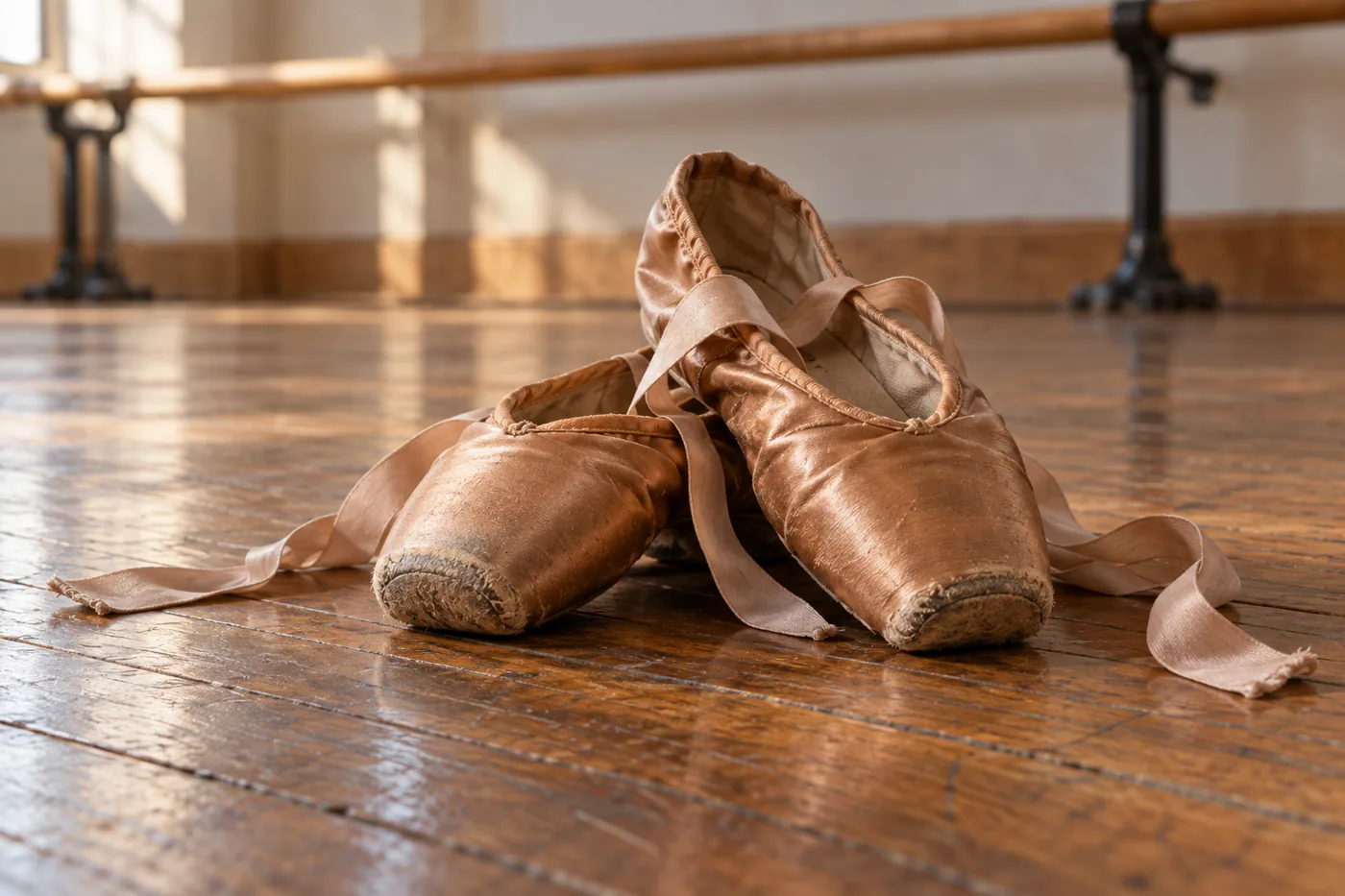
Generated interpretation, not documentary evidence. AI-generated interpretive study of ballet rehearsal materials; not a particular dancer’s shoes, a dance instruction or a fifteenth-century reconstruction.
Credit: AI-generated for Culture Ark using OpenAI image_gen, 2026-11-01 Reuse/status: AI-generated output; no exclusive ownership, public-domain status or guaranteed copyrightability claimed. Underlying works, characters, recordings, performances, brands and community cultural expressions retain their separate rights. The shoes do not define all ballet or prescribe how to train. They are not authenticated objects, product recommendations or evidence of a named production.
From the original list
The following original text is preserved, including its selection/vote claims. Preservation is not independent verification of every assertion.
Why: Theatrical dance on pointe, a discipline of grace and strength.
What to preserve: Positions, pointe shoes, performances
Year and origin: 15th century · Italy/France
Vote: 7/9 (historian 3 · future kid 2 · curator 2)
Learn more: Ballet on Wikipedia
Supplemental context
Ballet's long history should not be collapsed into the history of pointe shoes. English National Ballet's account distinguishes heeled footwear in Renaissance court ballets from later slippers and nineteenth-century pointe work. It also explains the continuing collaboration between dancers and makers in choosing and preparing shoes for particular bodies and choreography. The shoe is therefore a useful material clue to training and performance, but it is not a complete definition of ballet or evidence that all ballet dancers work on pointe.
Creator/community: Dancers, choreographers, teachers, musicians, designers and shoemakers across ballet traditions Place/era: European court beginnings in the fifteenth century; later theatrical developments, including nineteenth-century pointe work, and global practice
Context and limits
The original description is retained, but pointe work should not be projected backward into the fifteenth-century origin line. The generated shoes are fictional modern-looking props, not a dancer's personal objects or an instructional example. Ballet has multiple historical schools and contemporary approaches; no one shoe, body type or repertoire represents everyone. Recordings, choreography, photography and music retain separate rights and credits.
Where to learn more
- https://apiarybee.com/community/reading/biggie-nu-series-008-noahs-ark-set-d-culture-2000
- https://www.ballet.org.uk/blog/a-guide-to-pointe-shoes/
- https://en.wikipedia.org/wiki/Ballet
Part of the Culture Ark: 2,000 things people should still be able to see in 2,000 years, picked by AI research teams. This page keeps the original list entry for D-0047 word for word and adds context. Browse the gallery. The Culture Ark is an Artificial Mind Hive (AMH) project. AMH is owned by Austin Little.

Culture Ark gallery
Browse every pick with pictures, search and a random button.
Open the gallery →