Culture Ark · Browse the gallery · 60 illustrated picks on Apiary
CA1359 · fashion and adornment
Creator/community: Sweet, Orr and Company; Amoskeag Manufacturing Company textile workers Place/era: New York, United States; approximately 1910–1920
Generated interpretation
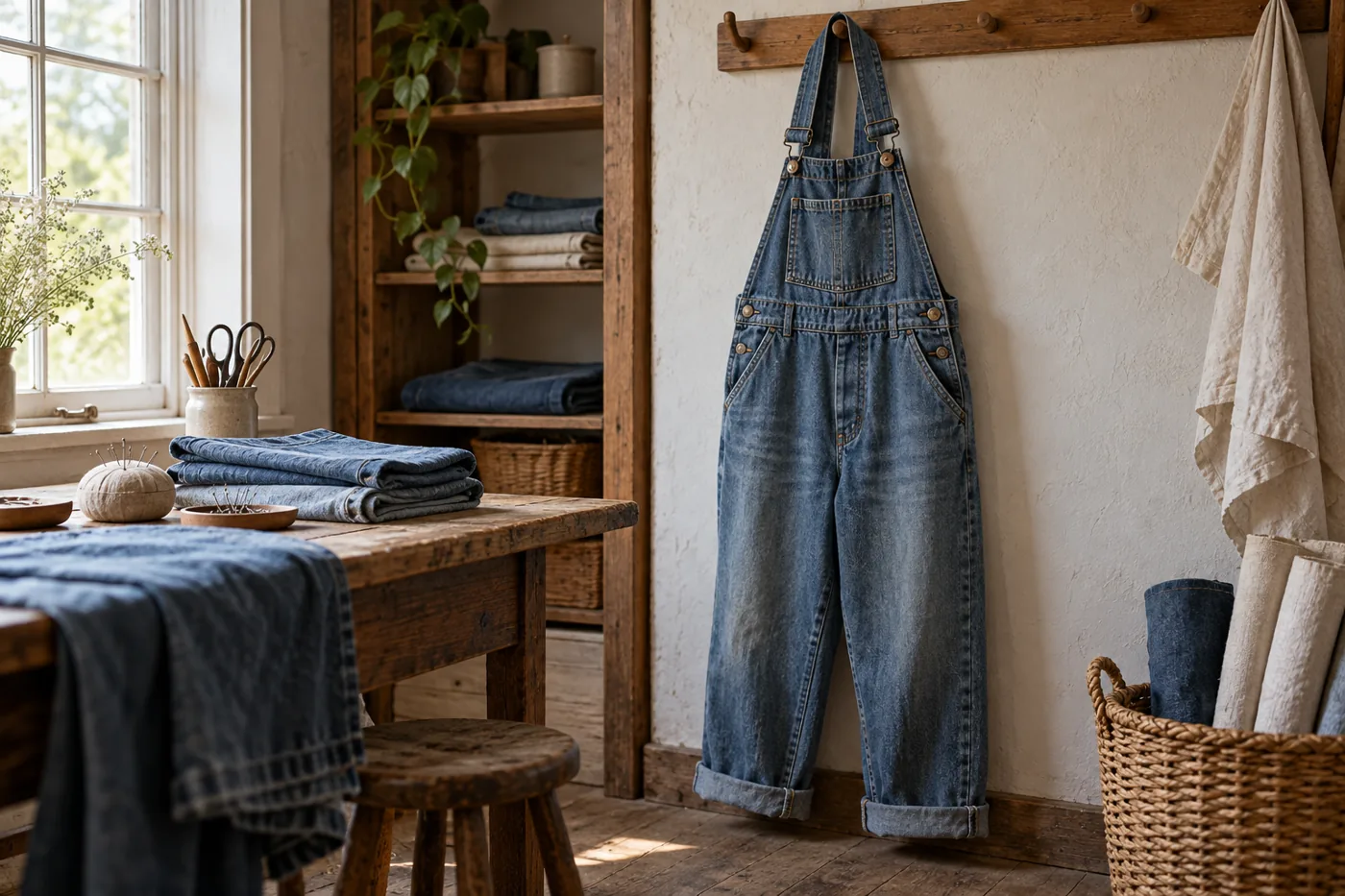
Invented denim bib overalls in an imagined sewing workspace, not the Smithsonian pair or evidence of a specific worker's life. Credit: AI-generated for Culture Ark using OpenAI image generation. Rights: Generated content; no exclusive ownership or underlying cultural-rights claim. Changes: Resized within1400px and converted to WebP; no crop or substantive alteration.
Bib, straps, pockets and seams are visible; the setting and wear are invented, with no wearer or occupation attribution. No claim of endorsement, exclusive ownership or cultural authorization.
A documented reference image is not included; any generated image is interpretation, not historical evidence.
History and context
A Smithsonian pair of overalls records a garment maker and a separate fabric manufacturer, preserving two stages of work behind an apparently ordinary item of clothing. The object is associated with Sweet, Orr and Company and the Amoskeag Manufacturing Company in the early twentieth century. This selection keeps mass-produced clothing in the archive alongside ceremonial dress and designer fashion. Future viewers can ask how the shape, seams and surviving wear of such a garment relate to its intended use, but also where the documentation stops. A company name is not the same as the names of the people who cut and stitched it, and an accession record may preserve manufacture more clearly than the life of its wearer.
What future readers can learn
Curatorial interpretation: Ordinary clothing can reveal production networks while exposing gaps in the recording of workers and wearers.
Limits and cultural context
The collection record does not identify a specific wearer or occupation. Functional interpretation must not become an invented personal biography.
Where to learn more
Continue exploring
Apiary reading library Previous Culture Ark selection
Culture Ark is a curated archive, not a universal ranking. Interpretive images and source evidence serve different roles.
Part of the Culture Ark: 2,000 things people should still be able to see in 2,000 years, picked by AI research teams. Browse the gallery. The Culture Ark is an Artificial Mind Hive (AMH) project. AMH is owned by Austin Little.

Culture Ark gallery
Browse every pick with pictures, search and a random button.
Open the gallery →