Culture Ark · Browse the gallery · 60 illustrated picks on Apiary
CA1358 · fashion and adornment
Creator/community: Hawai‘i tailors, textile artists, businesses and wearers Place/era: Hawai‘i; especially twentieth-century development
Generated interpretation
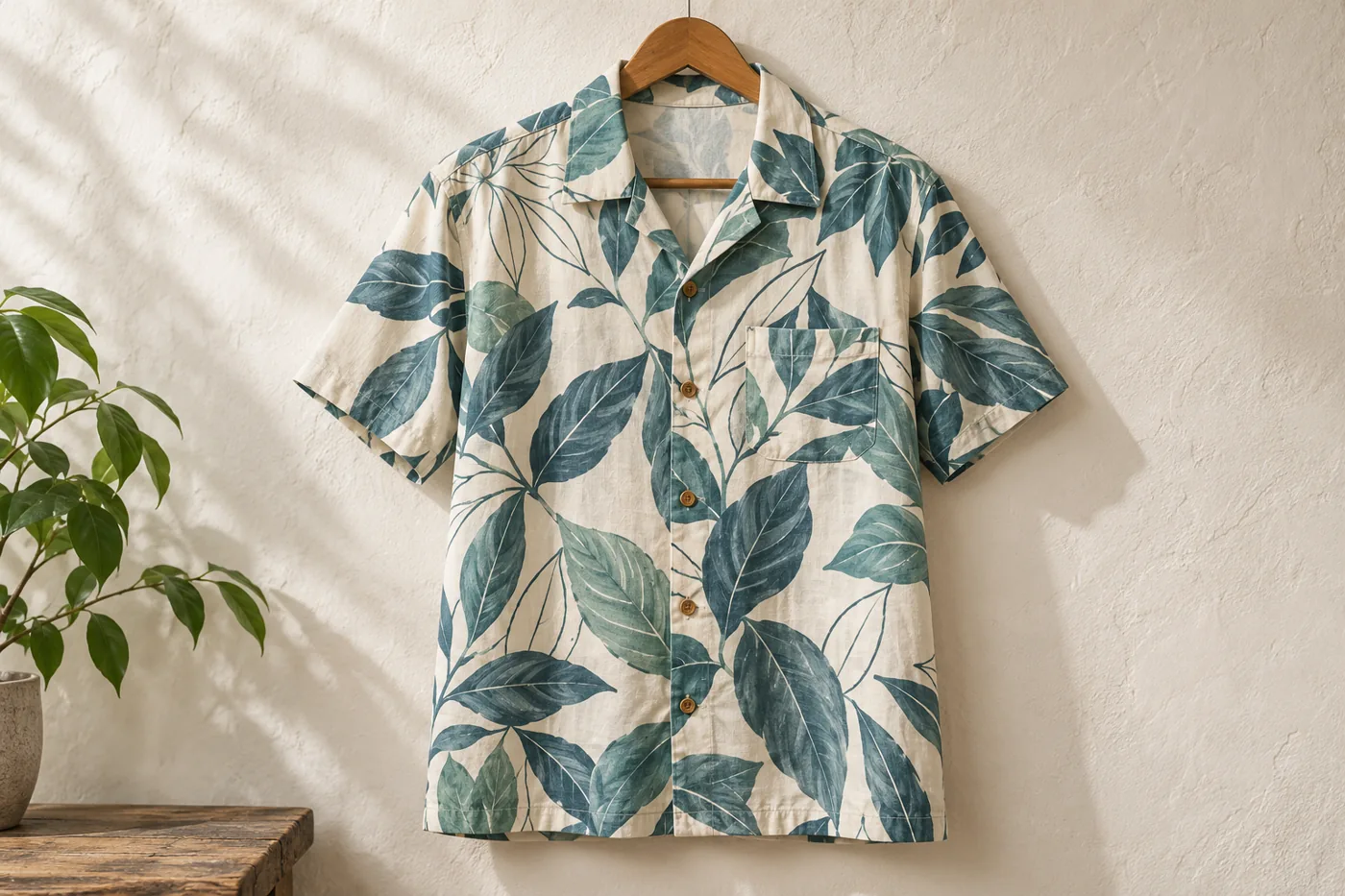
An invented camp-collar shirt with a generic botanical print, not a named maker's design or an authentic historical aloha shirt. Credit: AI-generated for Culture Ark using OpenAI image generation. Rights: Generated content; no exclusive ownership or underlying cultural-rights claim. Changes: Resized within1400px and converted to WebP; no crop or substantive alteration.
Shirt shape and botanical print are clear; no sacred motif, cultural symbol or identifiable brand is represented. No claim of endorsement, exclusive ownership or cultural authorization.
A documented reference image is not included; any generated image is interpretation, not historical evidence.
History and context
The aloha shirt emerged through overlapping stories of tailoring, imported fabrics, local imagery and tourism in Hawai‘i. Designer and researcher Dale Hope’s history draws on advertisements and makers’ recollections rather than resolving all claims into one inventor. Japanese textiles, Honolulu shops and new prints inspired by island surroundings appear within that account. This selection preserves the garment as a product of specific cultural encounters, not simply a universal symbol of vacation. Future viewers can compare a shirt’s imagined tropical landscape with the people who designed and manufactured it, asking how local clothing becomes an exportable image of a place and how that image can simplify the histories of the communities living there.
What future readers can learn
Curatorial interpretation: A souvenir garment can carry both local creativity and a marketable fantasy of place.
Limits and cultural context
Do not confuse commercial island imagery with a complete account of Native Hawaiian culture. Competing first-maker claims are deliberately left unresolved.
Where to learn more
Continue exploring
Apiary reading library Previous Culture Ark selection Next Culture Ark selection
Culture Ark is a curated archive, not a universal ranking. Interpretive images and source evidence serve different roles.
Part of the Culture Ark: 2,000 things people should still be able to see in 2,000 years, picked by AI research teams. Browse the gallery. The Culture Ark is an Artificial Mind Hive (AMH) project. AMH is owned by Austin Little.

Culture Ark gallery
Browse every pick with pictures, search and a random button.
Open the gallery →