Culture Ark · Browse the gallery · 60 illustrated picks on Apiary
CA1356 · fashion and adornment
Creator/community: African American, Mexican American and other urban youth communities; tailors Place/era: United States; especially 1930s–1940s
Generated interpretation
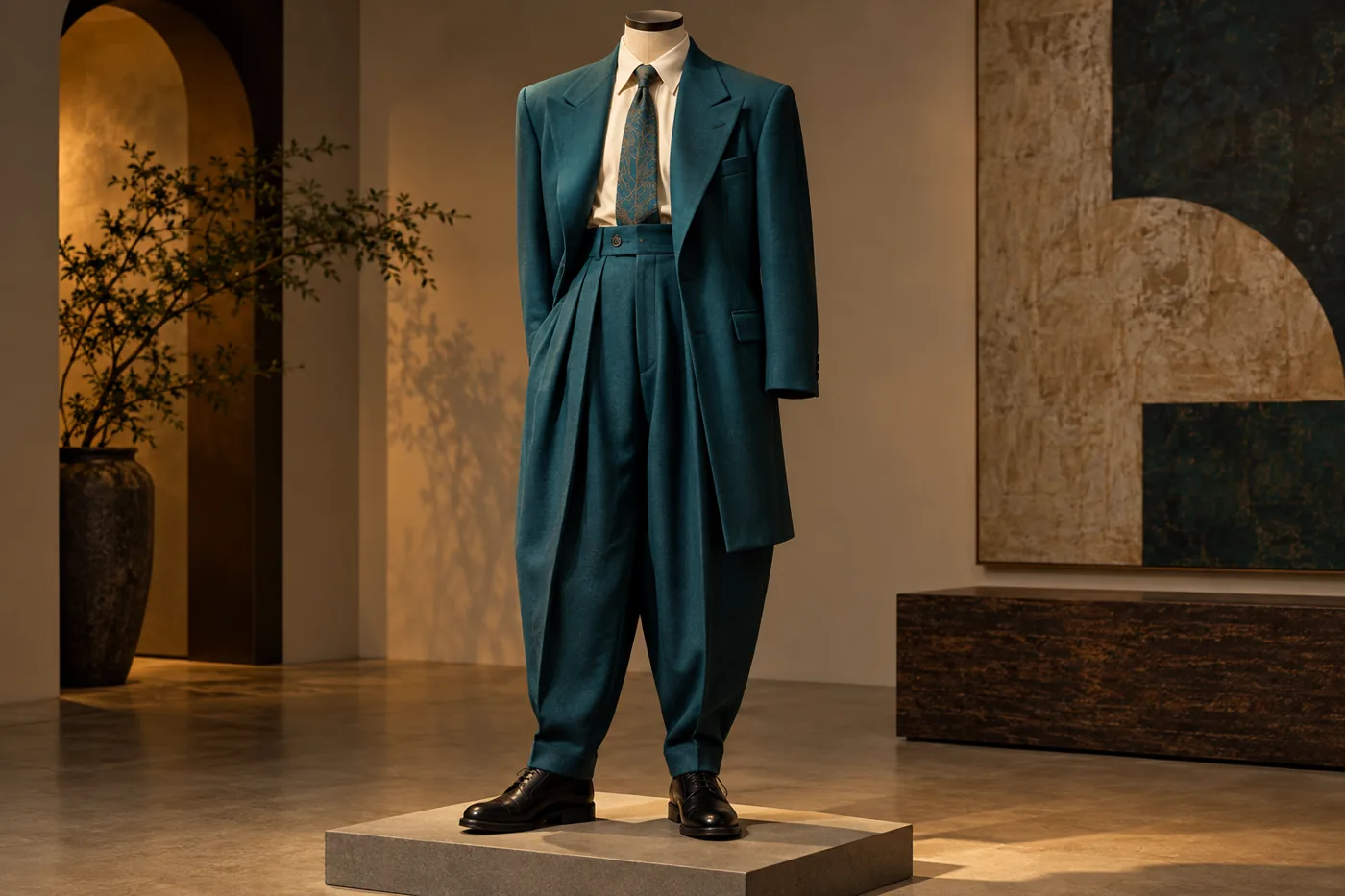
An invented teal zoot-suit-inspired ensemble emphasizing long jacket and roomy tapered trousers, not the LACMA garment. Credit: AI-generated for Culture Ark using OpenAI image generation. Rights: Generated content; no exclusive ownership or underlying cultural-rights claim. Changes: Resized within1400px and converted to WebP; no crop or substantive alteration.
Silhouette is clear and dignified; no person, weapon, gang association or documentary-event claim is introduced. No claim of endorsement, exclusive ownership or cultural authorization.
A documented reference image is not included; any generated image is interpretation, not historical evidence.
History and context
The zoot suit exaggerates a tailored silhouette into a highly visible statement of style. LACMA’s account of acquiring a rare surviving example connects the garment with urban youth and dance culture, while the National WWII Museum places its public reception within the racial tensions of wartime Los Angeles. This selection preserves fashion without separating it from the hostility directed at some of its wearers. Future viewers can ask why a suit becomes more than a matter of personal taste when observers read it as a challenge to social expectations. The garment’s survival is also instructive: a style can be widely remembered in images while original examples remain difficult for museums to locate.
What future readers can learn
Curatorial interpretation: Visibility through style can be a source of pride and also a focus of prejudice.
Limits and cultural context
The 1943 violence was not caused or justified by clothing. Communities and wearers differed; do not reduce zoot-suit culture to criminal stereotypes.
Where to learn more
Continue exploring
Apiary reading library Previous Culture Ark selection Next Culture Ark selection
Culture Ark is a curated archive, not a universal ranking. Interpretive images and source evidence serve different roles.
Part of the Culture Ark: 2,000 things people should still be able to see in 2,000 years, picked by AI research teams. Browse the gallery. The Culture Ark is an Artificial Mind Hive (AMH) project. AMH is owned by Austin Little.

Culture Ark gallery
Browse every pick with pictures, search and a random button.
Open the gallery →