Culture Ark · Browse the gallery · 60 illustrated picks on Apiary
CA1336 · fashion and adornment
Creator/community: Sámi makers, families and regional communities Place/era: Sápmi across northern Europe; living customary dress
Generated interpretation
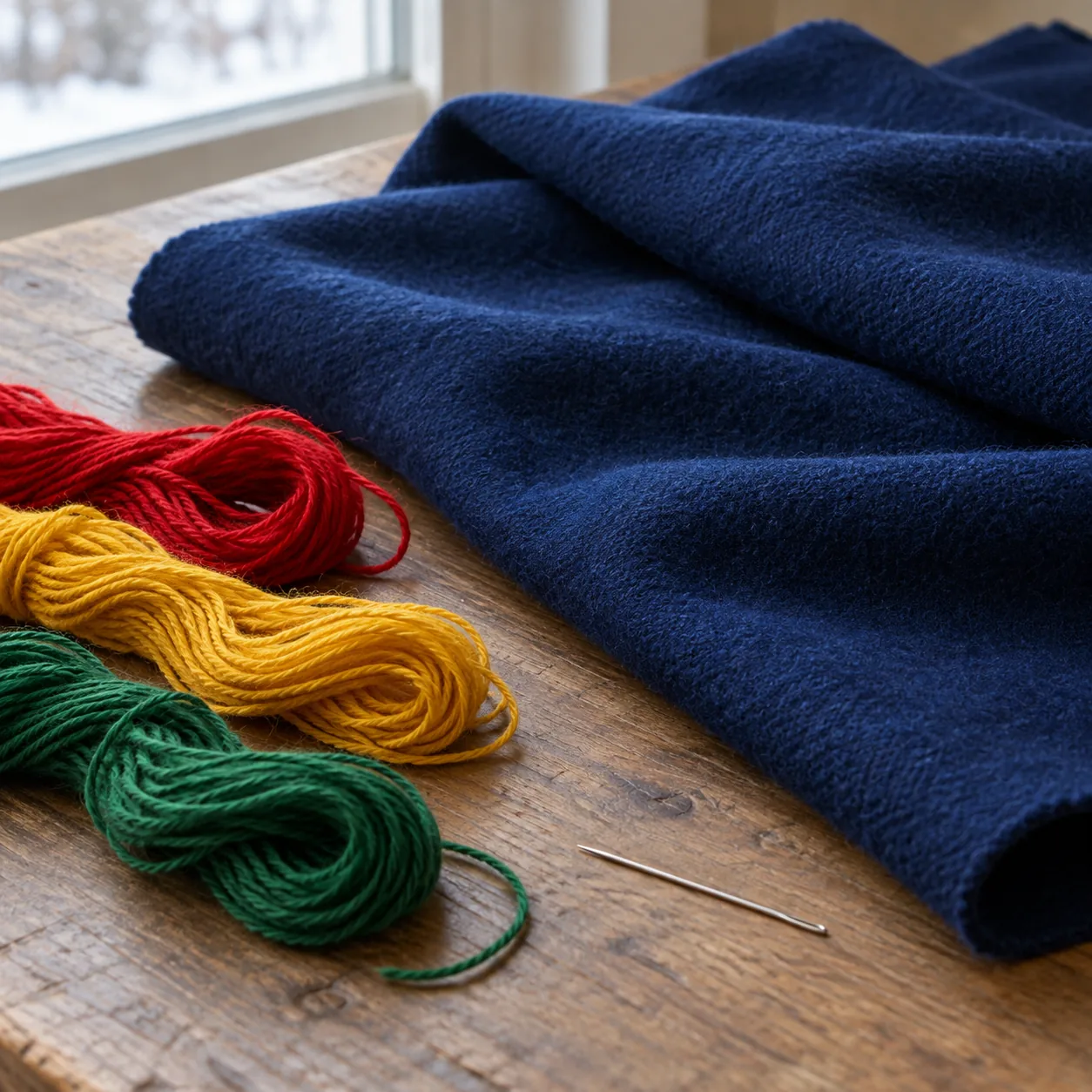
Generic blue cloth and separate colored threads; no gákti depicted. Credit: AI-generated for Culture Ark using OpenAI image generation. Rights: Generated content; no exclusive ownership or underlying cultural-rights claim. Changes: Resized within1400px and converted to WebP; no crop or substantive alteration.
Materials clear; no regional dress components combined, no community attribution or symbolic color meaning claimed. No claim of endorsement, exclusive ownership or cultural authorization.
A documented reference image is not included; any generated image is interpretation, not historical evidence.
History and context
Sámi dress carries information about belonging that cannot be understood by treating it as a colorful tourism costume. The Sámi Parliament of Finland describes the dress as an important expression of identity and identifies several regional forms within Finland alone. Its visitor guidance also emphasizes the relationship between visible cultural symbols, livelihoods and community knowledge. This selection preserves clothing as part of an Indigenous social world rather than a collection of freely interchangeable decorative elements. Future viewers can ask which details a knowledgeable person recognizes and which meanings remain invisible to an outsider, while learning why accurate attribution and respect for community authority matter as much as the preservation of fabric and ornament.
What future readers can learn
Curatorial interpretation: Some clothing communicates relationships that require community knowledge rather than a universal visual dictionary.
Limits and cultural context
Do not mix regional components or treat Sámi dress as a tourist costume. Community guidance should govern representation, participation and commercial use.
Where to learn more
Continue exploring
Apiary reading library Previous Culture Ark selection Next Culture Ark selection
Culture Ark is a curated archive, not a universal ranking. Interpretive images and source evidence serve different roles.
Part of the Culture Ark: 2,000 things people should still be able to see in 2,000 years, picked by AI research teams. Browse the gallery. The Culture Ark is an Artificial Mind Hive (AMH) project. AMH is owned by Austin Little.

Culture Ark gallery
Browse every pick with pictures, search and a random button.
Open the gallery →