Culture Ark · Browse the gallery · 60 illustrated picks on Apiary
CA1329 · fashion and adornment
Creator/community: Inca and provincial Andean textile makers Place/era: Andes; Inca period and subsequent colonial transformations
Generated interpretation
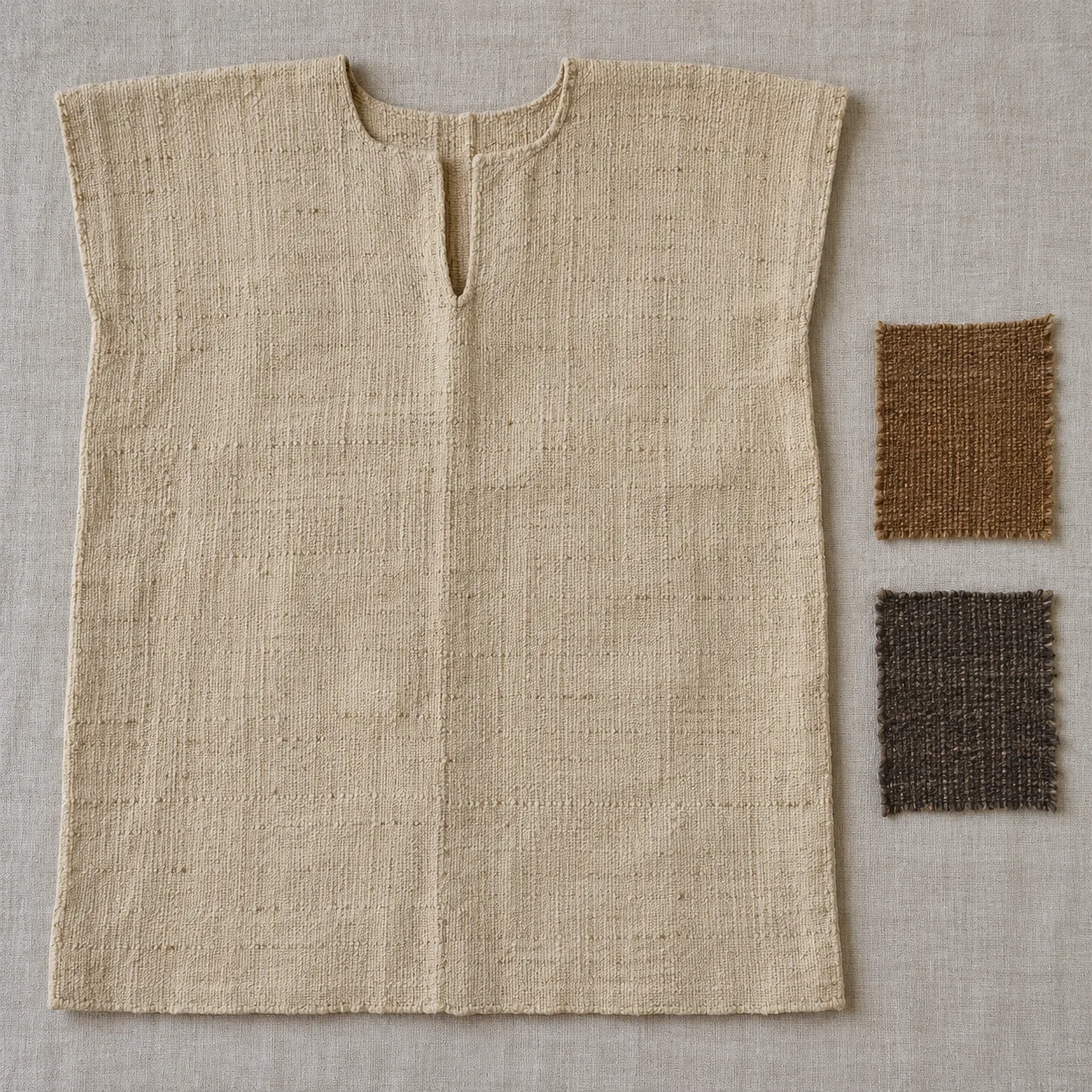
Conceptual plain tunic form and two textile swatches. Credit: AI-generated for Culture Ark using OpenAI image generation. Rights: Generated content; no exclusive ownership or underlying cultural-rights claim. Changes: Resized within1400px and converted to WebP; no crop or substantive alteration.
Rectangular form and material variation clear; no tocapu or named provincial signs, not an archaeological reconstruction. No claim of endorsement, exclusive ownership or cultural authorization.
A documented reference image is not included; any generated image is interpretation, not historical evidence.
History and context
The uncu is an Andean tunic whose form became strongly standardized during Inca sovereignty while its woven patterns could retain regional distinctions. LACMA’s research highlights this relationship between an imperial clothing format and motifs associated with particular provinces. A tunic is consequently evidence of more than personal taste: its shape and surface can reveal negotiations between centralized authority and local identity. This selection preserves those relationships without claiming that every geometric sign can now be decoded. Future viewers can compare what remains stable across examples with what changes, asking whether clothing makes political order visible through uniformity, controlled variation or the deliberate continuation of a community’s own visual language.
What future readers can learn
Curatorial interpretation: Dress can express central authority and local identity at the same time.
Limits and cultural context
Surviving elite textiles do not represent every person’s clothing. Interpretations of motifs and colonial-period changes require object-specific evidence.
Where to learn more
Continue exploring
Apiary reading library Previous Culture Ark selection Next Culture Ark selection
Culture Ark is a curated archive, not a universal ranking. Interpretive images and source evidence serve different roles.
Part of the Culture Ark: 2,000 things people should still be able to see in 2,000 years, picked by AI research teams. Browse the gallery. The Culture Ark is an Artificial Mind Hive (AMH) project. AMH is owned by Austin Little.

Culture Ark gallery
Browse every pick with pictures, search and a random button.
Open the gallery →