Culture Ark · Browse the gallery · 60 illustrated picks on Apiary
CA1320 · fashion and adornment
Creator/community: Japanese textile makers, dressers, designers and wearers Place/era: Japan; historical practice and contemporary fashion
Generated interpretation
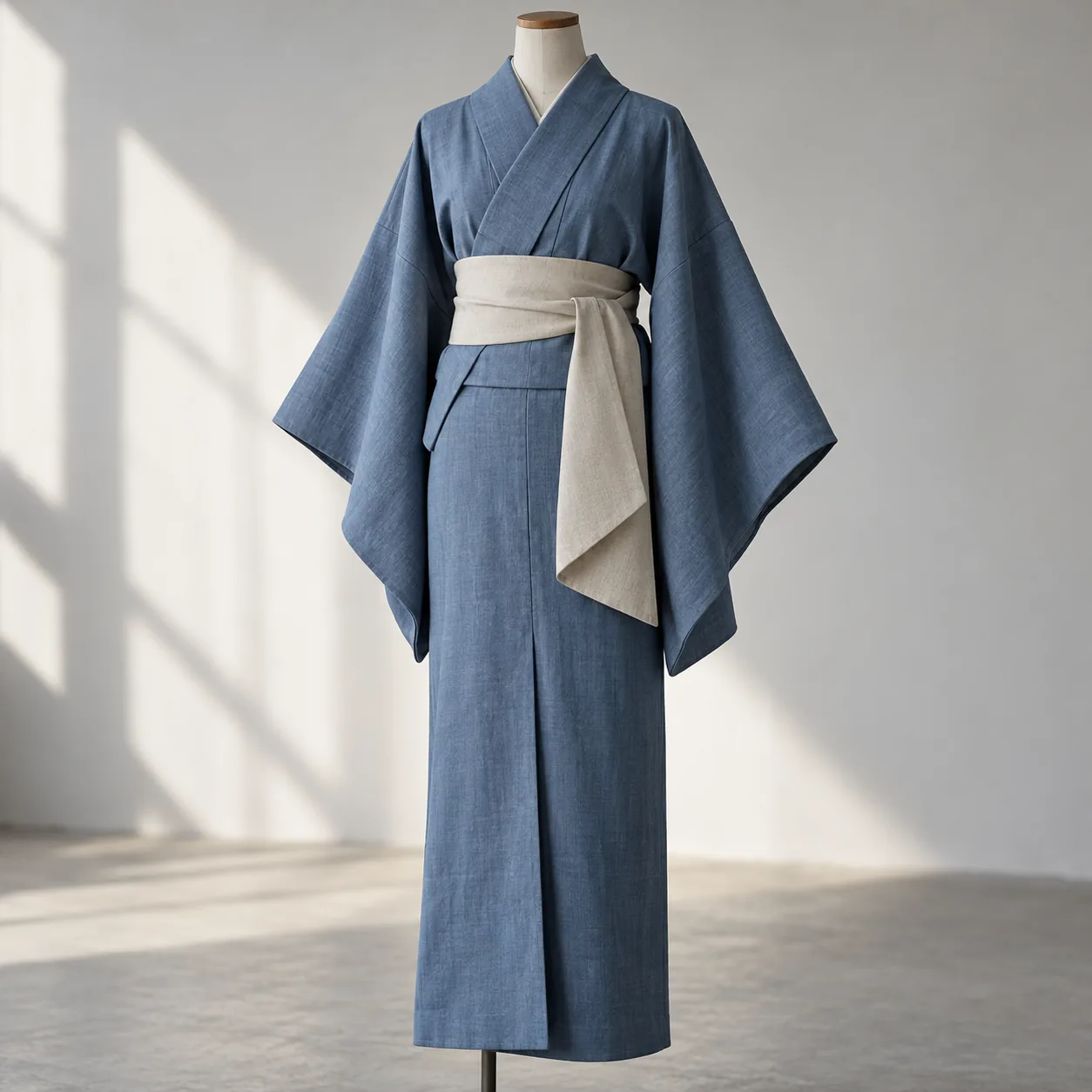
Invented plain blue kimono-inspired wrap garment on a display form. Credit: AI-generated for Culture Ark using OpenAI image generation. Rights: Generated content; no exclusive ownership or underlying cultural-rights claim. Changes: Resized within1400px and converted to WebP; no crop or substantive alteration.
Fabric and silhouette coherent; sash and dressing arrangement illustrative, not an authentic kimono or instructional standard. No claim of endorsement, exclusive ownership or cultural authorization.
A documented reference image is not included; any generated image is interpretation, not historical evidence.
History and context
The kimono uses a relatively stable straight-seamed form while allowing substantial variation through fabric, pattern, accessories and the way it is worn. The Victoria and Albert Museum explains how an obi secures the wrapped garment and how decoration can communicate season, occasion and social position. That emphasis makes the kimono a useful counterexample to a fashion history organized only around changing silhouettes. This selection preserves clothing as an arrangement made by the wearer as well as a finished textile made by an artisan. Future readers can compare an everyday garment with a luxurious ceremonial example, asking how material access, personal taste and social knowledge shape the meaning of apparently similar forms.
What future readers can learn
Curatorial interpretation: Fashion can change through surface, arrangement and context without requiring an entirely new cut.
Limits and cultural context
Kimono is not an unchanging national uniform. Specific motifs and dressing conventions require context; museum photographs are not automatically reusable.
Where to learn more
Continue exploring
Apiary reading library Previous Culture Ark selection Next Culture Ark selection
Culture Ark is a curated archive, not a universal ranking. Interpretive images and source evidence serve different roles.
Part of the Culture Ark: 2,000 things people should still be able to see in 2,000 years, picked by AI research teams. Browse the gallery. The Culture Ark is an Artificial Mind Hive (AMH) project. AMH is owned by Austin Little.

Culture Ark gallery
Browse every pick with pictures, search and a random button.
Open the gallery →