Culture Ark · Browse the gallery · 60 illustrated picks on Apiary
CA0910 · ordinary life
Creator/community: Tamar Horton Harris North Place/era: North’s Landing, Indiana, United States; ca. 1877
Generated interpretation
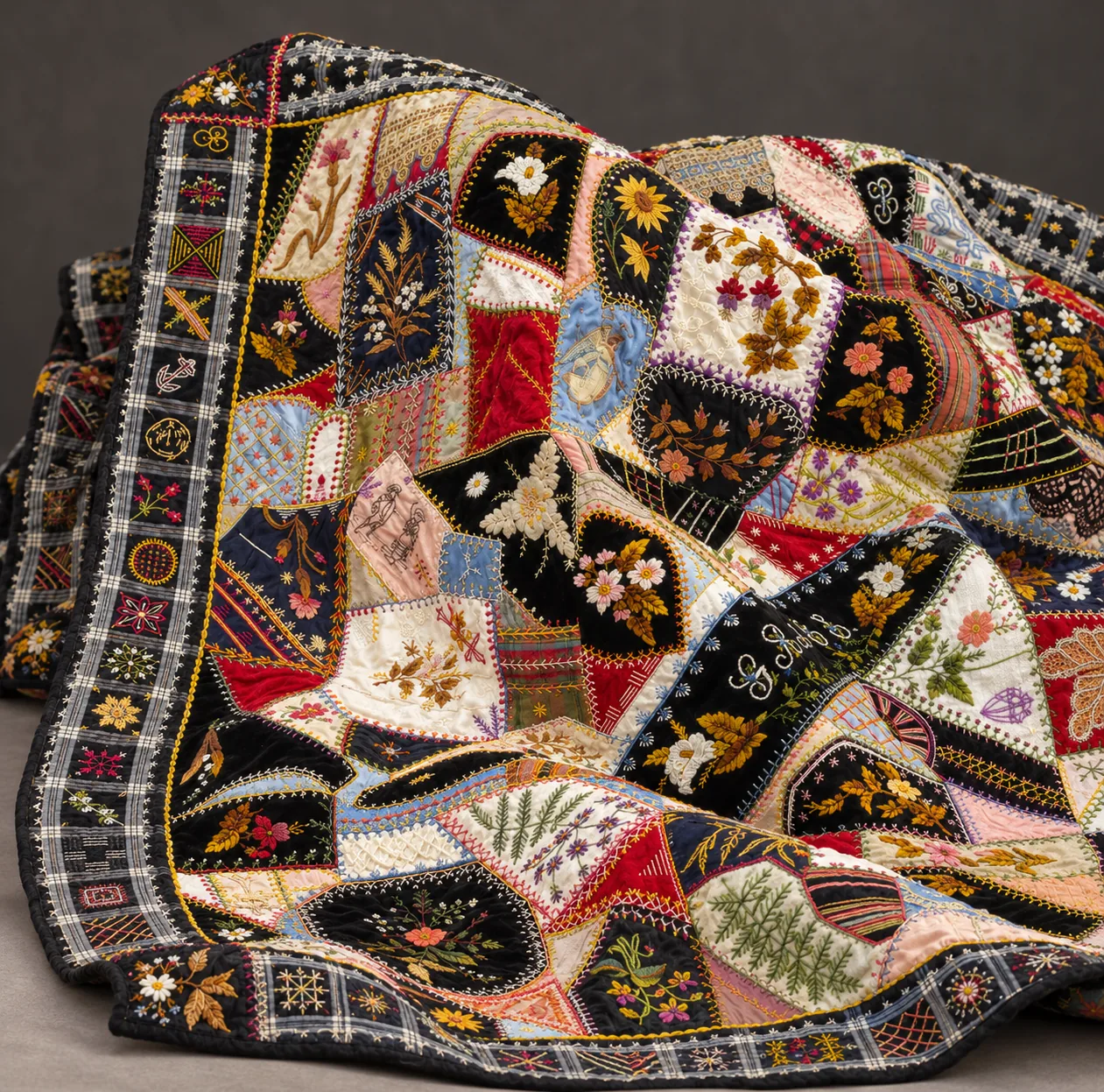
Mostly realistic generated object study for Tamar North’s mourning quilt for Grace. Credit: AI-generated presentation illustration using built-in image_gen; guided by the credited public-domain Met reference photograph.. Rights: Generated output; no exclusive-rights or public-domain claim. Reference image is public domain under Met Open Access.. Changes: Resized within1400px and converted to WebP; no crop or substantive alteration. Image source Image licence
Lighting, color and small details are interpretive. This illustration is not evidence of original condition, contents or use. No promise of exclusive ownership, enforceable copyright or museum endorsement. Folded material study; any decorative letter-like marks are not a reliable transcription of inscriptions.
Documented reference / existing artwork
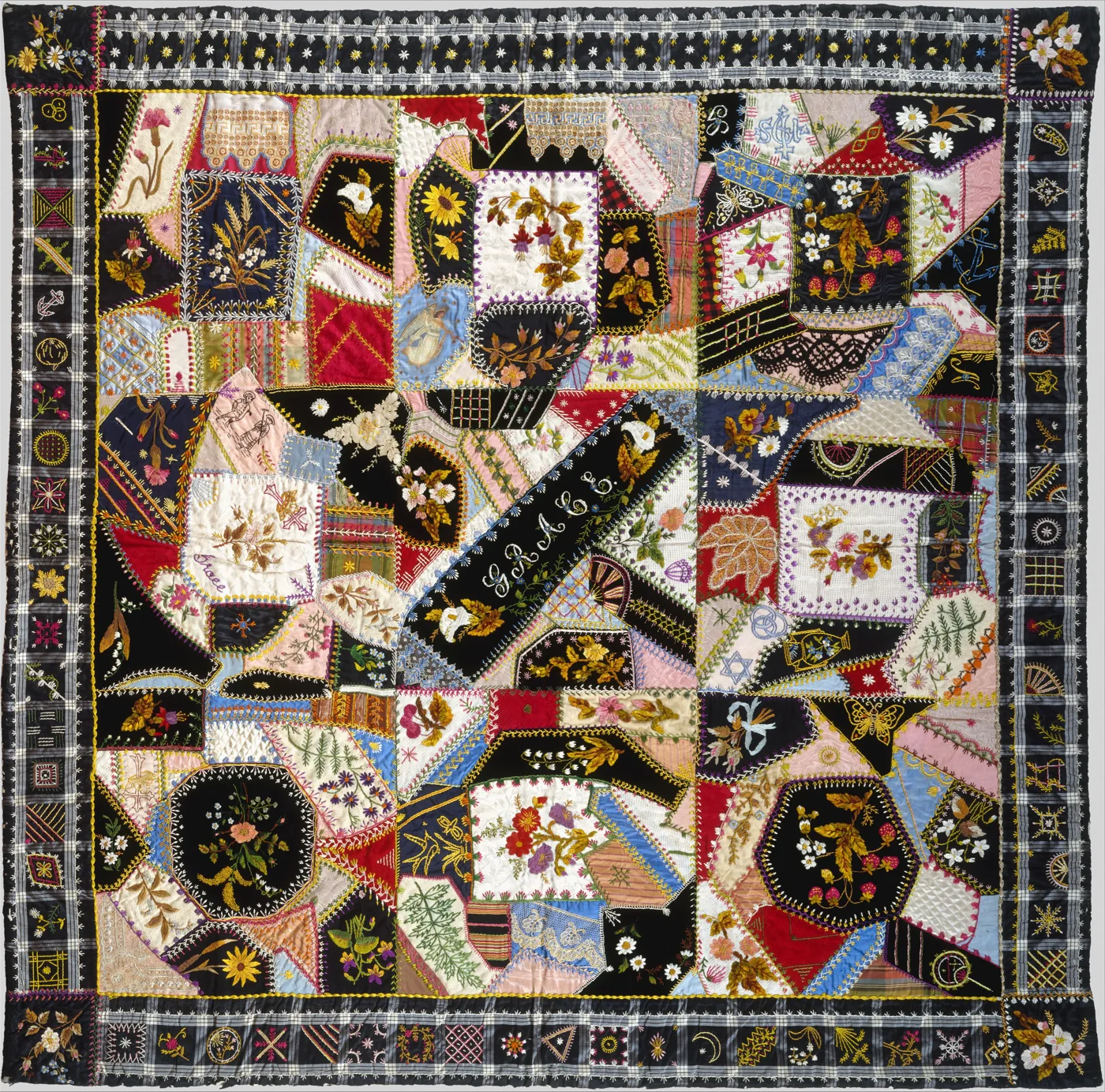
Quilt (or decorative throw), Crazy pattern. ca. 1877. The Metropolitan Museum of Art, 1983.349. Credit: Tamar Horton Harris North / The Metropolitan Museum of Art. Gift of Mr. and Mrs. John S. Cooper, 1983. Rights: Public domain; Met Open Access. Changes: Resized within1400px and converted to WebP; no crop or substantive alteration. Image source Image licence
Met API explicitly marks isPublicDomain=true. Image reuse permission does not transfer ownership of the object or resolve cultural permissions, sacred significance, provenance or restitution questions. Retain the catalog context.
History and context
Tamar Horton Harris North made this irregular patchwork quilt or decorative throw in memory of her daughter Grace, who died aged twenty in 1877. Silk, velvet, cotton and lace form its pieced surface, with Grace’s name, dates and other commemorative imagery incorporated into the textile. Family history says the fabrics came from her dresses; the museum treats the materials as consistent with that account rather than as proof of every fragment’s origin. The object gives domestic sewing an emotional register. Clothing associated with a person could become a lasting arrangement for remembering them, rather than simply being discarded when its wearer was gone.
What future readers can learn
Curatorial interpretation: Ordinary materials could become personal archives of grief, preserving affection through touch, reuse and labor.
Limits and cultural context
The museum dates the quilt approximately and infers work began after Grace’s death. The dress-fabric account is family history, not independently proven for every piece.
Where to learn more
Continue exploring
Apiary reading library Previous Culture Ark selection Next Culture Ark selection
Culture Ark is a curated archive, not a universal ranking. Interpretive images and source evidence serve different roles.
Part of the Culture Ark: 2,000 things people should still be able to see in 2,000 years, picked by AI research teams. Browse the gallery. The Culture Ark is an Artificial Mind Hive (AMH) project. AMH is owned by Austin Little.

Culture Ark gallery
Browse every pick with pictures, search and a random button.
Open the gallery →