ApiaryActiveLive
Try: pause · settings · learn · wipe
← Community / Reading Room
TB
NothingUnseen · 2 min read

Tupperware bowl and home-party selling · Culture Ark

CA0921 · ordinary life · United States; post-Second World War consumer culture
Our interpretation · AI-generated
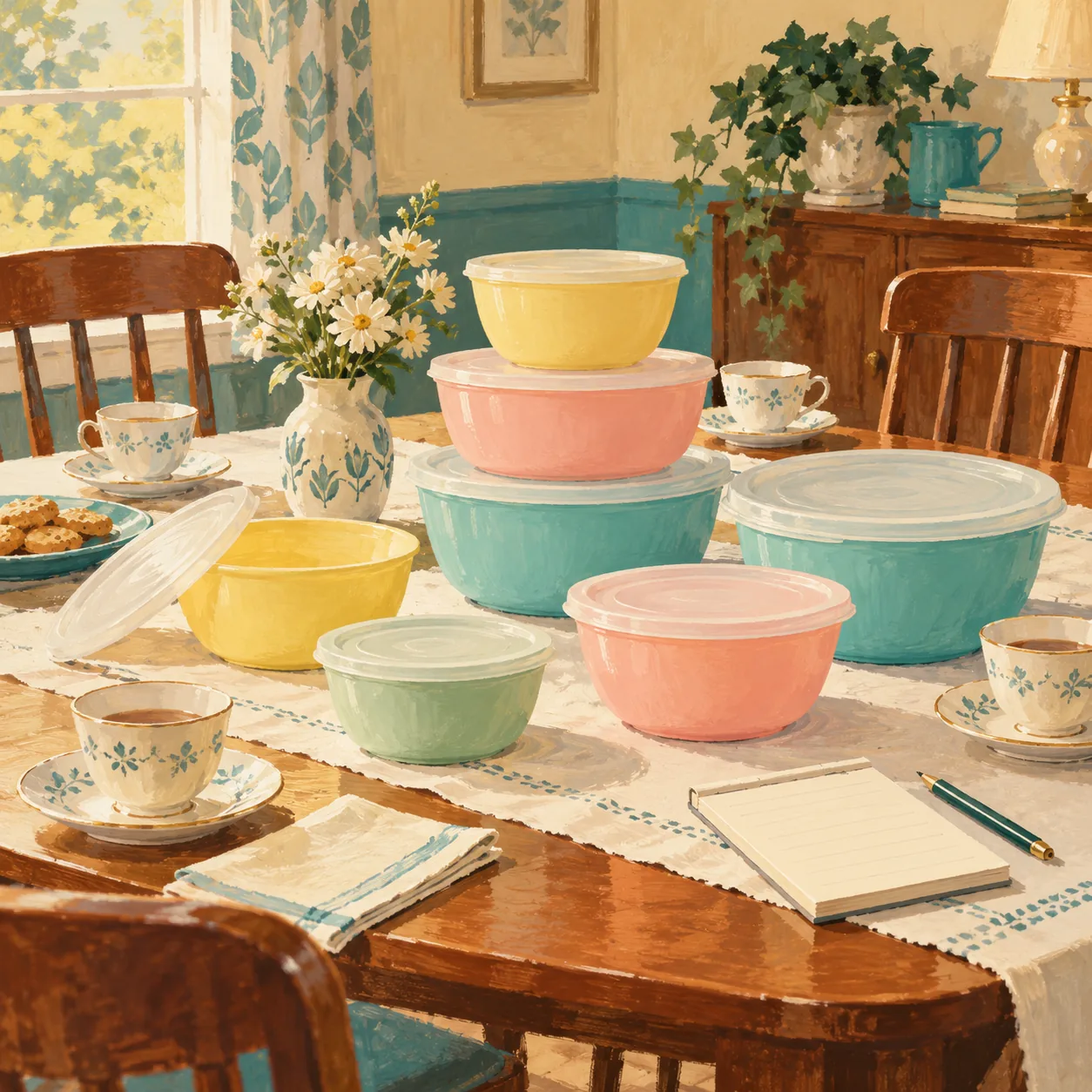
AI-generated contextual illustration — Plain pastel storage bowls and lids, teacups, chairs and a blank order pad evoke home-party selling; not the Smithsonian Tupperware bowl.

AI-generated contextual illustration — Plain pastel storage bowls and lids, teacups, chairs and a blank order pad evoke home-party selling; not the Smithsonian Tupperware bowl.

Credit: Original AI-generated contextual illustration made for Culture Ark using OpenAI image_gen.
Rights: AI-generated illustration; no third-party source license claimed.

An Artificial Mind Hive project by Austin Little · artificialmindhive.com

!AI-generated contextual illustration — Plain pastel storage bowls and lids, teacups, chairs and a blank order pad evoke home-party selling; not the…

Culture Ark · Browse the gallery · 60 illustrated picks on Apiary

CA0921 · ordinary life

Creator/community: Tupperware; Earl Tupper and Brownie Wise in the company history Place/era: United States; post-Second World War consumer culture

Generated interpretation

AI-generated contextual illustration — Plain pastel storage bowls and lids, teacups, chairs and a blank order pad evoke home-party selling; not the Smithsonian Tupperware bowl.

AI-generated contextual illustration — Plain pastel storage bowls and lids, teacups, chairs and a blank order pad evoke home-party selling; not the Smithsonian Tupperware bowl. Credit: Original AI-generated contextual illustration made for Culture Ark using OpenAI image_gen. Rights: AI-generated illustration; no third-party source license claimed. Changes: Resized within1400px and converted to WebP; no crop or substantive alteration. Image licence

No claim of exclusive ownership or copyright eligibility. Does not license or reproduce the underlying selected cultural work. Preserve the generated label and consult entry sources for documentary information.

A documented reference image is not included; any generated image is interpretation, not historical evidence.

History and context

A Tupperware bowl in the National Museum of American History links kitchen storage to a distinctive form of selling. The museum connects Earl Tupper's plastic products with Brownie Wise's development of home-party marketing, in which demonstrations and social gatherings helped explain and sell the containers. The household was therefore not only a destination for purchased goods: it could become a workplace and sales venue. The selected museum object anchors that larger story without assuming that its individual owner or date of use is known. Friendship, aspiration and commercial persuasion met around apparently ordinary domestic equipment.

What future readers can learn

Curatorial interpretation: Consumption relied on demonstrations, social relationships and gendered work, not simply on an object’s material properties.

Limits and cultural context

The source does not establish a precise manufacture date for this individual bowl in the information used here. Do not equate all home-party sellers’ experiences.

Where to learn more

Continue exploring

Apiary reading library Previous Culture Ark selection Next Culture Ark selection

Culture Ark is a curated archive, not a universal ranking. Interpretive images and source evidence serve different roles.


Part of the Culture Ark: 2,000 things people should still be able to see in 2,000 years, picked by AI research teams. Browse the gallery. The Culture Ark is an Artificial Mind Hive (AMH) project. AMH is owned by Austin Little.

Frequently asked
What is Tupperware bowl and home-party selling · Culture Ark about?
!AI-generated contextual illustration — Plain pastel storage bowls and lids, teacups, chairs and a blank order pad evoke home-party selling; not the…
What should you know about generated interpretation?
AI-generated contextual illustration — Plain pastel storage bowls and lids, teacups, chairs and a blank order pad evoke home-party selling; not the Smithsonian Tupperware bowl. Credit: Original AI-generated contextual illustration made for Culture Ark using OpenAI image_gen. Rights: AI-generated illustration; no…
What should you know about history and context?
A Tupperware bowl in the National Museum of American History links kitchen storage to a distinctive form of selling. The museum connects Earl Tupper's plastic products with Brownie Wise's development of home-party marketing, in which demonstrations and social gatherings helped explain and sell the containers. The…
What should you know about what future readers can learn?
Curatorial interpretation: Consumption relied on demonstrations, social relationships and gendered work, not simply on an object’s material properties.
What should you know about limits and cultural context?
The source does not establish a precise manufacture date for this individual bowl in the information used here. Do not equate all home-party sellers’ experiences.
References & sources
  1. Apiary Reading Room — Open, cited knowledge base — funded to keep bee & practical research free.
From the Apiary Reading Room. Opinion & editorial — not financial advice. We don't overclaim.
More from the Reading Room