Culture Ark · Browse the gallery · 60 illustrated picks on Apiary
CA0909 · ordinary life
Creator/community: Unidentified Japanese lacquer artisans Place/era: Japan, Edo period; 18th century
Generated interpretation
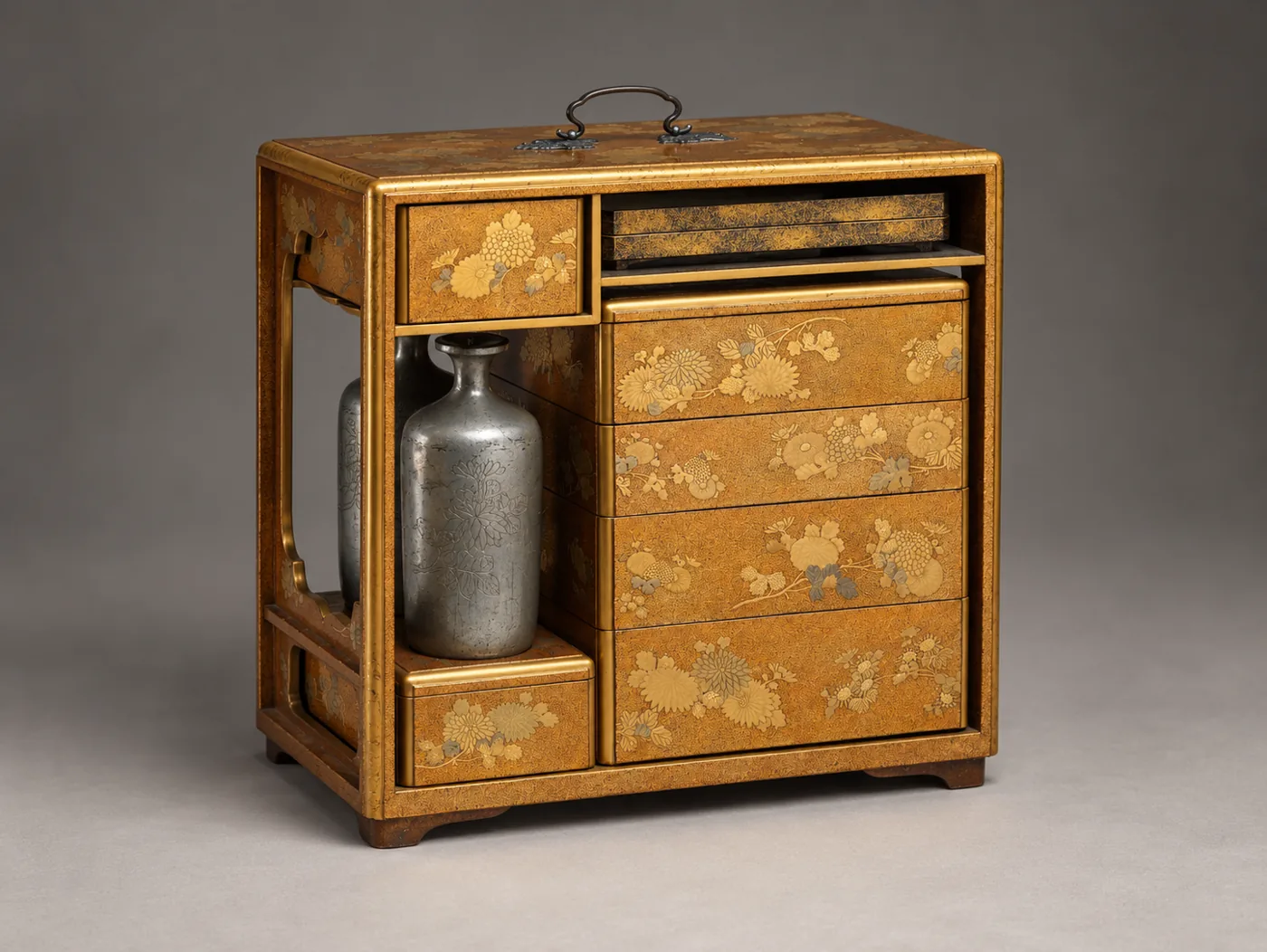
Mostly realistic generated object study for Chrysanthemum-decorated portable picnic set. Credit: AI-generated presentation illustration using built-in image_gen; guided by the credited public-domain Met reference photograph.. Rights: Generated output; no exclusive-rights or public-domain claim. Reference image is public domain under Met Open Access.. Changes: Resized within1400px and converted to WebP; no crop or substantive alteration. Image source Image licence
Lighting, color and small details are interpretive. This illustration is not evidence of original condition, contents or use. No promise of exclusive ownership, enforceable copyright or museum endorsement.
Documented reference / existing artwork
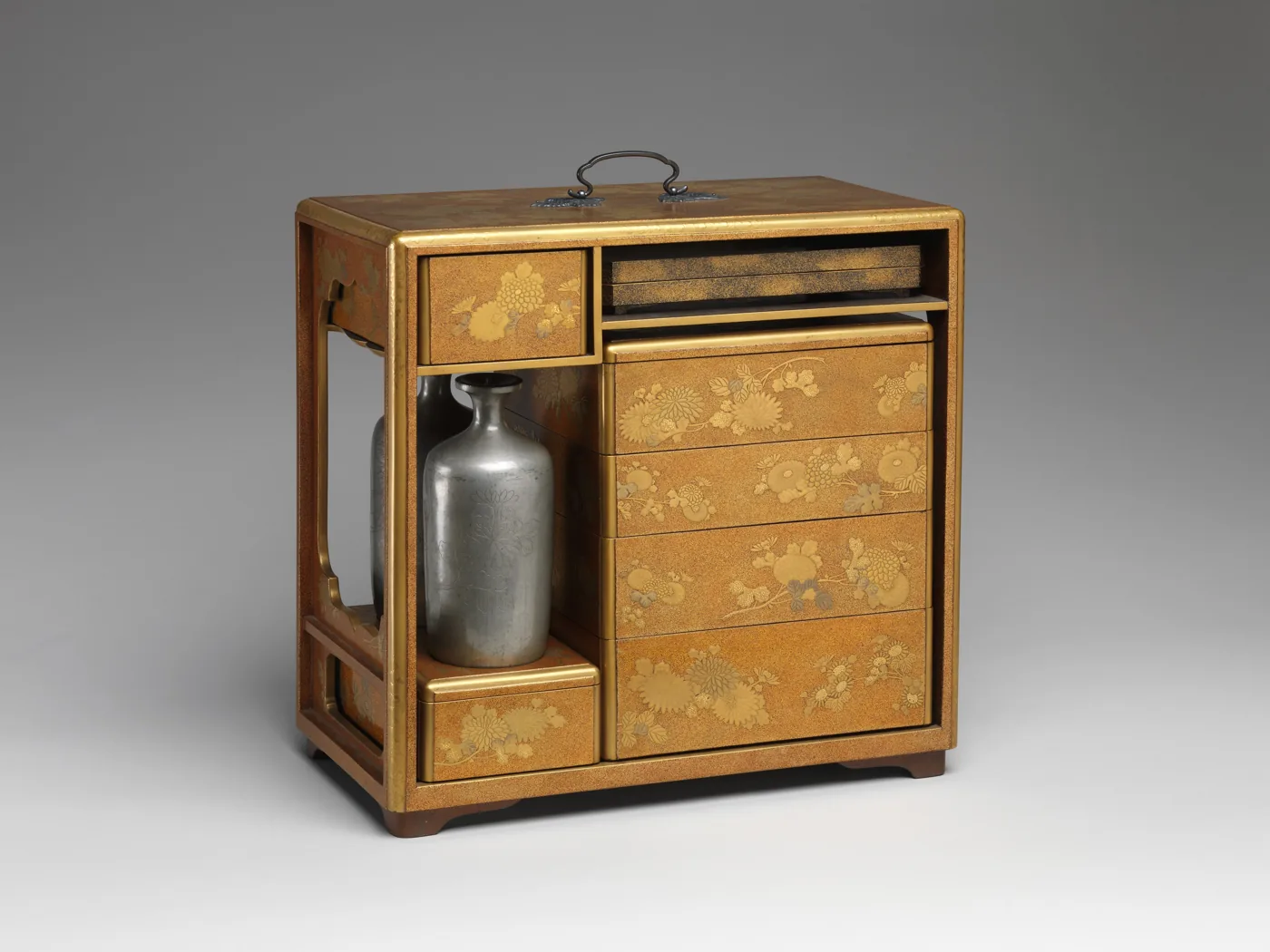
Portable Picnic Set (Sagejū) with Chrysanthemum Sprays. 18th century. The Metropolitan Museum of Art, 81.1.135a–e,g,i–t. Credit: Japan / The Metropolitan Museum of Art. Bequest of Stephen Whitney Phoenix, 1881. Rights: Public domain; Met Open Access. Changes: Resized within1400px and converted to WebP; no crop or substantive alteration. Image source Image licence
Met API explicitly marks isPublicDomain=true. Image reuse permission does not transfer ownership of the object or resolve cultural permissions, sacred significance, provenance or restitution questions. Retain the catalog context.
History and context
This portable picnic set combines lacquered wooden containers with pewter sake bottles. Gold and silver decoration places chrysanthemum sprays across the surfaces, turning a movable arrangement for food and drink into an object for display. The museum connects such sets with elite outdoor excursions and blossom-viewing festivities that also appealed to wealthy merchants. Stacked boxes, bottles and smaller dishes made an outing into a carefully organized social occasion. The selection shows leisure through the things people carried, rather than only through images of landscapes. Its elaborate decoration and cost are important limits: this is not a representative lunchbox for all eighteenth-century Japanese people.
What future readers can learn
Curatorial interpretation: Leisure can be planned through portable material arrangements, and dining outdoors can be a display of taste and resources.
Limits and cultural context
The museum’s list of foods describes the type of ensemble, not preserved contents from this particular set. Avoid treating it as an exact historical menu.
Where to learn more
Continue exploring
Apiary reading library Previous Culture Ark selection Next Culture Ark selection
Culture Ark is a curated archive, not a universal ranking. Interpretive images and source evidence serve different roles.
Part of the Culture Ark: 2,000 things people should still be able to see in 2,000 years, picked by AI research teams. Browse the gallery. The Culture Ark is an Artificial Mind Hive (AMH) project. AMH is owned by Austin Little.

Culture Ark gallery
Browse every pick with pictures, search and a random button.
Open the gallery →