Culture Ark · Browse the gallery · 60 illustrated picks on Apiary
CA0815 · food and drink
Creator/community: Ethiopian cooks, households and diaspora restaurateurs Place/era: Ethiopia and diaspora; longstanding foodway, Washington restaurant documentation 2011 onward
Generated interpretation
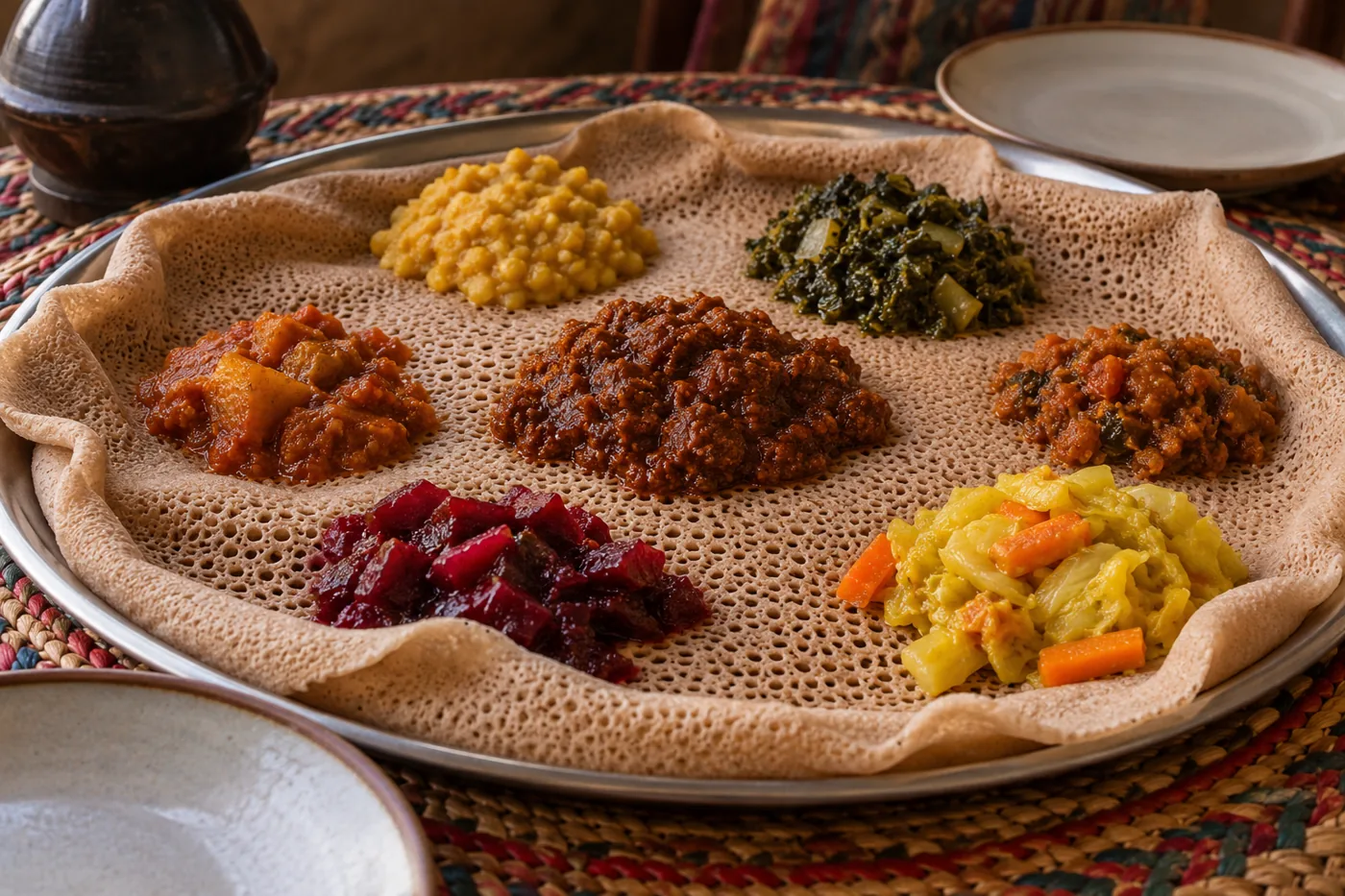
AI-created injera platter with invented accompaniments. It is not a photograph of DAS restaurant, its menu items or a universal Ethiopian meal; grain mixture and dishes are not specified by the image. Credit: AI-generated for Culture Ark using OpenAI image_gen. Rights: AI-generated output; no exclusive ownership or guaranteed copyrightability claimed. Changes: Resized within1400px and converted to WebP; no crop or substantive alteration.
Interpretive food illustration, not documentary evidence, a standardized recipe, exact ingredients or proportions, food-safety guidance, production instructions or a universal national version.
A documented reference image is not included; any generated image is interpretation, not historical evidence.
History and context
Injera is a tangy, fermented flatbread that can be both food and the surface on which other dishes are served. Ethiopian meals bring it together with preparations such as wot stews and tibs, with household and regional differences shaping the table. The Smithsonian preserves a menu from DAS Ethiopian restaurant in Washington, opened by Sileshi Alifom and Elizabeth Wossen in 2011, as evidence of food becoming a form of cultural introduction abroad. Their restaurant name refers to a tent used for family gatherings. Future readers should retain this combination of bread, shared dishes and hospitality, while remembering that a diaspora restaurant offers one situated interpretation rather than a complete map of Ethiopian eating.
What future readers can learn
A meal can be simultaneously a sensory experience, a way of sharing space and a means of explaining home abroad.
Limits and cultural context
Not every injera uses an identical grain mixture. Restaurant evidence is identified as diaspora practice, not a universal household rule.
Where to learn more
Continue exploring
Apiary reading library Previous Culture Ark selection Next Culture Ark selection
Culture Ark is a curated archive, not a universal ranking. Interpretive images and source evidence serve different roles.
Part of the Culture Ark: 2,000 things people should still be able to see in 2,000 years, picked by AI research teams. Browse the gallery. The Culture Ark is an Artificial Mind Hive (AMH) project. AMH is owned by Austin Little.

Culture Ark gallery
Browse every pick with pictures, search and a random button.
Open the gallery →