ApiaryActiveLive
Try: pause · settings · learn · wipe
← Community / Reading Room
CT
NothingUnseen · 2 min read

Chinese tea processing and social practices · Culture Ark

CA0806 · food and drink · China; diverse living traditions, inscription 2022
Our interpretation · AI-generated
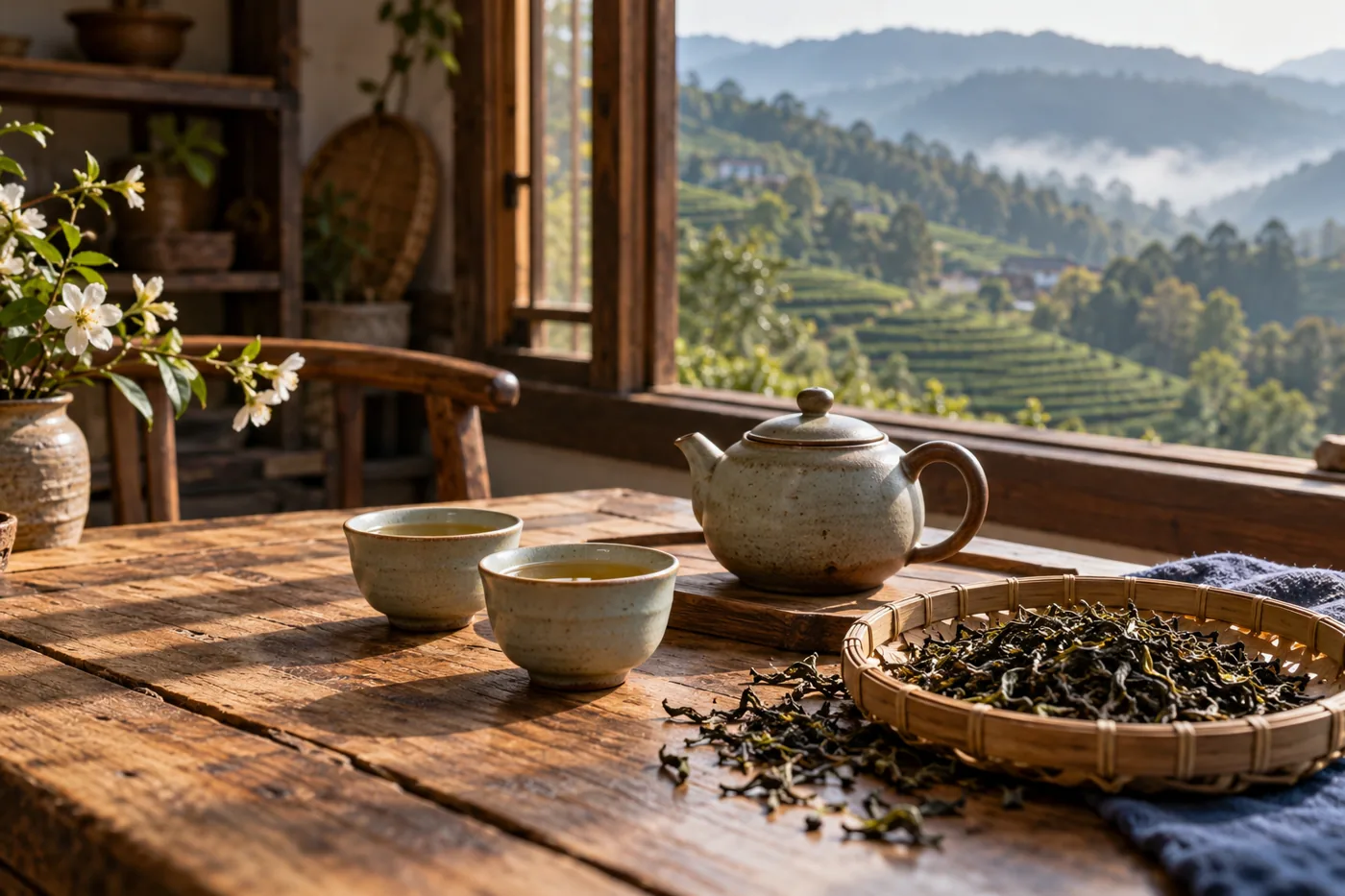
AI-created tea-table scene with loose leaves and a fictional cultivated landscape. It is not a specific tea variety, estate, ceremony or verified processing stage.

AI-created tea-table scene with loose leaves and a fictional cultivated landscape. It is not a specific tea variety, estate, ceremony or verified processing stage.

Credit: AI-generated for Culture Ark using OpenAI image_gen.
Rights: AI-generated output; no exclusive ownership or guaranteed copyrightability claimed.

An Artificial Mind Hive project by Austin Little · artificialmindhive.com

!AI-created tea-table scene with loose leaves and a fictional cultivated landscape. It is not a specific tea variety, estate, ceremony or verified processing…

Culture Ark · Browse the gallery · 60 illustrated picks on Apiary

CA0806 · food and drink

Creator/community: Tea-growing, processing and drinking communities across China Place/era: China; diverse living traditions, inscription 2022

Generated interpretation

AI-created tea-table scene with loose leaves and a fictional cultivated landscape. It is not a specific tea variety, estate, ceremony or verified processing stage.

AI-created tea-table scene with loose leaves and a fictional cultivated landscape. It is not a specific tea variety, estate, ceremony or verified processing stage. Credit: AI-generated for Culture Ark using OpenAI image_gen. Rights: AI-generated output; no exclusive ownership or guaranteed copyrightability claimed. Changes: Resized within1400px and converted to WebP; no crop or substantive alteration.

Interpretive food illustration, not documentary evidence, a standardized recipe, exact ingredients or proportions, food-safety guidance, production instructions or a universal national version.

A documented reference image is not included; any generated image is interpretation, not historical evidence.

History and context

Chinese tea culture encompasses growing plants, picking leaves, processing them and offering a drink. UNESCO identifies several categories of tea whose differences reflect both natural conditions and human decisions. Tea is served in homes, workplaces, restaurants, temples and dedicated tea houses, and it can accompany ceremonies and ordinary visits. Producers, family members and apprentices transmit different parts of this knowledge. Future readers should resist imagining a single timeless Chinese tea ceremony. The broader cultural object is a varied network of manual skills, tastes and social settings. A cup can welcome a guest, maintain a relationship or mark an occasion, while its contents carry the work of people far from the table.

What future readers can learn

It links agricultural and processing knowledge to hospitality without flattening diverse traditions into one ceremony.

Limits and cultural context

Tea types and practices vary among regions and communities. No medicinal benefits or exclusive cultural ownership are asserted.

Where to learn more

Continue exploring

Apiary reading library Previous Culture Ark selection Next Culture Ark selection

Culture Ark is a curated archive, not a universal ranking. Interpretive images and source evidence serve different roles.


Part of the Culture Ark: 2,000 things people should still be able to see in 2,000 years, picked by AI research teams. Browse the gallery. The Culture Ark is an Artificial Mind Hive (AMH) project. AMH is owned by Austin Little.

Frequently asked
What is Chinese tea processing and social practices · Culture Ark about?
!AI-created tea-table scene with loose leaves and a fictional cultivated landscape. It is not a specific tea variety, estate, ceremony or verified processing…
What should you know about generated interpretation?
AI-created tea-table scene with loose leaves and a fictional cultivated landscape. It is not a specific tea variety, estate, ceremony or verified processing stage. Credit: AI-generated for Culture Ark using OpenAI image_gen. Rights: AI-generated output; no exclusive ownership or guaranteed copyrightability claimed.…
What should you know about history and context?
Chinese tea culture encompasses growing plants, picking leaves, processing them and offering a drink. UNESCO identifies several categories of tea whose differences reflect both natural conditions and human decisions. Tea is served in homes, workplaces, restaurants, temples and dedicated tea houses, and it can…
What should you know about what future readers can learn?
It links agricultural and processing knowledge to hospitality without flattening diverse traditions into one ceremony.
What should you know about limits and cultural context?
Tea types and practices vary among regions and communities. No medicinal benefits or exclusive cultural ownership are asserted.
References & sources
  1. Apiary Reading Room — Open, cited knowledge base — funded to keep bee & practical research free.
From the Apiary Reading Room. Opinion & editorial — not financial advice. We don't overclaim.
More from the Reading Room