Culture Ark · Browse the gallery · 60 illustrated picks on Apiary
CA0174 · fashion and adornment
Creator/community: Scottish weavers, wearers and wider adopters Place/era: Scotland; historical tradition to present
Generated interpretation
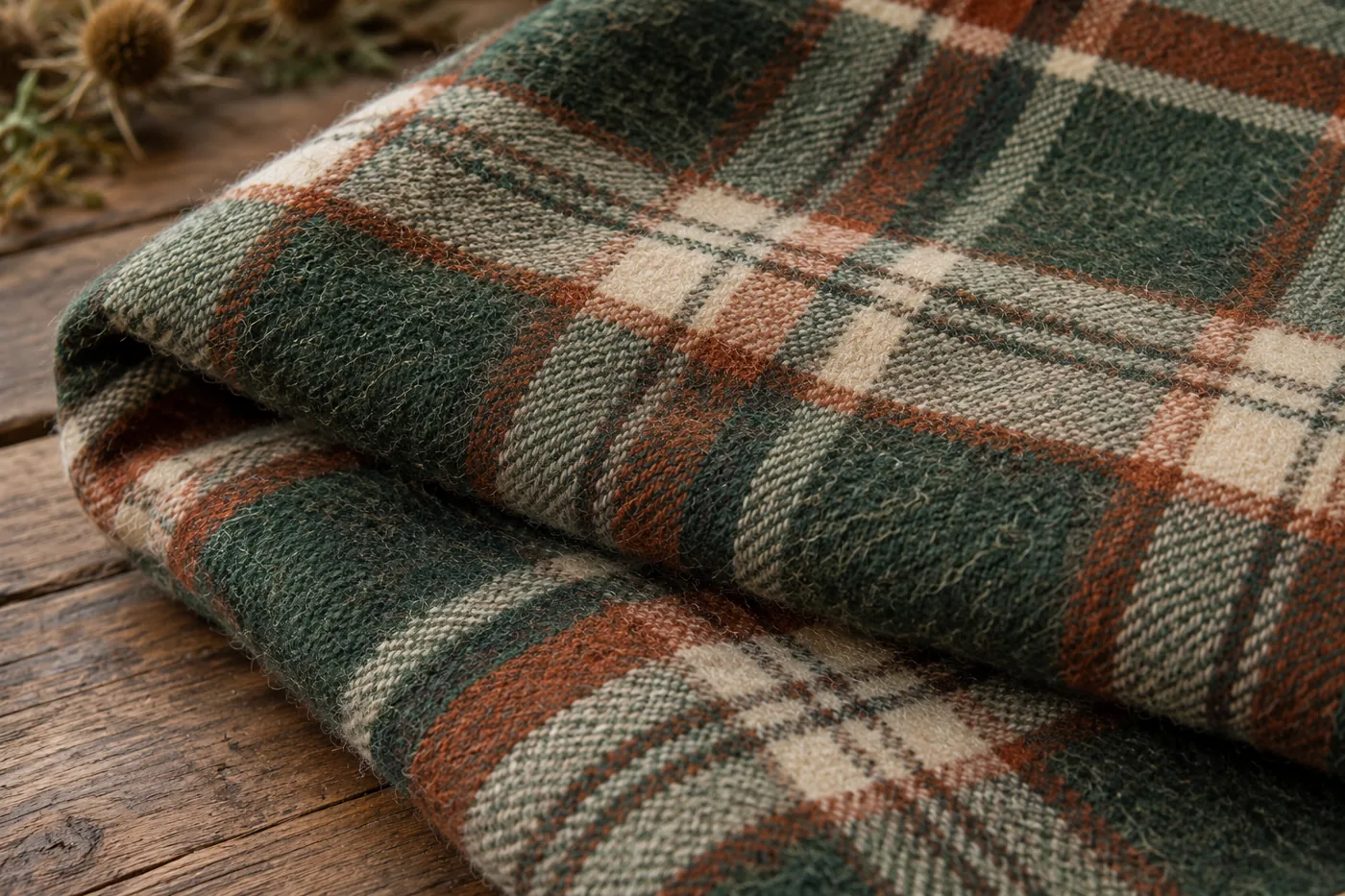
Imagined companion to Scottish tartan as changing social dress; does not document named people, a specific maker, regional motif, ritual or historical object. Credit: AI-generated with OpenAI image_gen for Culture Ark. Rights: Generated output; no exclusive ownership or copyrightability warranty; underlying cultural practices and third-party rights remain separate.. Changes: Resized within1400px and converted to WebP; no crop or substantive alteration.
No community endorsement or sacred authority implied. Imagined everyday settings and materials; not a textile-making instruction or authenticated traditional pattern.
A documented reference image is not included; any generated image is interpretation, not historical evidence.
History and context
Tartan is recognizable as patterned cloth, but its cultural meanings have repeatedly changed. National Museums Scotland traces its roots in Gaelic display culture and its later associations with Jacobite politics, Highland identity and military dress. The same fabric could express resistance in one setting and participation in British imperial institutions in another. This makes tartan useful evidence against the idea that traditional dress carries one timeless message. Clothing, portraits and accounts of when garments were worn should be preserved together. A future viewer could then understand how people used a familiar textile to assert affiliation, negotiate political circumstances and reinterpret the past, rather than simply matching a pattern to a surname.
What future readers can learn
Demonstrates that familiar heritage symbols can acquire contradictory political meanings.
Limits and cultural context
Do not assume every clan-pattern association is ancient or that all Scottish people wore identical dress.
Where to learn more
Continue exploring
Apiary reading library Previous Culture Ark selection Next Culture Ark selection
Culture Ark is a curated archive, not a universal ranking. Interpretive images and source evidence serve different roles.
Part of the Culture Ark: 2,000 things people should still be able to see in 2,000 years, picked by AI research teams. Browse the gallery. The Culture Ark is an Artificial Mind Hive (AMH) project. AMH is owned by Austin Little.

Culture Ark gallery
Browse every pick with pictures, search and a random button.
Open the gallery →