Culture Ark · Browse the gallery · 60 illustrated picks on Apiary
CA0172 · fashion and adornment
Creator/community: Blaudruck, Modrotisk, Kékfestés and Modrotlač workshop communities Place/era: Austria, Czechia, Germany, Hungary and Slovakia; living craft
Generated interpretation
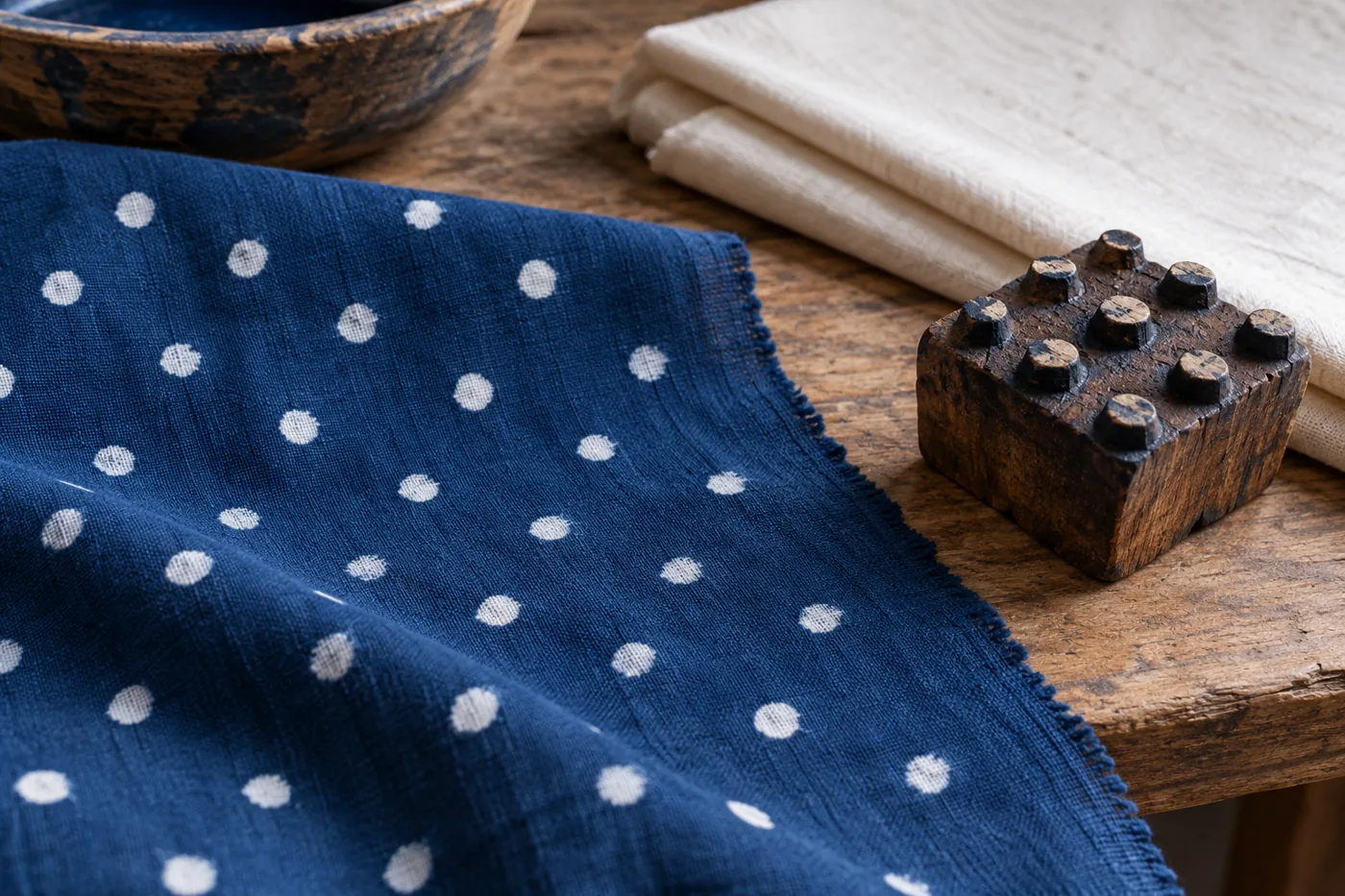
Imagined companion to Central European indigo resist printing; does not document named people, a specific maker, regional motif, ritual or historical object. Credit: AI-generated with OpenAI image_gen for Culture Ark. Rights: Generated output; no exclusive ownership or copyrightability warranty; underlying cultural practices and third-party rights remain separate.. Changes: Resized within1400px and converted to WebP; no crop or substantive alteration.
No community endorsement or sacred authority implied. Imagined everyday settings and materials; not a textile-making instruction or authenticated traditional pattern.
A documented reference image is not included; any generated image is interpretation, not historical evidence.
History and context
This textile practice creates pale patterns on blue cloth by protecting selected areas before dyeing. Makers print a resist paste using patterned blocks, then immerse the cloth in indigo. Removing the resist reveals the design. Blocks may carry local plants, animals, religious motifs or more widely shared ornament. The skill extends beyond stamping a pattern: preparing and finishing the textile and managing the dye process are essential. Small family workshops have been important places of learning and continuity. Their journals, tools and practical demonstrations make knowledge tangible. For an archive, a finished piece should be accompanied by an explanation of the sequence that produced its apparently simple contrast of white and blue.
What future readers can learn
Shows that a surface pattern records a chain of coordinated material decisions.
Limits and cultural context
Related resist-dye practices exist worldwide; this entry concerns the named Central European traditions.
Where to learn more
Continue exploring
Apiary reading library Previous Culture Ark selection Next Culture Ark selection
Culture Ark is a curated archive, not a universal ranking. Interpretive images and source evidence serve different roles.
Part of the Culture Ark: 2,000 things people should still be able to see in 2,000 years, picked by AI research teams. Browse the gallery. The Culture Ark is an Artificial Mind Hive (AMH) project. AMH is owned by Austin Little.

Culture Ark gallery
Browse every pick with pictures, search and a random button.
Open the gallery →