Culture Ark · Browse the gallery · 60 illustrated picks on Apiary
CA0170 · fashion and adornment
Creator/community: Palestinian embroiderers in Palestine and diaspora Place/era: Palestine and diaspora; living tradition
Generated interpretation
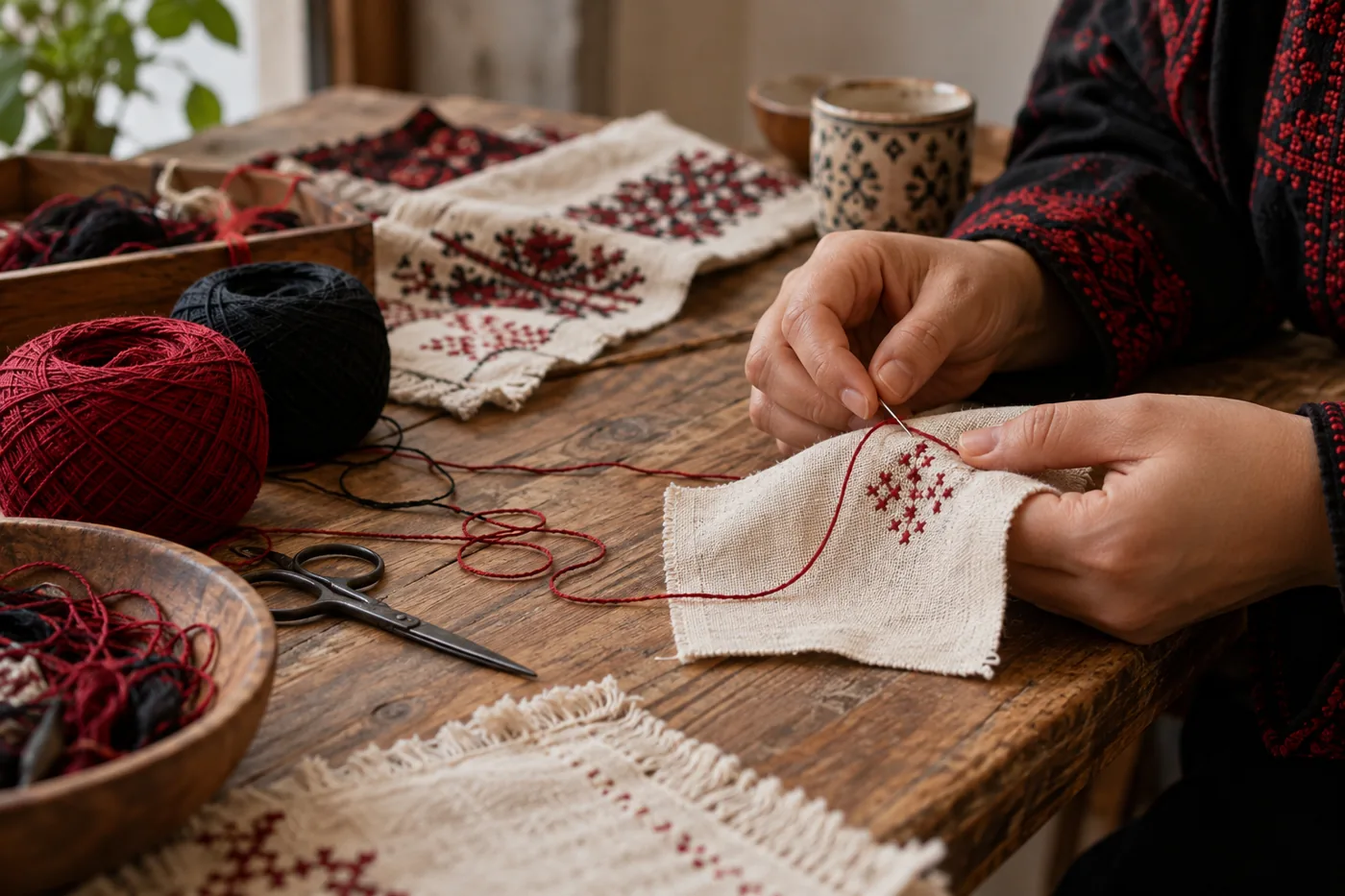
Imagined companion to Palestinian embroidery, or tatreez; does not document named people, a specific maker, regional motif, ritual or historical object. Credit: AI-generated with OpenAI image_gen for Culture Ark. Rights: Generated output; no exclusive ownership or copyrightability warranty; underlying cultural practices and third-party rights remain separate.. Changes: Resized within1400px and converted to WebP; no crop or substantive alteration.
No community endorsement or sacred authority implied. Imagined everyday settings and materials; not a textile-making instruction or authenticated traditional pattern.
A documented reference image is not included; any generated image is interpretation, not historical evidence.
History and context
Palestinian embroidery turns clothing and other textiles into detailed records of skill, identity and social connection. Traditional dress often places dense stitched ornament on the chest, sleeves and vertical panels of a thob. Designs and colour choices have expressed regional affiliations and other aspects of a wearer's life, although meanings require context. The practice extends beyond rural origins into towns, refugee communities and the diaspora. Women learn and work together in homes, cooperatives and training settings, sometimes earning income through their embroidery. A future archive should identify makers and places rather than presenting these garments as anonymous national symbols. Their stitches belong to lived histories and continuing creative decisions.
What future readers can learn
Shows how portable textiles sustain identity across generations and displacement.
Limits and cultural context
Regional meanings are not fixed codes; present conflict and displacement without reducing makers to those experiences.
Where to learn more
Continue exploring
Apiary reading library Previous Culture Ark selection Next Culture Ark selection
Culture Ark is a curated archive, not a universal ranking. Interpretive images and source evidence serve different roles.
Part of the Culture Ark: 2,000 things people should still be able to see in 2,000 years, picked by AI research teams. Browse the gallery. The Culture Ark is an Artificial Mind Hive (AMH) project. AMH is owned by Austin Little.

Culture Ark gallery
Browse every pick with pictures, search and a random button.
Open the gallery →