Culture Ark · Browse the gallery · 60 illustrated picks on Apiary
CA0157 · festivals and rituals
Creator/community: Oruro carnival fraternities, artisans and devotees Place/era: Oruro, Bolivia; annual carnival, inscription 2008
Generated interpretation
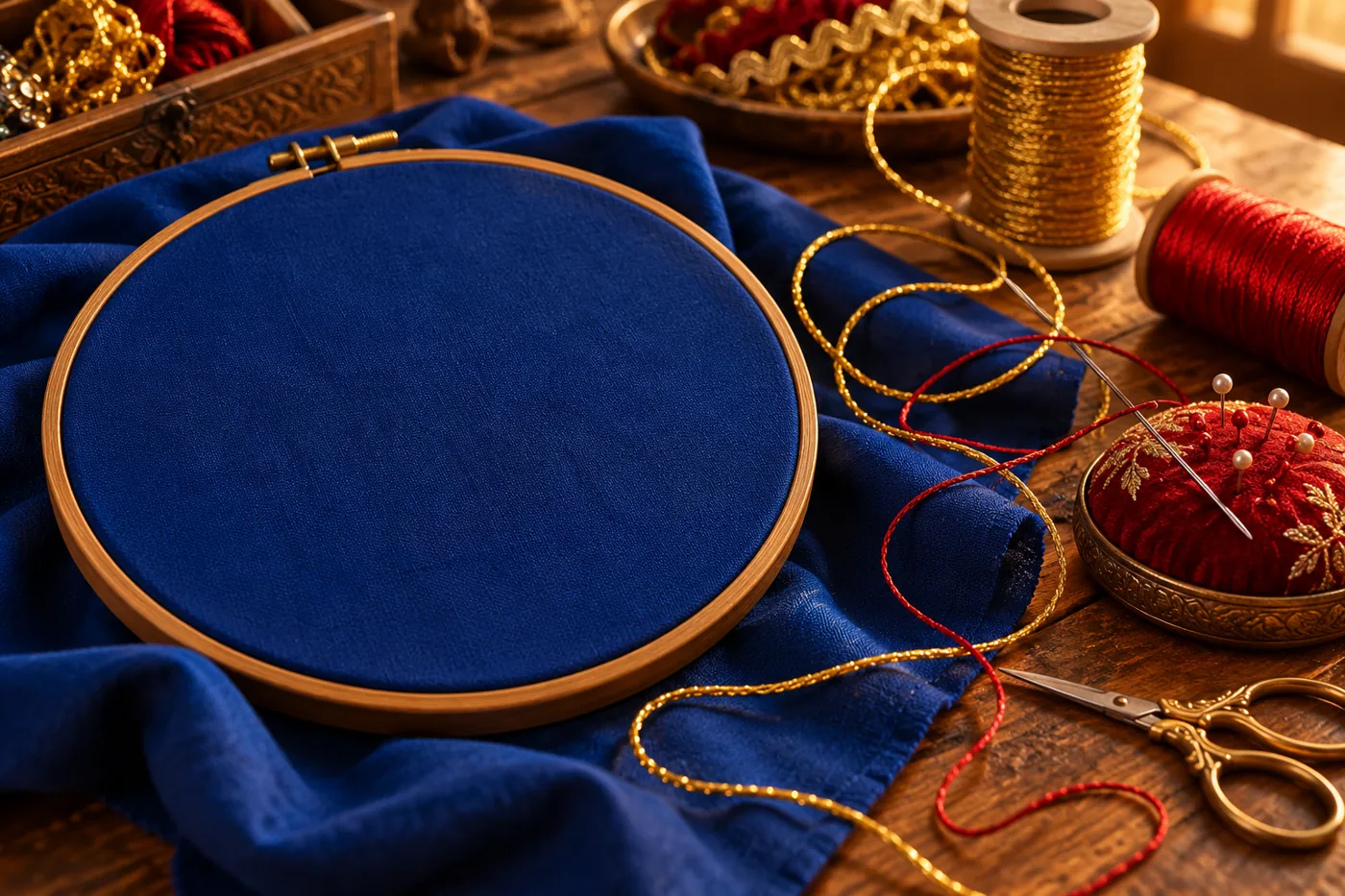
Unpatterned blue fabric in an embroidery hoop beside red and gold-colored threads and a pincushion. Credit: AI-generated for Culture Ark using OpenAI image_gen, 2026-11-01. Rights: AI-generated output; no exclusive ownership, public-domain status or guaranteed copyrightability claimed. Source photography and community cultural expressions retain their separate rights.. Changes: Resized within1400px and converted to WebP; no crop or substantive alteration. Image licence
Original thematic interpretation, not a cover, manuscript facsimile, historical photograph, sacred ceremony or authenticated object. No rights in source photography or community cultural expressions transferred.
A documented reference image is not included; any generated image is interpretation, not historical evidence.
History and context
Oruro Carnival joins an Andean ceremonial landscape to a major procession of costumed groups. UNESCO relates its history to Uru sacred practices, colonial restrictions and the incorporation of Christian forms. Masks, embroidered clothing and collective performance give the event a rich material life, while the entrada procession brings groups into a shared route through the town. Future readers should resist reading its imagery as simple decoration. A mask can sit at the meeting point of devotion, historical memory and a performer’s commitment. The carnival also illustrates how cultural practices can survive political pressure through adaptation, without remaining identical to their earlier forms or meanings.
What future readers can learn
It shows historical adaptation and layered religious expression through public art and procession.
Limits and cultural context
Historical origin accounts can be complex. Do not present every current costume as an unchanged precolonial survival or reuse older crowd totals as contemporary facts.
Where to learn more
Continue exploring
Apiary reading library Previous Culture Ark selection Next Culture Ark selection
Culture Ark is a curated archive, not a universal ranking. Interpretive images and source evidence serve different roles.
Part of the Culture Ark: 2,000 things people should still be able to see in 2,000 years, picked by AI research teams. Browse the gallery. The Culture Ark is an Artificial Mind Hive (AMH) project. AMH is owned by Austin Little.

Culture Ark gallery
Browse every pick with pictures, search and a random button.
Open the gallery →