Culture Ark · Browse the gallery · 60 illustrated picks on Apiary
CA0143 · festivals and rituals
Creator/community: Chinese households, communities and festival craftspeople Place/era: China and Chinese communities; living new year practices, inscription 2024
Generated interpretation
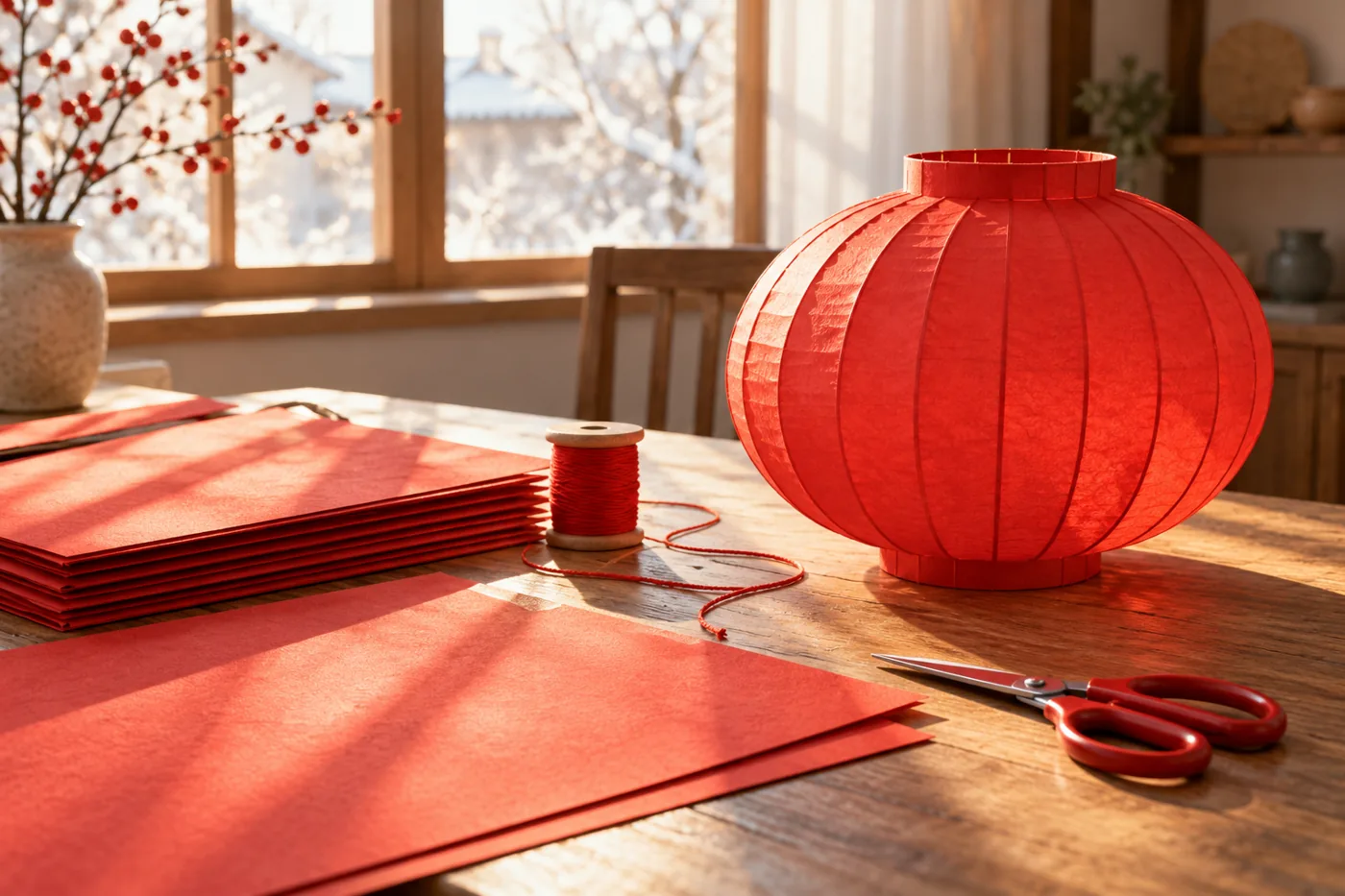
Plain red paper, scissors, thread and an undecorated red lantern on a sunlit table. Credit: AI-generated for Culture Ark using OpenAI image_gen, 2026-11-01. Rights: AI-generated output; no exclusive ownership, public-domain status or guaranteed copyrightability claimed. Source photography and community cultural expressions retain their separate rights.. Changes: Resized within1400px and converted to WebP; no crop or substantive alteration. Image licence
Original thematic interpretation, not a cover, manuscript facsimile, historical photograph, sacred ceremony or authenticated object. No rights in source photography or community cultural expressions transferred.
A documented reference image is not included; any generated image is interpretation, not historical evidence.
History and context
Spring Festival marks the first day of the first month of the Chinese calendar through preparations and gatherings that cross from one year into the next. UNESCO describes cleaning homes, preparing provisions, a family meal on New Year’s Eve and visits to relatives and neighbours. Decorations and public performances depend on their own craft and teaching traditions. The festival is therefore not a single spectacle but a sequence of domestic and collective actions. Future readers should study who travels, who cooks, who hosts and how greetings are exchanged. These details explain how a calendar becomes a shared social experience and how people affirm relationships through repetition and reunion.
What future readers can learn
It records the household labour and relationships behind a major public celebration.
Limits and cultural context
The Chinese Spring Festival is not identical to every Asian lunar new year observance. Family practices vary and participation should not be assumed for every Chinese person.
Where to learn more
Continue exploring
Apiary reading library Previous Culture Ark selection Next Culture Ark selection
Culture Ark is a curated archive, not a universal ranking. Interpretive images and source evidence serve different roles.
Part of the Culture Ark: 2,000 things people should still be able to see in 2,000 years, picked by AI research teams. Browse the gallery. The Culture Ark is an Artificial Mind Hive (AMH) project. AMH is owned by Austin Little.

Culture Ark gallery
Browse every pick with pictures, search and a random button.
Open the gallery →