Culture Ark · Browse the gallery · 60 illustrated picks on Apiary
CA0142 · festivals and rituals
Creator/community: Hindu celebrating communities, with distinct related observances in other faith communities Place/era: South Asia and diaspora; living festival of lights
Generated interpretation
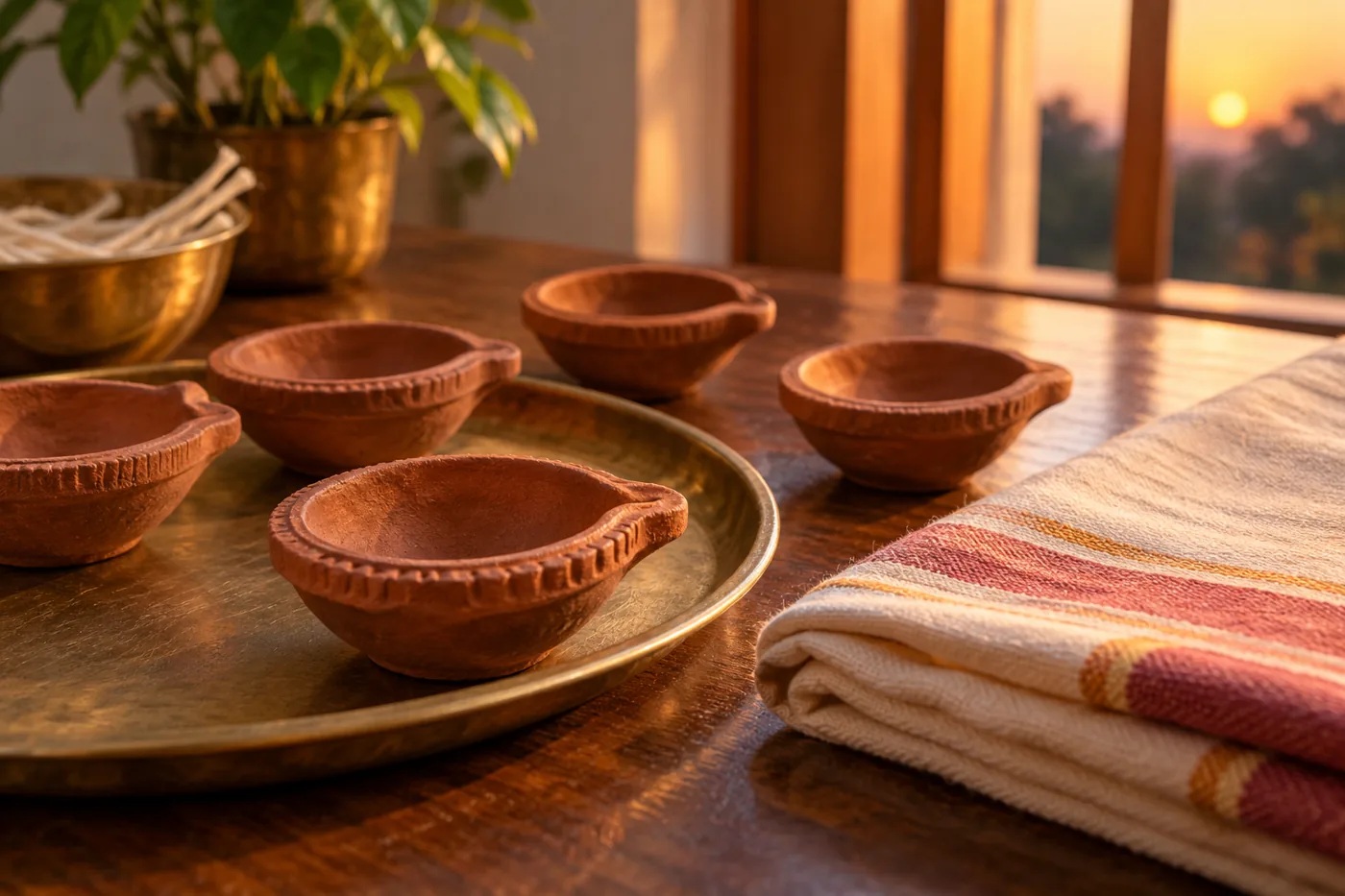
Unlit earthen lamps beside a folded cloth in warm evening light. Credit: AI-generated for Culture Ark using OpenAI image_gen, 2026-11-01. Rights: AI-generated output; no exclusive ownership, public-domain status or guaranteed copyrightability claimed. Source photography and community cultural expressions retain their separate rights.. Changes: Resized within1400px and converted to WebP; no crop or substantive alteration. Image licence
Original thematic interpretation, not a cover, manuscript facsimile, historical photograph, sacred ceremony or authenticated object. No rights in source photography or community cultural expressions transferred.
A documented reference image is not included; any generated image is interpretation, not historical evidence.
History and context
Diwali, also called Deepavali, makes light a visible part of celebration, devotion and family visiting. Lamps and other decorations transform domestic and public spaces, while food, sweets and festive clothing contribute to gatherings. The Smithsonian’s account describes worship of Lakshmi and the significance of light as a sign of knowledge and hope. These are important examples rather than a complete account of every observance. A future reader should ask what a particular family’s lights mean to them and which stories accompany them. The festival demonstrates how a recurring visual gesture can connect household work, religious imagination and a wider sense of belonging across a dispersed community.
What future readers can learn
It links a widely recognizable visual form with diverse religious meanings and family practices.
Limits and cultural context
Practices and narratives differ by region and faith; Sikh and Jain observances should not be collapsed into a single Hindu account. Fireworks are contextual, not instructions or an assumed universal custom.
Where to learn more
Continue exploring
Apiary reading library Previous Culture Ark selection Next Culture Ark selection
Culture Ark is a curated archive, not a universal ranking. Interpretive images and source evidence serve different roles.
Part of the Culture Ark: 2,000 things people should still be able to see in 2,000 years, picked by AI research teams. Browse the gallery. The Culture Ark is an Artificial Mind Hive (AMH) project. AMH is owned by Austin Little.

Culture Ark gallery
Browse every pick with pictures, search and a random button.
Open the gallery →