Culture Ark · Browse the gallery · 60 illustrated picks on Apiary
CA0159 · festivals and rituals
Creator/community: Japanese households and Buddhist communities Place/era: Japan; living summer ancestor observances
Generated interpretation
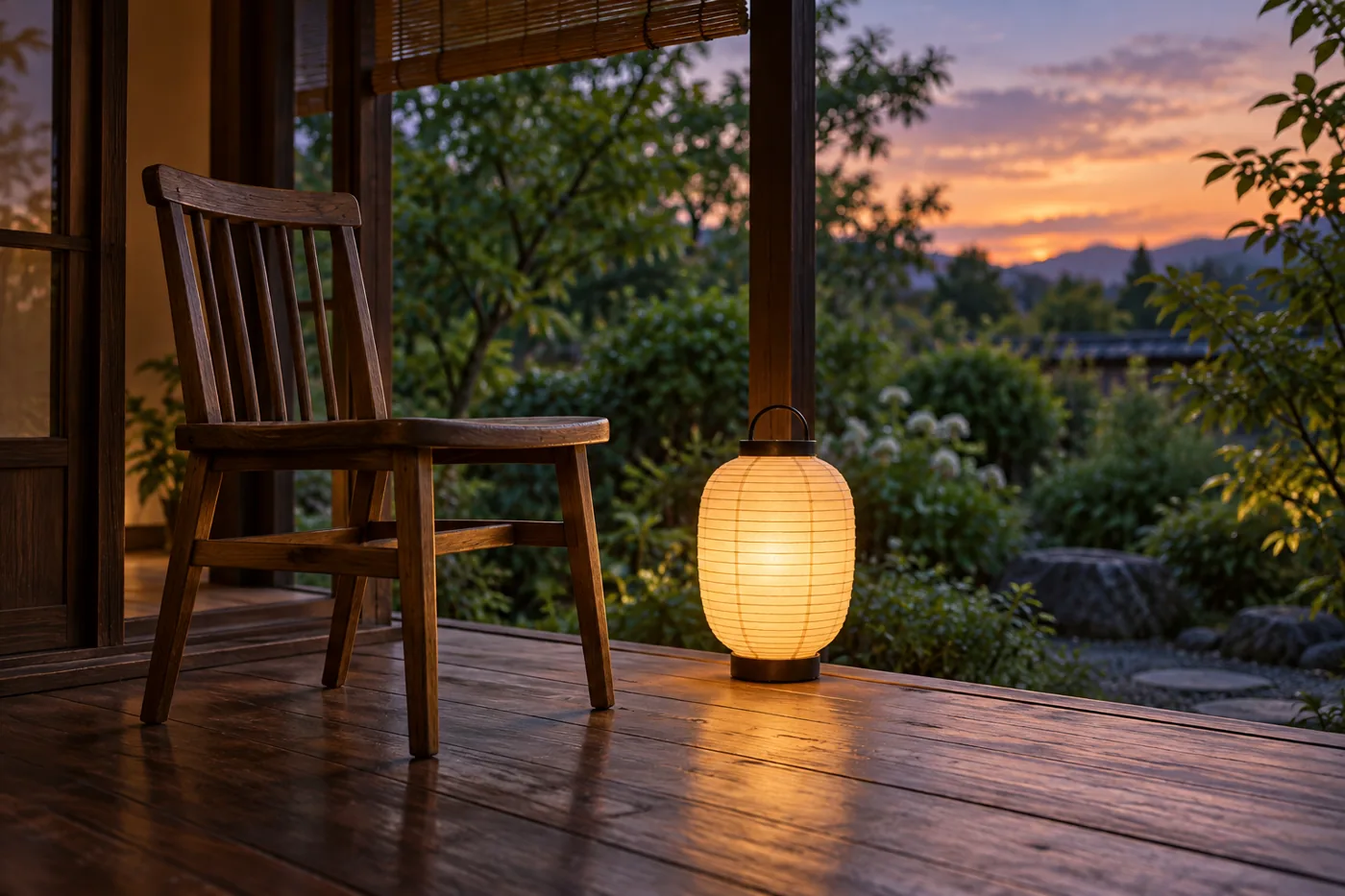
An empty wooden chair and unlettered glowing lantern on an imagined veranda at summer dusk. Credit: AI-generated for Culture Ark using OpenAI image_gen, 2026-11-01. Rights: AI-generated output; no exclusive ownership, public-domain status or guaranteed copyrightability claimed. Source photography and community cultural expressions retain their separate rights.. Changes: Resized within1400px and converted to WebP; no crop or substantive alteration. Image licence
Original thematic interpretation, not a cover, manuscript facsimile, historical photograph, sacred ceremony or authenticated object. No rights in source photography or community cultural expressions transferred.
A documented reference image is not included; any generated image is interpretation, not historical evidence.
History and context
Obon is a period of ancestral remembrance associated with the belief that deceased family members return temporarily to visit the living. Japanese cultural accounts describe household preparations, grave visits, offerings and regional events; lanterns and dance gatherings can accompany the observance. Its meanings extend beyond what a visitor sees at a public festival. Future readers should ask how a family remembers particular people and which places it returns to during this period. The practice shows remembrance being carried through repeated actions and seasonal return. It also reminds an archive that grief, gratitude and celebration can coexist without being reducible to a single mood or a standard public ceremony.
What future readers can learn
It preserves family remembrance as a seasonal activity involving places, objects and relationships.
Limits and cultural context
Timing and customs differ by locality and household. Ancestral return is a religious or cultural belief, not a factual claim about the dead; do not assume all Japanese people observe Obon.
Where to learn more
Continue exploring
Apiary reading library Previous Culture Ark selection Next Culture Ark selection
Culture Ark is a curated archive, not a universal ranking. Interpretive images and source evidence serve different roles.
Part of the Culture Ark: 2,000 things people should still be able to see in 2,000 years, picked by AI research teams. Browse the gallery. The Culture Ark is an Artificial Mind Hive (AMH) project. AMH is owned by Austin Little.

Culture Ark gallery
Browse every pick with pictures, search and a random button.
Open the gallery →