
Culture Ark · Browse the gallery · 60 illustrated picks on Apiary
CA0134 · craft and material culture
Creator/community: Papuan communities and noken makers Place/era: Papua in Indonesia; living fibre-bag craft, urgent safeguarding inscription 2012
Generated interpretation
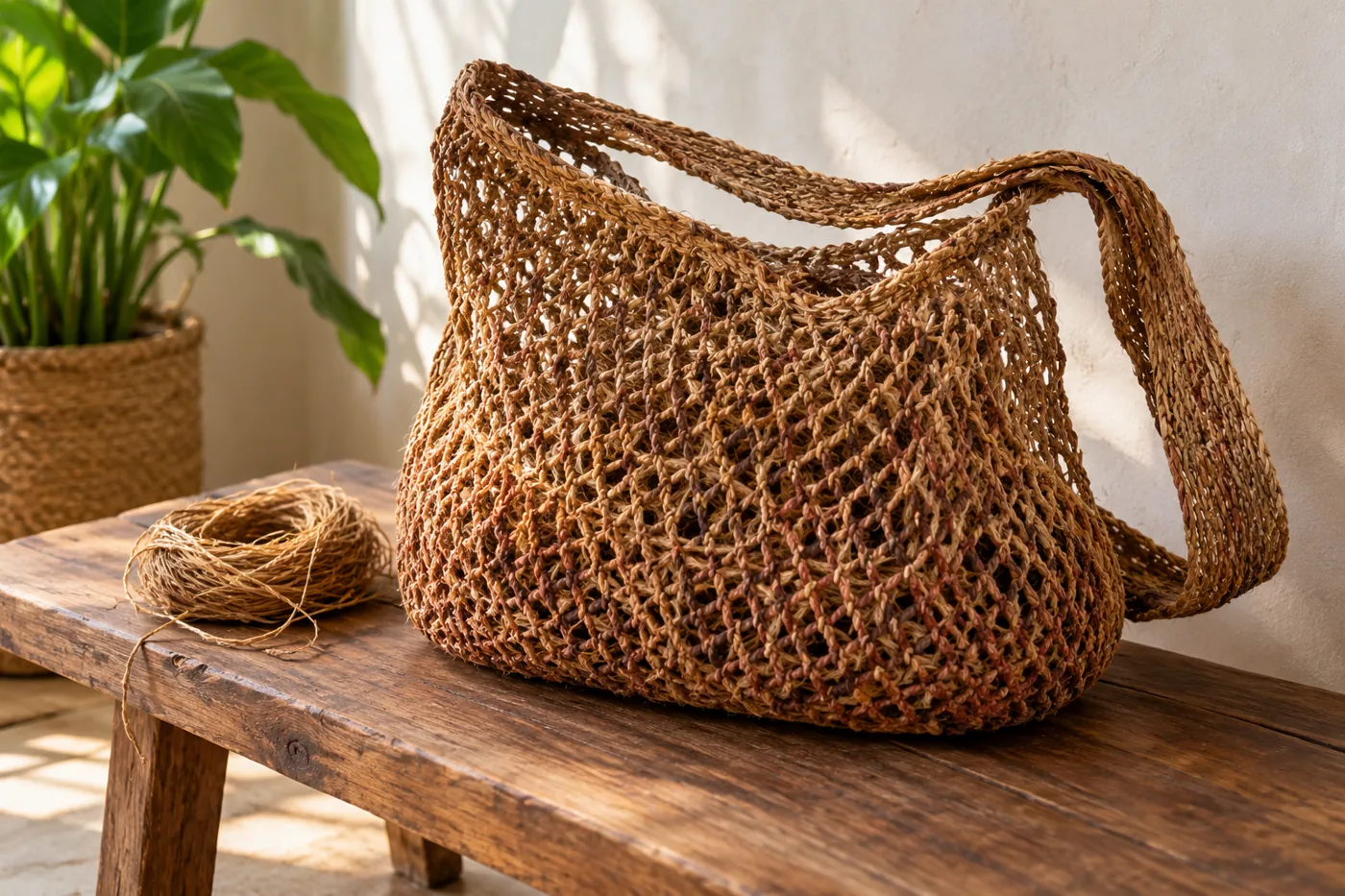
An imagined noken-inspired open-mesh fibre bag emphasizes handworked texture. It is not the pictured person’s bag or a universal model for every Papuan community. Credit: AI-generated for Culture Ark using OpenAI image_gen. Rights: AI-generated output; no exclusive ownership or guaranteed copyrightability claimed. Changes: Resized within1400px and converted to WebP; no crop or substantive alteration.
Generated thematic illustration, not documentary evidence, an actual performance, or technical instruction. Cultural knowledge, underlying works, names and personality rights remain separate.
Documented reference / existing artwork
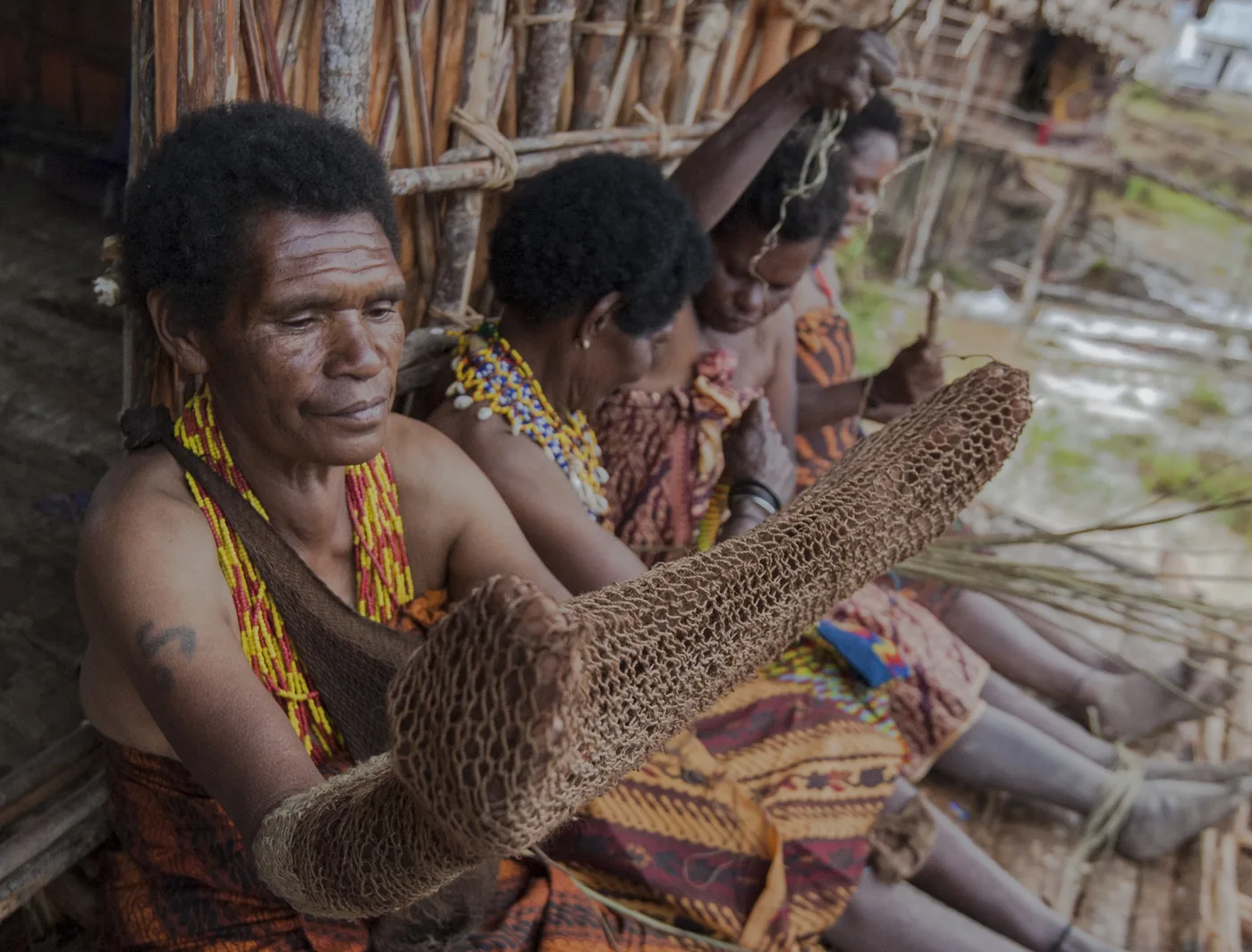
A woman holding a noken bag, photographed in 2016. Credit: Keenan63. Rights: CC BY-SA 4.0. Changes: Resized within1400px and converted to WebP; no crop or substantive alteration. Image source Image licence
Respectful cultural context required. Identifiable person; no endorsement/model-release claim. Photograph license is not a claim of ownership over traditional craft. Credit the creator, link the license and indicate any changes. Adapted versions must use the same or a compatible ShareAlike license.
History and context
Noken are knotted or woven bags whose uses range from carrying produce and household belongings to ceremonial exchange. The UNESCO record describes handmade fibres prepared from particular plants and worked into bags of different sizes and patterns. Making methods vary between communities. The object joins material knowledge, manual skill and daily movement: it can be worn, carried, stored at home or offered to another person. Future readers should not assume that a bag is culturally insignificant because it is useful. An archive that records only finished examples would miss the makers’ knowledge and the changing conditions that determine whether younger people can learn and sustain the practice.
What future readers can learn
It reveals an everyday container as a carrier of local knowledge and social meaning.
Limits and cultural context
The 2012 record uses provincial names from its time. Papuan communities are diverse; do not impose one method or meaning on every noken. No weaving instruction is implied.
Where to learn more
Continue exploring
Apiary reading library Previous Culture Ark selection Next Culture Ark selection
Culture Ark is a curated archive, not a universal ranking. Interpretive images and source evidence serve different roles.
Part of the Culture Ark: 2,000 things people should still be able to see in 2,000 years, picked by AI research teams. Browse the gallery. The Culture Ark is an Artificial Mind Hive (AMH) project. AMH is owned by Austin Little.

Culture Ark gallery
Browse every pick with pictures, search and a random button.
Open the gallery →