
Culture Ark · Browse the gallery · 60 illustrated picks on Apiary
CA0121 · food and drink
Creator/community: Korean households and community groups Place/era: Republic of Korea; living annual practice, inscription 2013
Generated interpretation
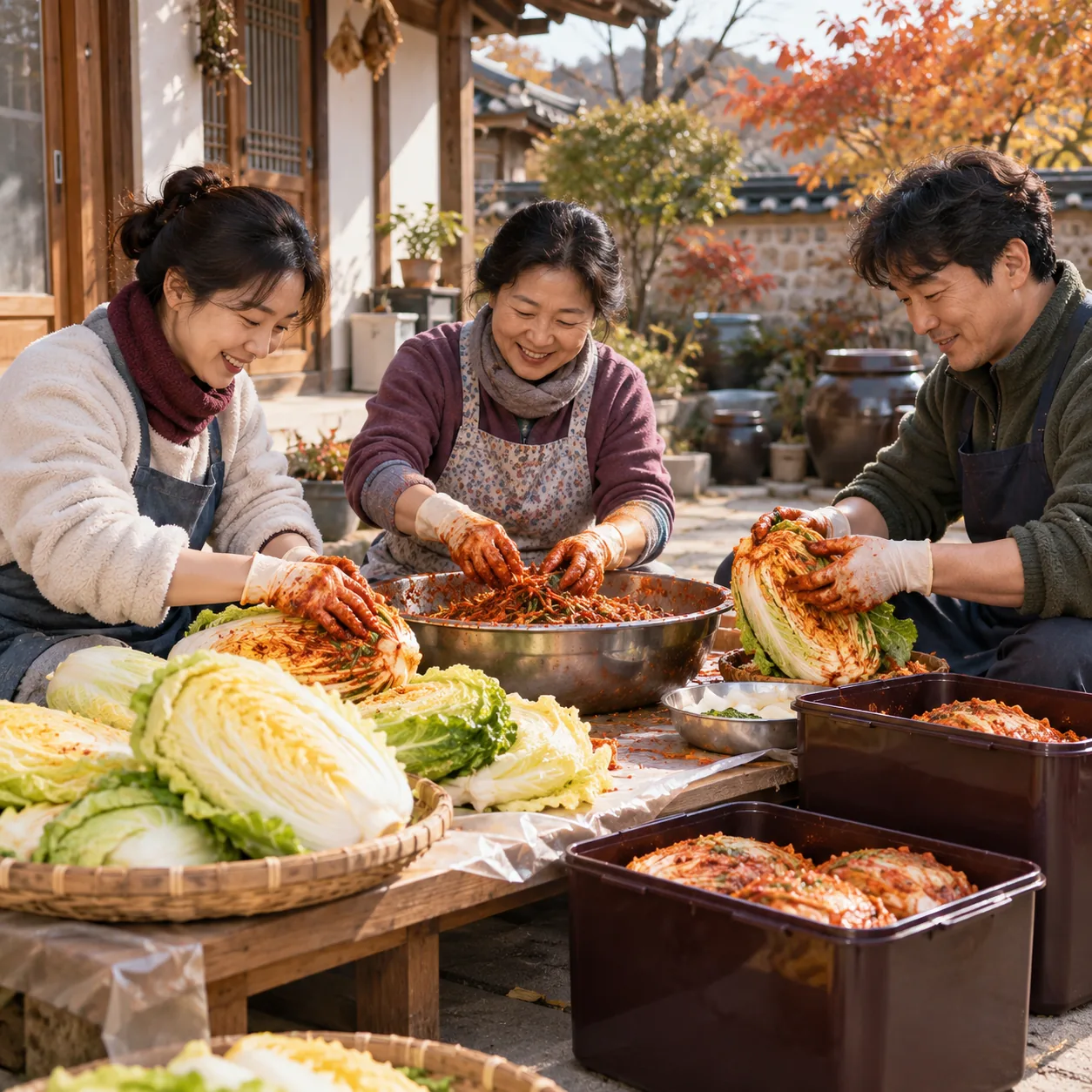
Three fictional adults prepare cabbage together in an imagined autumn courtyard. Credit: AI-generated for Culture Ark using OpenAI image generation. Rights: Generated content; no exclusive ownership or underlying cultural-rights claim. Changes: Resized within1400px and converted to WebP; no crop or substantive alteration.
Fictional illustrative scene. No claim of documentary authenticity, exclusive ownership, endorsement, cultural authorization or verified recipe. Cooperation, cabbage, seasoning and containers are clear; hands and faces plausible. Courtyard is an invented setting, not evidence of all Korean homes.
Documented reference / existing artwork
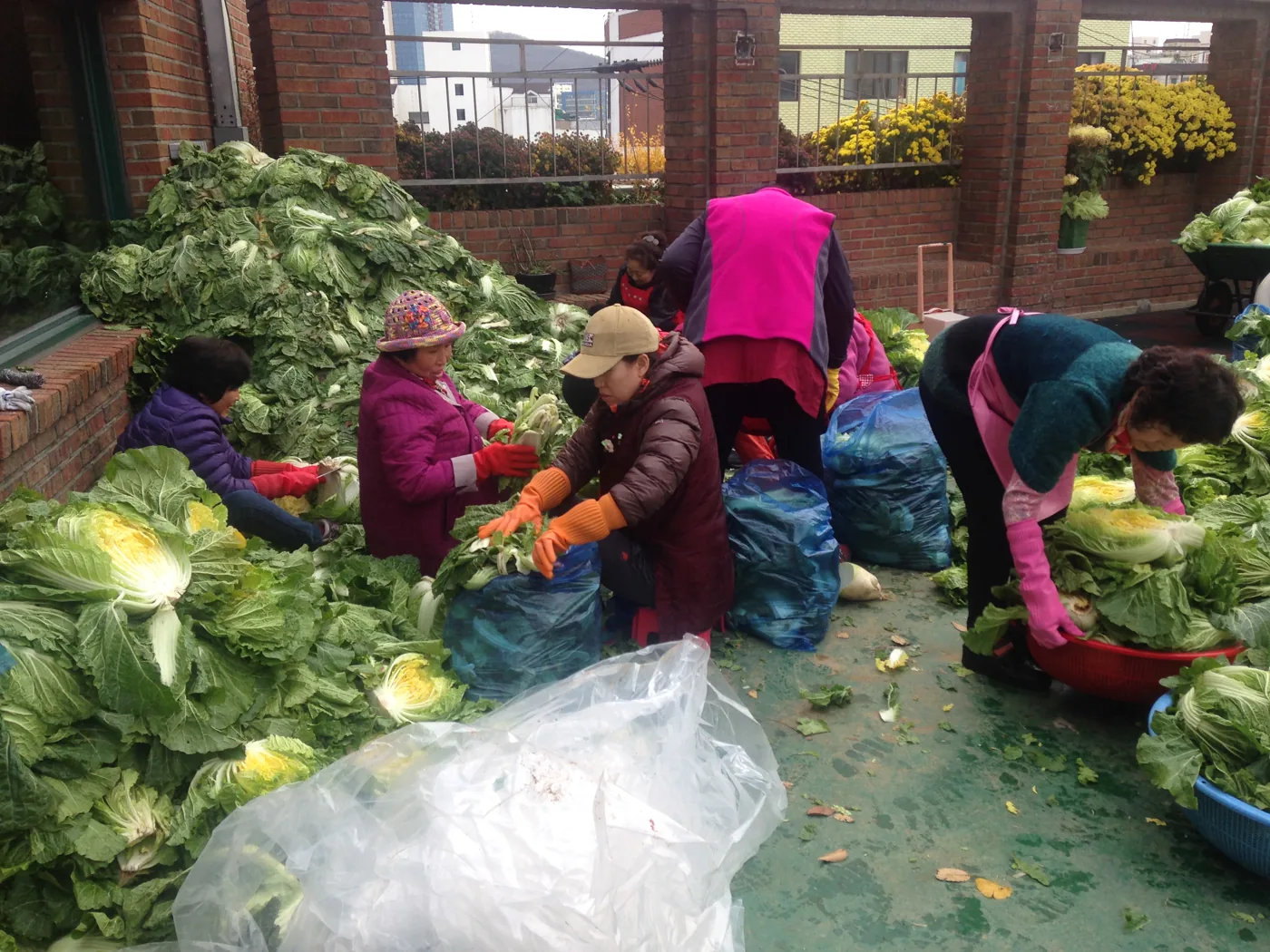
People making kimchi in Korea, photographed by Manju Shakya in November 2016. Credit: Manju Shakya. Rights: CC BY-SA 4.0. Changes: Resized within1400px and converted to WebP; no crop or substantive alteration. Image source Image licence
Identifiable people: no advertising endorsement or model-release claim. Credit the creator, link the license and indicate any changes. Adapted versions must use the same or a compatible ShareAlike license.
History and context
Kimjang is the collective preparation and exchange of kimchi, rather than simply the name of a fermented food. Its annual sequence links ingredients gathered or prepared in different seasons to a major period of shared work in late autumn. Families and neighbours make quantities intended to last through winter, exchanging both finished food and practical knowledge. Recipes differ between regions and households. UNESCO describes the custom as a setting for family cooperation and transmission between generations. Future readers should notice the labour behind a familiar side dish: selecting a date, assembling ingredients, dividing tasks and deciding who receives the results all help make preservation a social occasion.
What future readers can learn
It explains how food storage also created networks of care, exchange and household identity.
Limits and cultural context
Kimchi and its preparation are diverse across Korea. This entry documents the South Korean inscription without claiming exclusive ownership or giving fermentation safety instructions.
Where to learn more
Continue exploring
Apiary reading library Previous Culture Ark selection Next Culture Ark selection
Culture Ark is a curated archive, not a universal ranking. Interpretive images and source evidence serve different roles.
Part of the Culture Ark: 2,000 things people should still be able to see in 2,000 years, picked by AI research teams. Browse the gallery. The Culture Ark is an Artificial Mind Hive (AMH) project. AMH is owned by Austin Little.

Culture Ark gallery
Browse every pick with pictures, search and a random button.
Open the gallery →