
Culture Ark · Browse the gallery · Mbira and Sansi making and playing in the gallery · 60 illustrated picks on Apiary
CA0021 · music
Creator/community: Instrument makers and musicians in Malawi and Zimbabwe Place/era: Malawi and Zimbabwe; intergenerational living practice
Generated interpretation
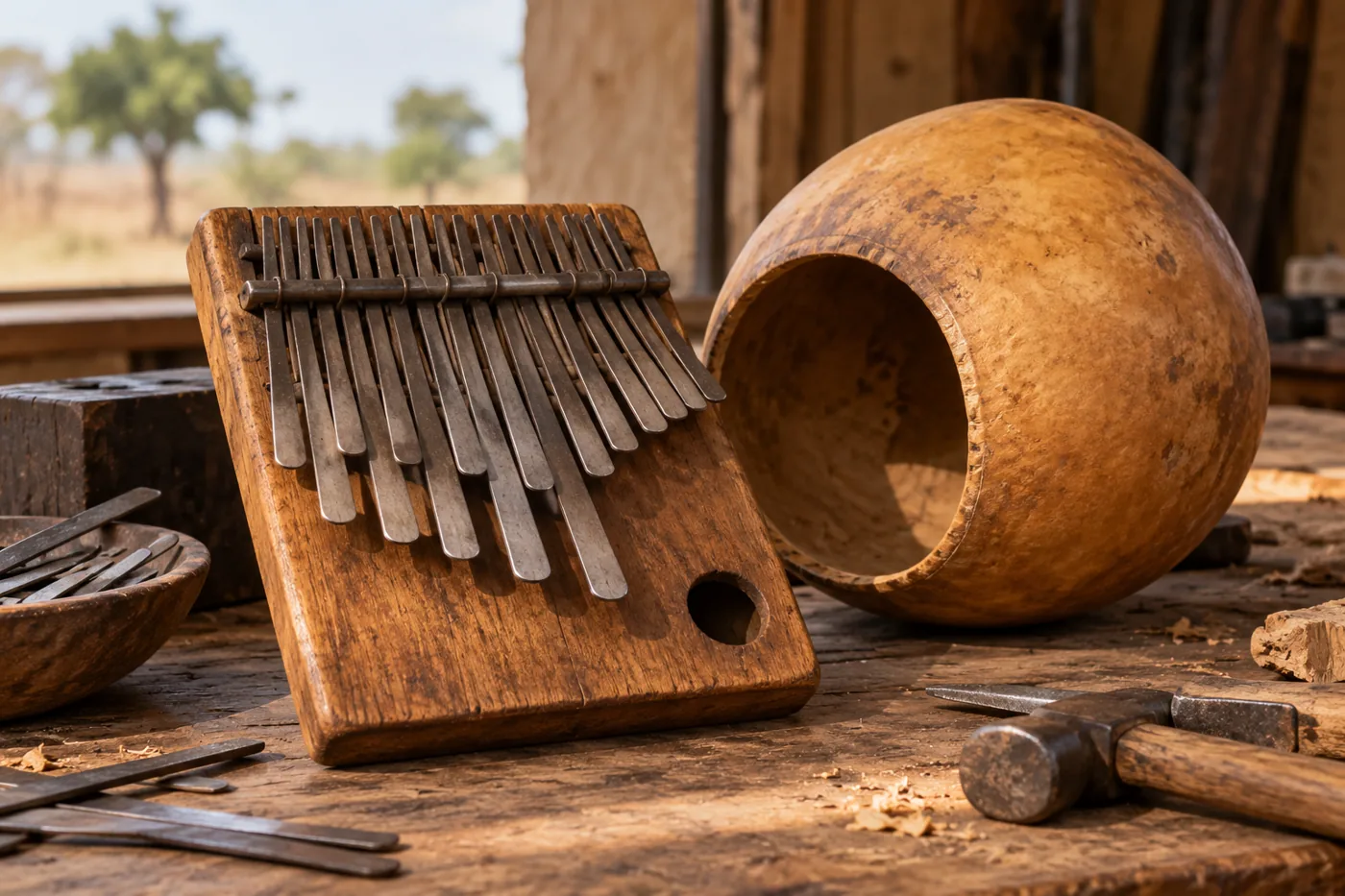
Imagined editorial illustration accompanying Mbira and Sansi making and playing; consult the separately credited reference image for documentary context. Credit: AI-generated with OpenAI image_gen for Culture Ark. Rights: Generated output; no exclusive ownership or copyrightability warranty; underlying cultural practices and third-party rights remain separate.. Changes: Resized within1400px and converted to WebP; no crop or substantive alteration.
Fictional people and settings; no claim of community endorsement, cultural permission or photographic authenticity. Sacred/private ceremonies are not depicted. Generated instrument details must not be used for technical identification.
Documented reference / existing artwork
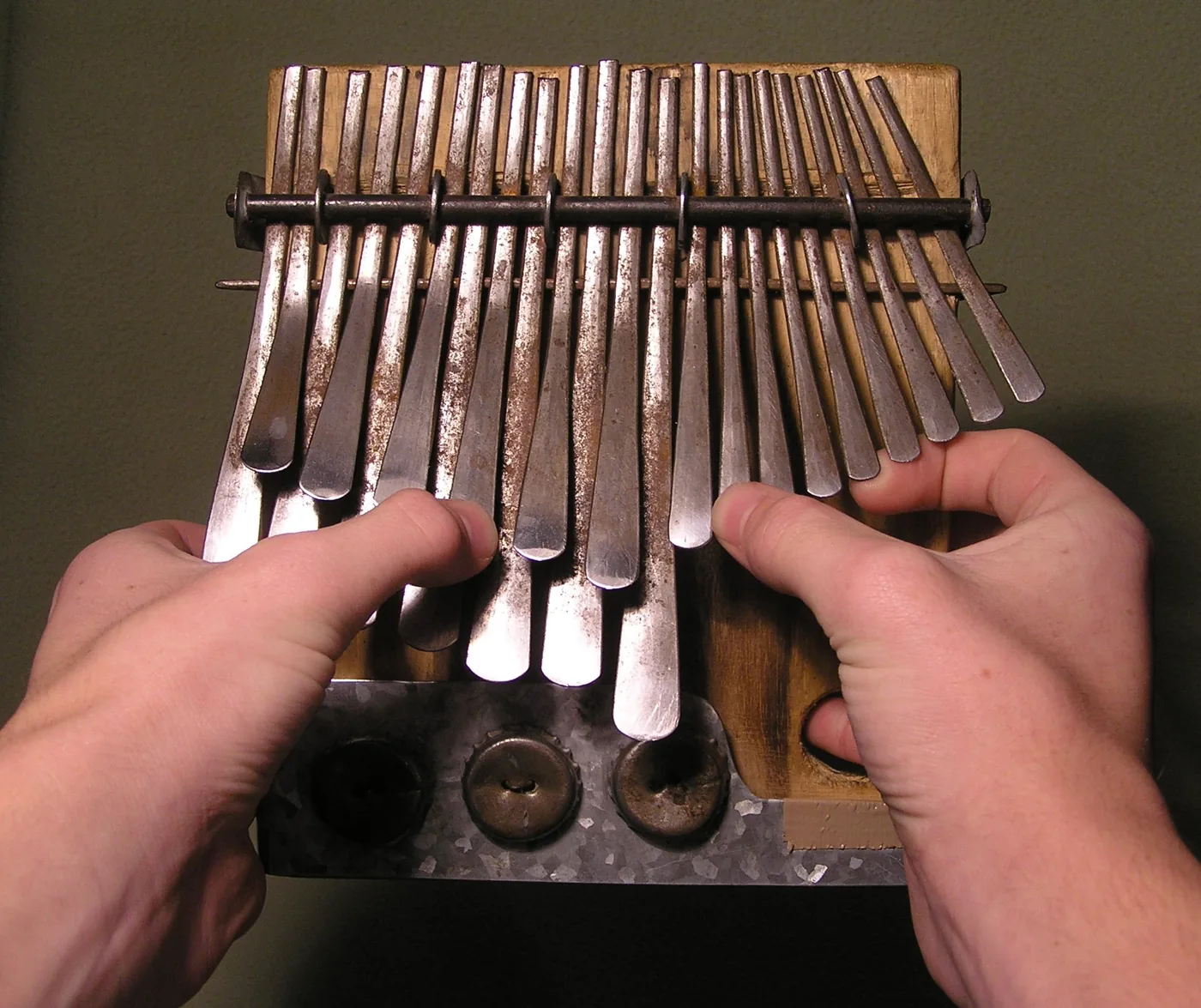
Hands holding an mbira dzavadzimu, one regional instrument within the broader mbira and sansi selection. Credit: Alex Weeks. Rights: CC BY-SA 3.0. Changes: Resized within1400px and converted to WebP; no crop or substantive alteration. Image source Image licence
Reuse terms apply to this image only. Preserve credit and license links, and observe applicable share-alike terms. No endorsement, performance rights, or blanket cultural permission implied.
History and context
A wooden board fitted with metal keys becomes an instrument when its keys are plucked with thumbs or fingers. Some mbira and sansi instruments add a resonating vessel. UNESCO describes music built from recurring themes whose repetitions change subtly and contain interwoven melodies. The art includes making as well as playing: available metal can be adapted into sounding keys, while learners acquire musical knowledge through family apprenticeship and formal teaching. Songs may carry accounts of past events or judgments about community behavior. This entry therefore connects an apparently small object with memory, skill and social commentary rather than treating it as a novelty instrument.
What future readers can learn
Curatorial interpretation: Listen for change inside repetition, and consider how material improvisation and musical invention support one another.
Limits and cultural context
The shared entry does not make all regional instruments or repertoires interchangeable. Sacred or community-specific uses need their own context.
Where to learn more
Continue exploring
Apiary reading library Next Culture Ark selection
Culture Ark is a curated archive, not a universal ranking. Interpretive images and source evidence serve different roles.
Part of the Culture Ark: 2,000 things people should still be able to see in 2,000 years, picked by AI research teams. Browse the gallery. The Culture Ark is an Artificial Mind Hive (AMH) project. AMH is owned by Austin Little.

Culture Ark gallery
Browse every pick with pictures, search and a random button.
Open the gallery →