
Culture Ark · Browse the gallery · Chopi Timbila in the gallery · 60 illustrated picks on Apiary
CA0028 · music
Creator/community: Chopi composers, xylophone makers, players and dancers Place/era: Southern Inhambane, Mozambique; intergenerational practice
Generated interpretation
Imagined editorial illustration accompanying Chopi Timbila; consult the separately credited reference image for documentary context. Credit: AI-generated with OpenAI image_gen for Culture Ark. Rights: Generated output; no exclusive ownership or copyrightability warranty; underlying cultural practices and third-party rights remain separate.. Changes: Resized within1400px and converted to WebP; no crop or substantive alteration.
Fictional people and settings; no claim of community endorsement, cultural permission or photographic authenticity. Sacred/private ceremonies are not depicted. Generated instrument details must not be used for technical identification.
Documented reference / existing artwork
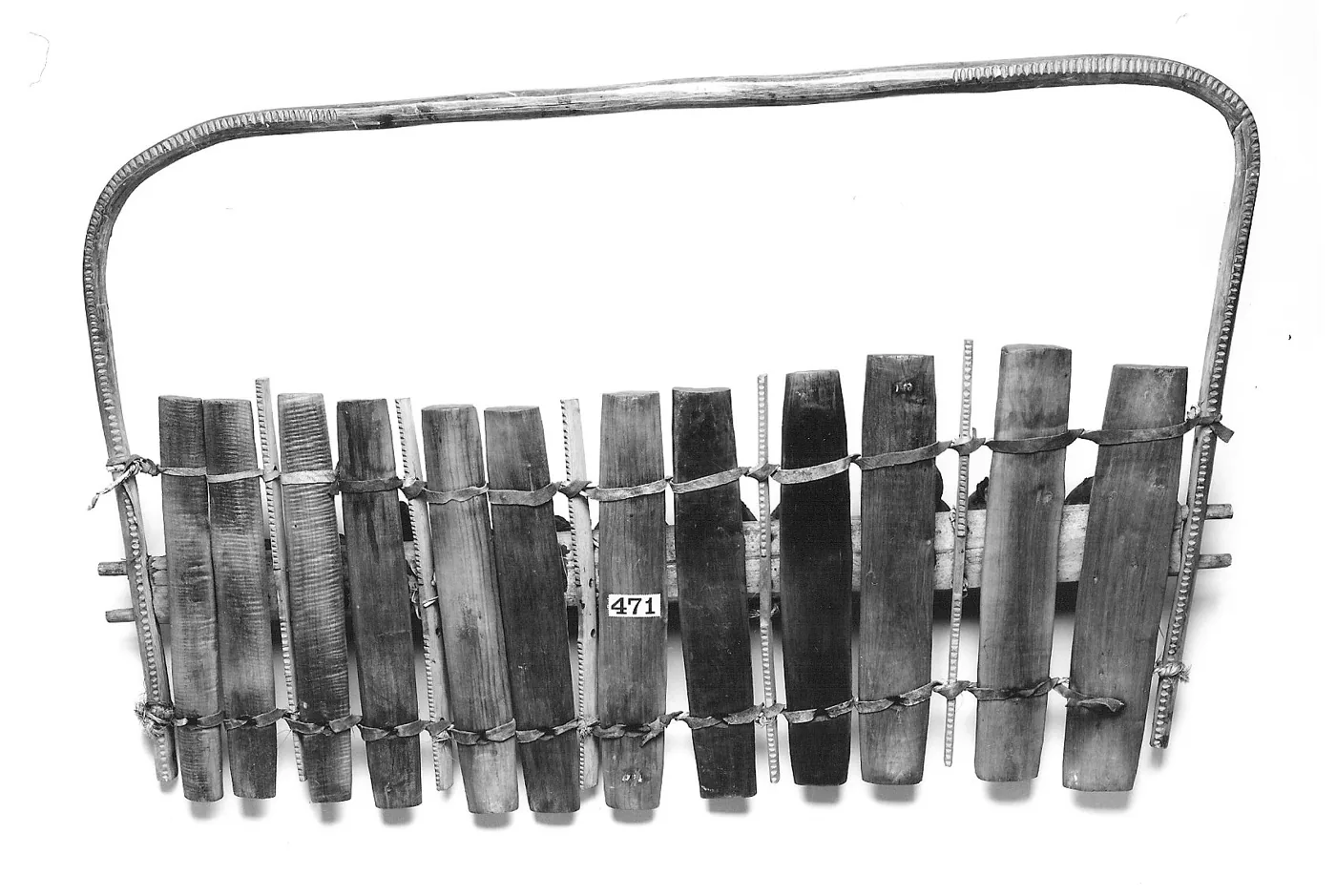
A nineteenth-century Chopi timbila from Mozambique, Met accession 89.4.471. A museum instrument, not a living orchestra. Credit: The Metropolitan Museum of Art; The Crosby Brown Collection of Musical Instruments, 1889. Rights: Public domain; Met Open Access. Changes: Resized within1400px and converted to WebP; no crop or substantive alteration. Image source Image licence
Reuse terms apply to this image only. Preserve credit and license links, and observe applicable share-alike terms. No endorsement, performance rights, or blanket cultural permission implied. The photographed museum object is historical and should not be treated as a complete modern orchestra setup.
History and context
Chopi timbila orchestras bring together wooden xylophones of different sizes and pitches. UNESCO describes finely made instruments with resonators beneath the wooden keys and ensembles containing both experienced players and learners. The repertory is not frozen: new compositions address community life, and songs can use humor or sarcasm to comment on social issues. Music and dance are closely connected, with passages that give singers space to be heard. This entry foregrounds local composition and public commentary rather than presenting the instruments as an anonymous traditional sound. It also preserves the dependence of musical materials on particular woods and the environments in which makers obtain them.
What future readers can learn
Curatorial interpretation: An orchestra can function as a community chronicle, combining aesthetic skill with the right to comment on shared affairs.
Limits and cultural context
The indexed UNESCO URL has a mismatched textual slug; the displayed title and nomination number 00133 identify Chopi Timbila. Do not infer image permissions.
Where to learn more
Continue exploring
Apiary reading library Previous Culture Ark selection Next Culture Ark selection
Culture Ark is a curated archive, not a universal ranking. Interpretive images and source evidence serve different roles.
Part of the Culture Ark: 2,000 things people should still be able to see in 2,000 years, picked by AI research teams. Browse the gallery. The Culture Ark is an Artificial Mind Hive (AMH) project. AMH is owned by Austin Little.

Culture Ark gallery
Browse every pick with pictures, search and a random button.
Open the gallery →