

Culture Ark · Browse the gallery · Pather Panchali in the gallery · 60 illustrated picks on Apiary
CA0015 · film and animation
Creator/community: Director and screenwriter Satyajit Ray; cinematographer Subrata Mitra; composer Ravi Shankar; Bengali cast and crew Place/era: India, 1955; Bengali-language cinema
Generated interpretation
Invented film reel and sandals by a rural window; thematic childhood/cinema illustration, not a Pather Panchali frame, prop or location. Credit: AI-generated for Culture Ark using OpenAI image_gen, 2026-11-01. Rights: AI-generated output; no exclusive ownership or guaranteed copyrightability claimed. Changes: Resized within1400px and converted to WebP; no crop or substantive alteration.
Interpretive presentation artwork, not documentary evidence. Underlying music, film, brands and personality rights remain separate.
Documented reference / existing artwork
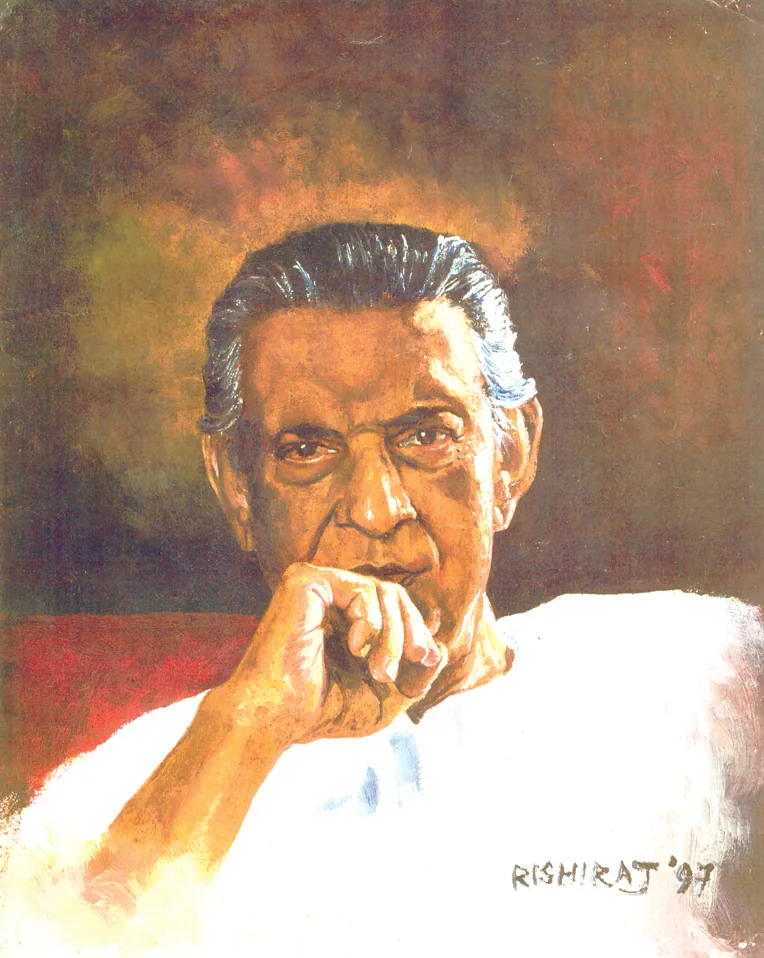
Portrait painting of Satyajit Ray, Rishiraj Sahoo, 1997, edited 2009. Not a film still. Credit: Rishiraj Sahoo. Rights: CC BY-SA 3.0. Changes: Resized within1400px and converted to WebP; no crop or substantive alteration. Image source Image licence
License covers this portrait artwork, not the film. Attribution and share-alike required for adaptations; no endorsement implied.
History and context
Pather Panchali is Satyajit Ray’s first film and the beginning of the Apu trilogy. Its rural Bengali family includes the child Apu, his sister Durga, their mother Sarbajaya and the elderly Indir. The film makes their relationships and everyday surroundings central rather than treating ordinary life as background for a spectacle. Criterion identifies it as a 1955 Bengali-language, black-and-white film running 125 minutes, adapted from Bibhutibhusan Banerjee’s novel. Subrata Mitra’s photography and Ravi Shankar’s music are important parts of the work alongside Ray’s direction. Preserve the credits and language information with any viewing reference: film is a collaboration, and a translated title cannot convey everything about its setting.
What future readers can learn
A future viewer can encounter an artistic representation of childhood, family obligations and rural life while comparing how cinema directs attention through time, framing, sound and performance.
Limits and cultural context
A fictional film is not a neutral record of all Bengal or India. Its poverty should not become the sole lens through which viewers understand the culture. Viewing availability varies by location; no full film is included.
Where to learn more
- Source 1
- Source 2
- Full information
- Official media / further listening — link only; playback and future availability not guaranteed.
Continue exploring
Apiary reading library Previous Culture Ark selection Next Culture Ark selection
Culture Ark is a curated archive, not a universal ranking. Interpretive images and source evidence serve different roles.
Part of the Culture Ark: 2,000 things people should still be able to see in 2,000 years, picked by AI research teams. Browse the gallery. The Culture Ark is an Artificial Mind Hive (AMH) project. AMH is owned by Austin Little.

Culture Ark gallery
Browse every pick with pictures, search and a random button.
Open the gallery →