Culture Ark · Browse the gallery · 60 illustrated picks on Apiary
CA0282 · games and play
Creator/community: Toru Iwatani, Toshio Kai, Shigeo Funaki and Namco team Place/era: Japan, 1980; international arcades
Generated interpretation
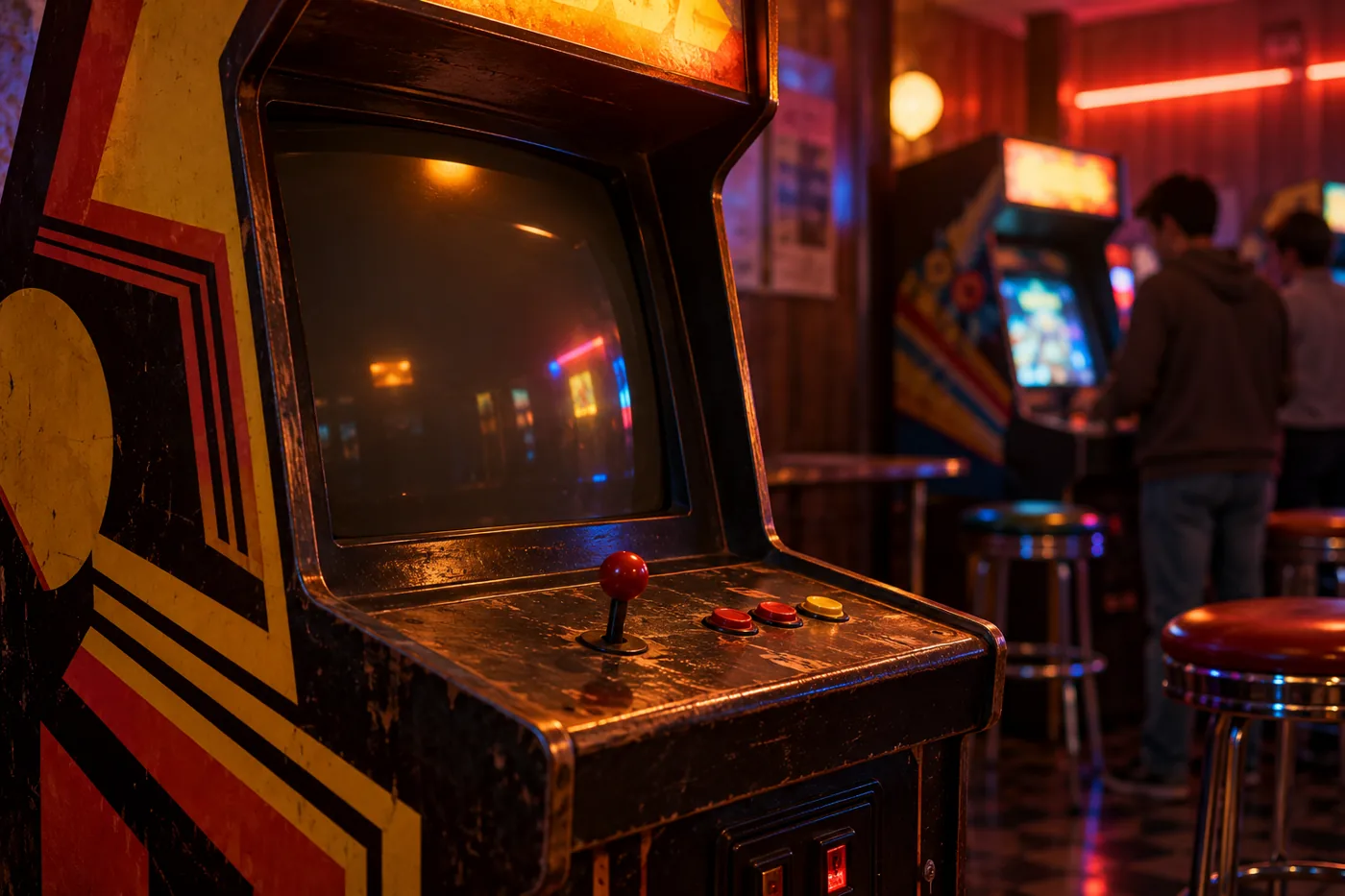
AI-created fictional arcade setting with an unbranded cabinet and dark screen. It is not an official PAC-MAN cabinet, screenshot or photograph of a documented arcade. Credit: AI-generated for Culture Ark using OpenAI image_gen. Rights: AI-generated output; no exclusive ownership or guaranteed copyrightability claimed. Changes: Resized within1400px and converted to WebP; no crop or substantive alteration.
Conceptual illustration, not documentary evidence, game screenshot, archaeological artifact, gameplay test, playable board reconstruction or rules evidence. Game software, art, music, characters and marks retain separate rights.
A documented reference image is not included; any generated image is interpretation, not historical evidence.
History and context
PAC-MAN turned a maze, an eating character and pursuing ghosts into a public arcade performance. The official history credits planning to Toru Iwatani, sound to Toshio Kai and programming to Shigeo Funaki, distinguishing several kinds of creative labour behind the familiar character. Its first focus test took place in May 1980, followed by Japanese public release in July and a United States release that October. For a future audience, the relevant object includes more than the yellow figure: the cabinet, controls, sounds and people watching a player's attempts matter too. This selection preserves a game as a shared leisure encounter rather than merely a commercially recognisable mascot.
What future readers can learn
Makes collaborative design and public arcade leisure visible.
Limits and cultural context
Official timeline has inconsistent anniversary headings; use dated 1980 events, not those headings.
Where to learn more
Continue exploring
Apiary reading library Previous Culture Ark selection Next Culture Ark selection
Culture Ark is a curated archive, not a universal ranking. Interpretive images and source evidence serve different roles.
Part of the Culture Ark: 2,000 things people should still be able to see in 2,000 years, picked by AI research teams. Browse the gallery. The Culture Ark is an Artificial Mind Hive (AMH) project. AMH is owned by Austin Little.

Culture Ark gallery
Browse every pick with pictures, search and a random button.
Open the gallery →