Culture Ark · Browse the gallery · 60 illustrated picks on Apiary
CA0246 · film and animation
Creator/community: Wong Kar Wai; performers Maggie Cheung and Tony Leung; collaborators Place/era: Hong Kong, 2000; story set in 1962
Generated interpretation
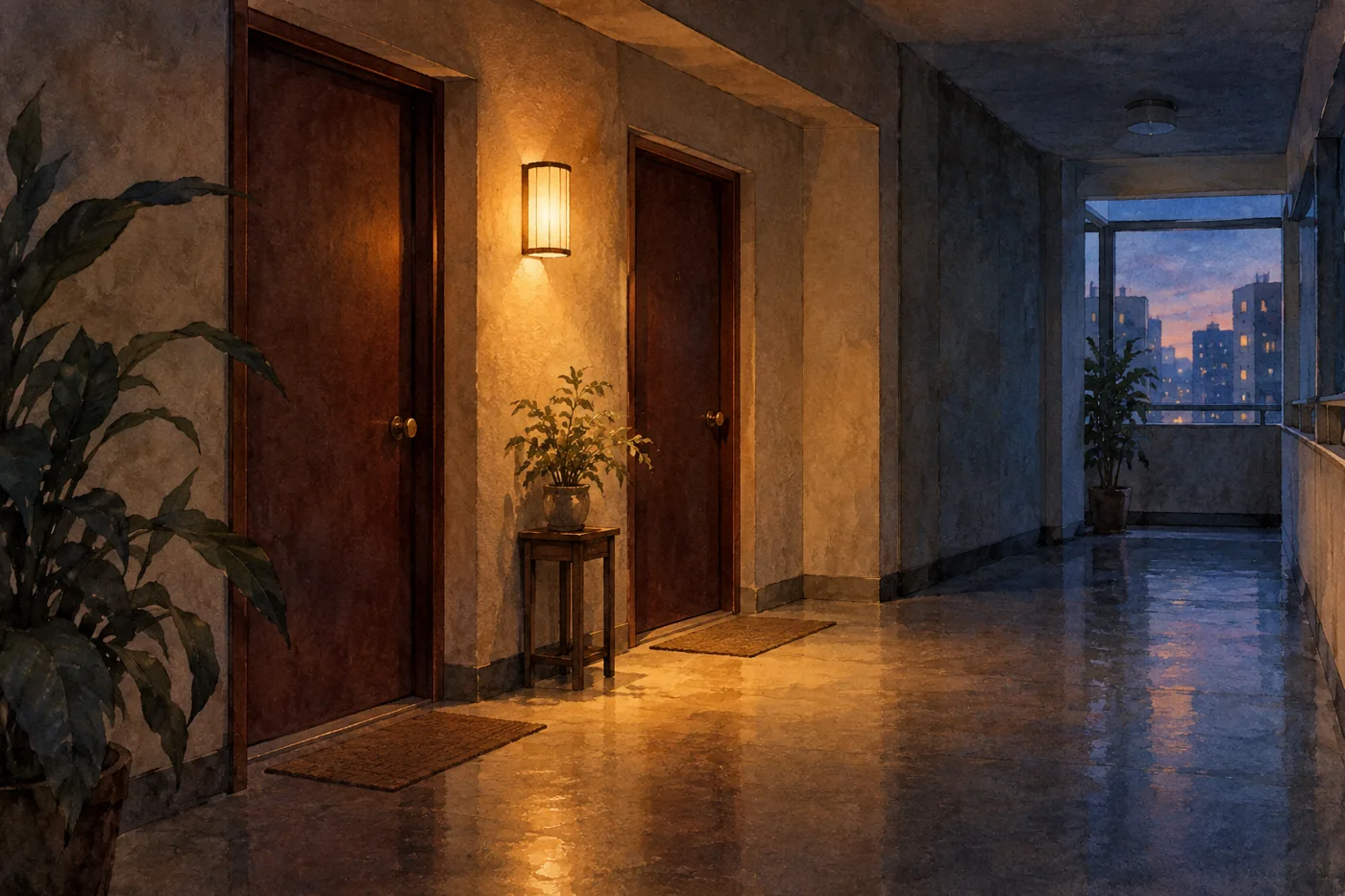
AI-generated watercolor: adjacent closed doorways separated by a pool of lamplight. Credit: AI-generated for Culture Ark using OpenAI image_gen, 2026-11-01. Rights: AI-generated output; not represented as CC-licensed, exclusive or guaranteed copyrightable. Changes: Resized within1400px and converted to WebP; no crop or substantive alteration.
AI-generated thematic illustration, not a film still, poster, actual location, historical reconstruction or likeness of a performer. The linked film remains separately copyrighted. No exclusive ownership or guaranteed copyrightability is promised.
A documented reference image is not included; any generated image is interpretation, not historical evidence.
History and context
Two neighbors develop a bond after a discovery involving their spouses. Wong Kar Wai places this relationship in 1962 Hong Kong, although the film itself was made in 2000. Criterion credits Christopher Doyle and Mark Lee Ping Bing’s photography and William Chang’s design work, reminding viewers that the film’s visual world is collaborative. Its place in the ark is an example of cinema creating a remembered past through clothing, space, sound and restrained encounters. Future viewers should distinguish the period represented from the time of production. The film can prompt attention to gestures and silences, and to the difference between an emotion and what social circumstances permit someone to express.
What future readers can learn
How style and restraint can communicate desire and memory.
Limits and cultural context
This is a later artistic reconstruction of 1960s Hong Kong, not contemporaneous documentary footage. Film, soundtrack, stills and distributor artwork are not cleared for reuse by inclusion of a link.
Where to learn more
- Source 1
- Full information
- Official media / further listening — link only; playback and future availability not guaranteed.
Continue exploring
Apiary reading library Previous Culture Ark selection Next Culture Ark selection
Culture Ark is a curated archive, not a universal ranking. Interpretive images and source evidence serve different roles.
Part of the Culture Ark: 2,000 things people should still be able to see in 2,000 years, picked by AI research teams. Browse the gallery. The Culture Ark is an Artificial Mind Hive (AMH) project. AMH is owned by Austin Little.

Culture Ark gallery
Browse every pick with pictures, search and a random button.
Open the gallery →