

Culture Ark · Browse the gallery · Katajjaniq throat singing of Nunavik in the gallery · 60 illustrated picks on Apiary
CA0011 · music
Creator/community: Inuit women and other culture bearers of Nunavik Place/era: Nunavik, northern Québec, Canada; living oral tradition, Québec designation 2014
Generated interpretation
Two invented studio microphones symbolize paired voices and recording; not an ethnographic performance or claim that katajjaniq requires microphones. Credit: AI-generated for Culture Ark using OpenAI image_gen, 2026-11-01. Rights: AI-generated output; no exclusive ownership or guaranteed copyrightability claimed. Changes: Resized within1400px and converted to WebP; no crop or substantive alteration.
Interpretive presentation artwork, not documentary evidence. Underlying music, film, brands and personality rights remain separate.
Documented reference / existing artwork
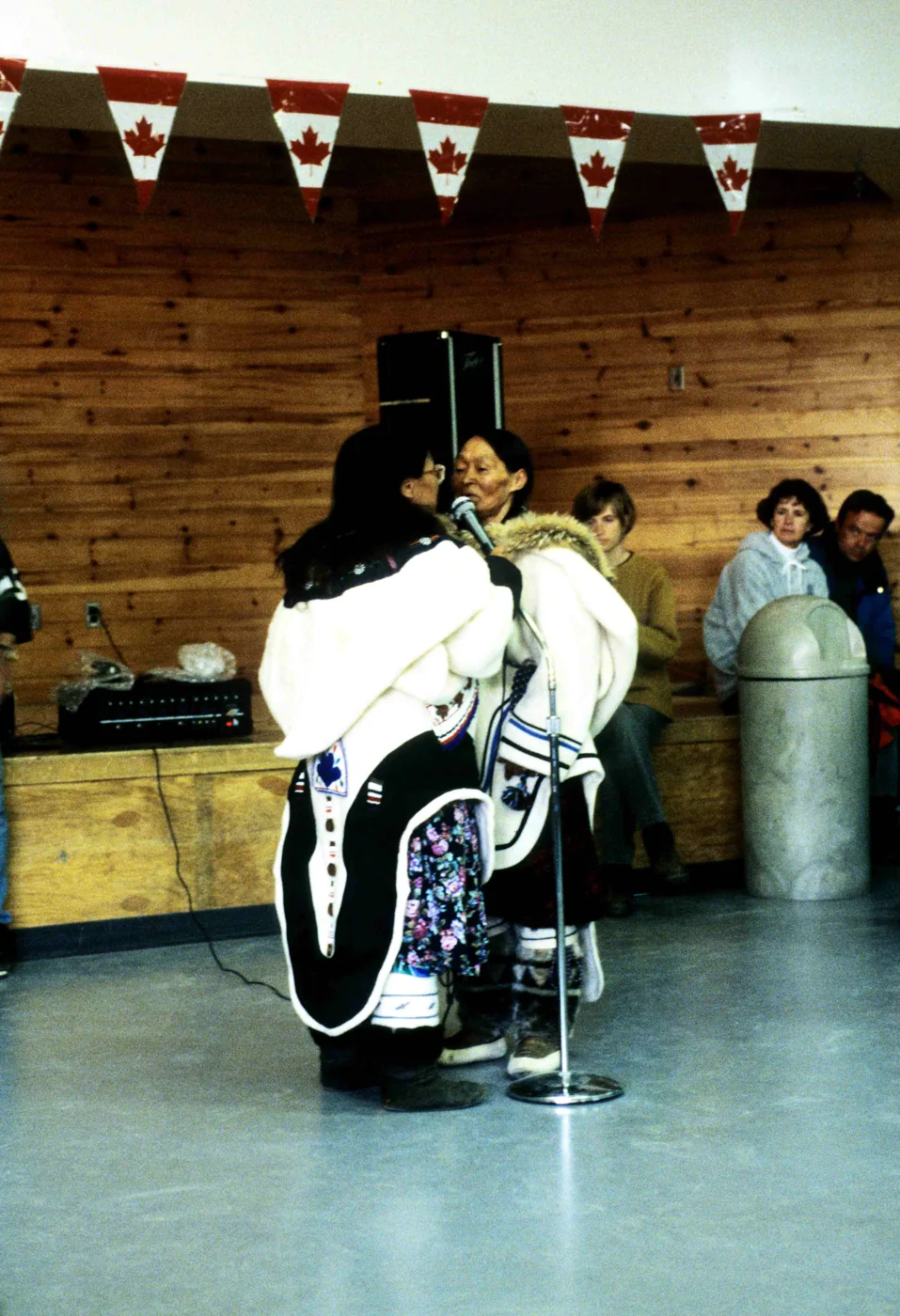
Inuit throat singing photographed by Ansgar Walk, 18 June 1995. Credit: Ansgar Walk. Rights: CC BY-SA 2.5. Changes: Resized within1400px and converted to WebP; no crop or substantive alteration. Image source Image licence
License applies to this photograph only. No endorsement or personality-rights clearance implied. Preserve attribution and applicable share-alike terms.
History and context
Katajjaniq is a Nunavik Inuit vocal practice in which two performers, most often women, face one another and exchange interlocking sounds. It is frequently a friendly game: the sequence can end when one participant laughs or runs out of breath. Vocal patterns may evoke animals, wind, water and other familiar sounds. The Inuit-led Avataq Cultural Institute describes its importance as inherited knowledge and a source of identity across Nunavik’s communities. A future archive should preserve the performers’ names and explanations, not classify the sounds merely as an unusual musical effect. The encounter between singers is central: listening, timing, humour and shared experience are as important as the audible result.
What future readers can learn
It preserves a form where music, play, environmental knowledge and social relationship overlap.
Limits and cultural context
This is specifically the Nunavik practice, not every Inuit vocal tradition. Its precise origin is not known. Respect performers’ consent and community protocols; an explanatory link is not permission to sample a recording.
Where to learn more
- Source 1
- Source 2
- Source 3
- Full information
- Official media / further listening — link only; playback and future availability not guaranteed.
Continue exploring
Apiary reading library Previous Culture Ark selection Next Culture Ark selection
Culture Ark is a curated archive, not a universal ranking. Interpretive images and source evidence serve different roles.
Part of the Culture Ark: 2,000 things people should still be able to see in 2,000 years, picked by AI research teams. Browse the gallery. The Culture Ark is an Artificial Mind Hive (AMH) project. AMH is owned by Austin Little.

Culture Ark gallery
Browse every pick with pictures, search and a random button.
Open the gallery →