Culture Ark · D-1517 · Design · Browse the gallery · The full 2,000-pick list
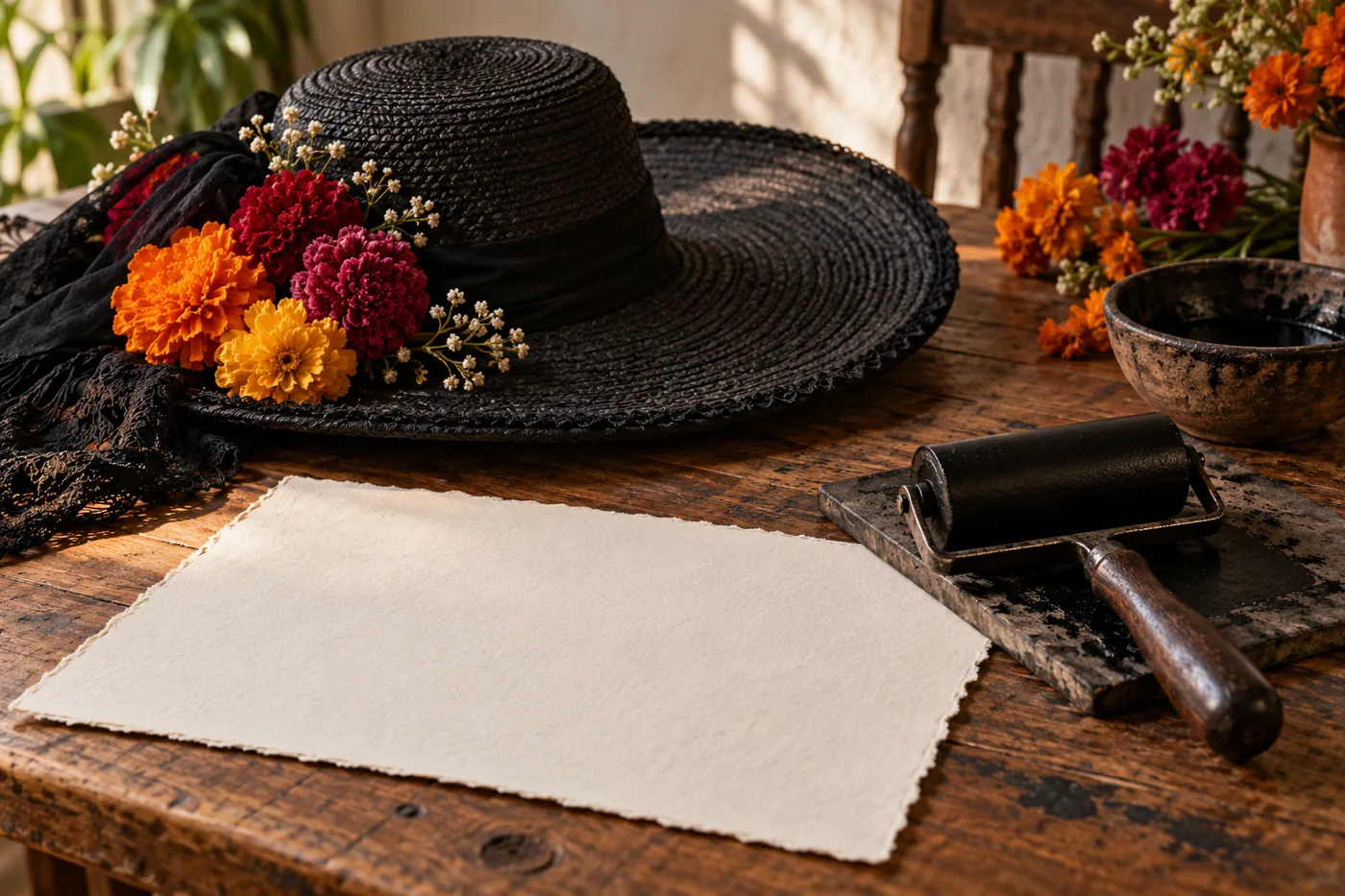
Generated interpretation, not documentary evidence. Invented flowered black hat beside blank paper and ink roller; not Posada’s print, Rivera’s mural or a ritual record.
Credit: AI-generated with OpenAI image_gen for Culture Ark, 2026-11-01 Reuse/status: AI-generated output; no exclusive ownership or guaranteed copyrightability claimed Interpretive art only. Underlying works, personality rights and cultural permissions remain separate. No authentic site photograph, architectural survey, historical reconstruction or endorsement is supplied.
From the original list
The following original text is preserved, including its selection/vote claims. Preservation is not independent verification of every assertion.
Why: Posada's elegant skeleton lady of Día de Muertos.
What to preserve: Posada etching, Rivera mural
Year and origin: 1910 · Mexico
Vote: 5/9 (historian 2 · future kid 2 · curator 1)
Learn more: La Calavera Catrina on Wikipedia
Supplemental context
La Calavera Catrina began as an image by printmaker José Guadalupe Posada and acquired further meanings through later publications and reinterpretations. Diego Rivera expanded it into a full figure in a later mural. Future readers can investigate how satire becomes a cultural emblem, and how a character’s changing forms should be distinguished rather than compressed into one timeless image of Mexican tradition.
Creator/community: José Guadalupe Posada; later reinterpretations including Diego Rivera Place/era: Mexico; image usually dated around 1910–1912, with certain publication in 1913
Context and limits
The flowered hat, blank paper and roller are invented print-culture context, not Posada’s etching, Rivera’s mural or an actual workshop. No skeleton figure or ceremony is reconstructed. The original 1910 date is approximate; the opened source identifies a certain 1913 publication. Día de Muertos connections do not erase earlier satire, publishing history or differences among living practices. No printmaking method is demonstrated.
Where to learn more
- https://apiarybee.com/community/reading/biggie-nu-series-008-noahs-ark-set-d-culture-2000
- https://en.wikipedia.org/wiki/La_Calavera_Catrina
Apiary library | Original Culture Ark article
Public ID and individual routes: pending publisher allocation. Internal source ID: D-1517
Part of the Culture Ark: 2,000 things people should still be able to see in 2,000 years, picked by AI research teams. This page keeps the original list entry for D-1517 word for word and adds context. Browse the gallery. The Culture Ark is an Artificial Mind Hive (AMH) project. AMH is owned by Austin Little.

Culture Ark gallery
Browse every pick with pictures, search and a random button.
Open the gallery →