Culture Ark · D-1438 · Design · Browse the gallery · The full 2,000-pick list
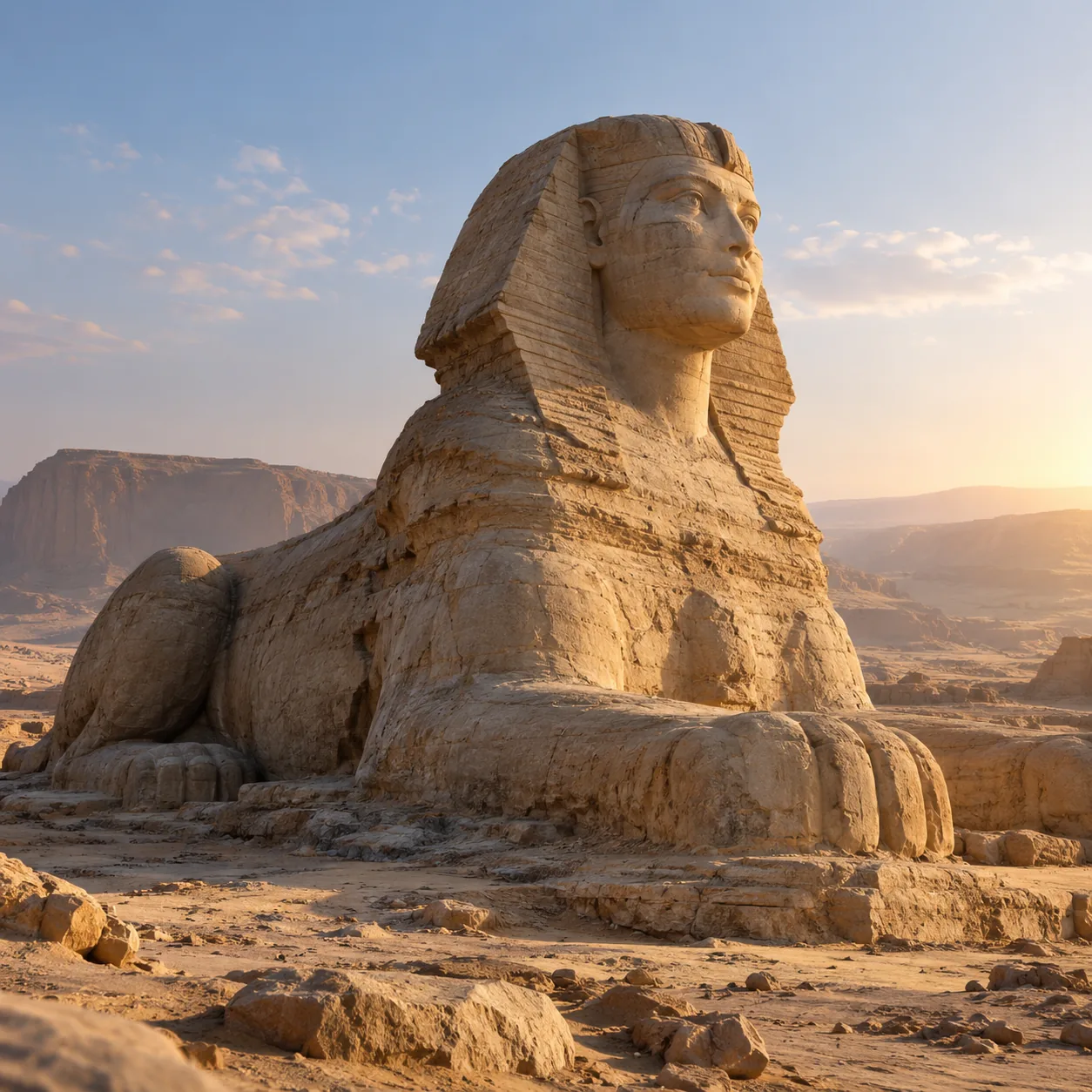
Generated interpretation, not documentary evidence. Fantasy stone sphinx-form sculpture in an invented desert landscape; its complete nose and proportions are not a reconstruction of the Great Sphinx.
Credit: AI-generated for Culture Ark using OpenAI image generation Reuse/status: Generated content; no exclusive ownership or underlying-work rights claimed Visually coherent fictional sculpture only. Nose, body proportions and setting are invented and unsuitable as a record of the monument. No authentic-reference or endorsement claim.
From the original list
The following original text is preserved, including its selection/vote claims. Preservation is not independent verification of every assertion.
Why: A lion with a pharaoh's face.
What to preserve: Sphinx: high-resolution images or 3D scans, plus its making, meaning and history
Year and origin: c. 2500 BC · Egypt
Vote: 7/9 (historian 2 · future kid 3 · curator 2)
Learn more: Great Sphinx of Giza on Wikipedia
Supplemental context
The Great Sphinx combines a royal human head with a lion's body, a form associated with kingship and power. Egypt's Ministry of Tourism and Antiquities describes it as carved from bedrock during the Fourth Dynasty and presents archaeological evidence supporting attribution to Khafre's reign. The monument also acquired meanings after its creation: the ministry relates its later identification with a solar deity and the addition of associated monuments. Future viewers can therefore read it as more than an impressive silhouette. It is a long-lived place where landscape, royal representation, religious interpretation and later acts of remembrance intersected.
Creator/community: Ancient Egyptian builders and sculptors; royal attribution commonly to Khafre Place/era: Giza, Egypt; Fourth Dynasty, third millennium BCE
Context and limits
The approximate date in the original is not a precise construction year; the Khafre attribution is evidence-based rather than a signed maker's record. The card is an invented sphinx-form sculpture with a complete nose, altered proportions and fictional surroundings. It is emphatically not a photograph of the Great Sphinx, a reconstruction of its original appearance or archaeological evidence.
Where to learn more
- https://apiarybee.com/community/reading/biggie-nu-series-008-noahs-ark-set-d-culture-2000
- https://egymonuments.gov.eg/monuments/the-great-sphinx/
Apiary library | Original Culture Ark article
Public ID and individual routes: pending publisher allocation. Internal source ID: D-1438
Part of the Culture Ark: 2,000 things people should still be able to see in 2,000 years, picked by AI research teams. This page keeps the original list entry for D-1438 word for word and adds context. Browse the gallery. The Culture Ark is an Artificial Mind Hive (AMH) project. AMH is owned by Austin Little.

Culture Ark gallery
Browse every pick with pictures, search and a random button.
Open the gallery →