Culture Ark · D-1441 · Design · Browse the gallery · The full 2,000-pick list
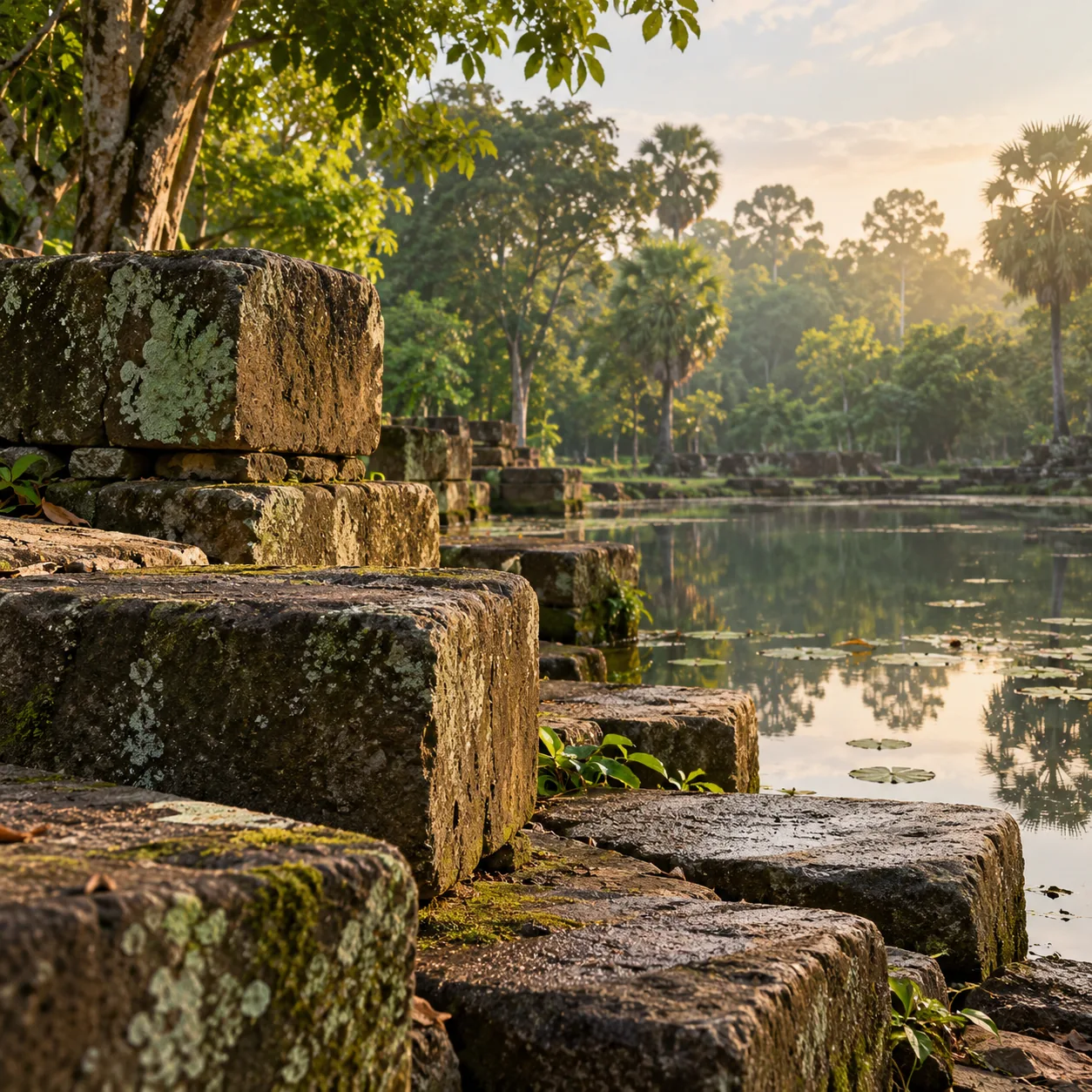
Generated interpretation, not documentary evidence. Invented weathered stone blocks beside a tropical pool; contextual metaphor, not Angkor Wat or a sacred-site record.
Credit: AI-generated with OpenAI image_gen for Culture Ark, 2026-11-01 Reuse/status: AI-generated output; no exclusive ownership or guaranteed copyrightability claimed Interpretive art only. Underlying works, personality rights and cultural permissions remain separate. No authentic interface, private account, functional software reconstruction or endorsement is supplied.
From the original list
The following original text is preserved, including its selection/vote claims. Preservation is not independent verification of every assertion.
Why: The largest religious monument.
What to preserve: Temple: high-resolution images or 3D scans, plus its making, meaning and history
Year and origin: 12th century · Cambodia
Vote: 7/9 (historian 3 · future kid 2 · curator 2)
Learn more: Angkor Wat on Wikipedia
Supplemental context
Angkor Wat belongs to the history of the Khmer Empire and to continuing religious life, not only to the history of tourism. Built as a temple dedicated to Vishnu, it later became associated with Buddhist worship. Future readers can consider how a monumental place changes meanings across centuries while remaining important to communities, and why a scan alone cannot preserve all of that cultural life.
Creator/community: Khmer builders and craftspeople under Suryavarman II, and later religious communities Place/era: Cambodia; twelfth-century foundation and subsequent Hindu and Buddhist histories
Context and limits
The undecorated stone blocks, pool and vegetation are invented context, not Angkor Wat, its sacred reliefs or a surveyed site plan. No ritual or deity is reconstructed. The original largest claim is preserved without making this image evidence for a ranking. Religious significance and Cambodian heritage should not be reduced to a picturesque ruin or an engineering puzzle.
Where to learn more
- https://apiarybee.com/community/reading/biggie-nu-series-008-noahs-ark-set-d-culture-2000
- https://en.wikipedia.org/wiki/Angkor_Wat
Apiary library | Original Culture Ark article
Public ID and individual routes: pending publisher allocation. Internal source ID: D-1441
Part of the Culture Ark: 2,000 things people should still be able to see in 2,000 years, picked by AI research teams. This page keeps the original list entry for D-1441 word for word and adds context. Browse the gallery. The Culture Ark is an Artificial Mind Hive (AMH) project. AMH is owned by Austin Little.

Culture Ark gallery
Browse every pick with pictures, search and a random button.
Open the gallery →