Culture Ark · D-1392 · Inventions · Browse the gallery · The full 2,000-pick list
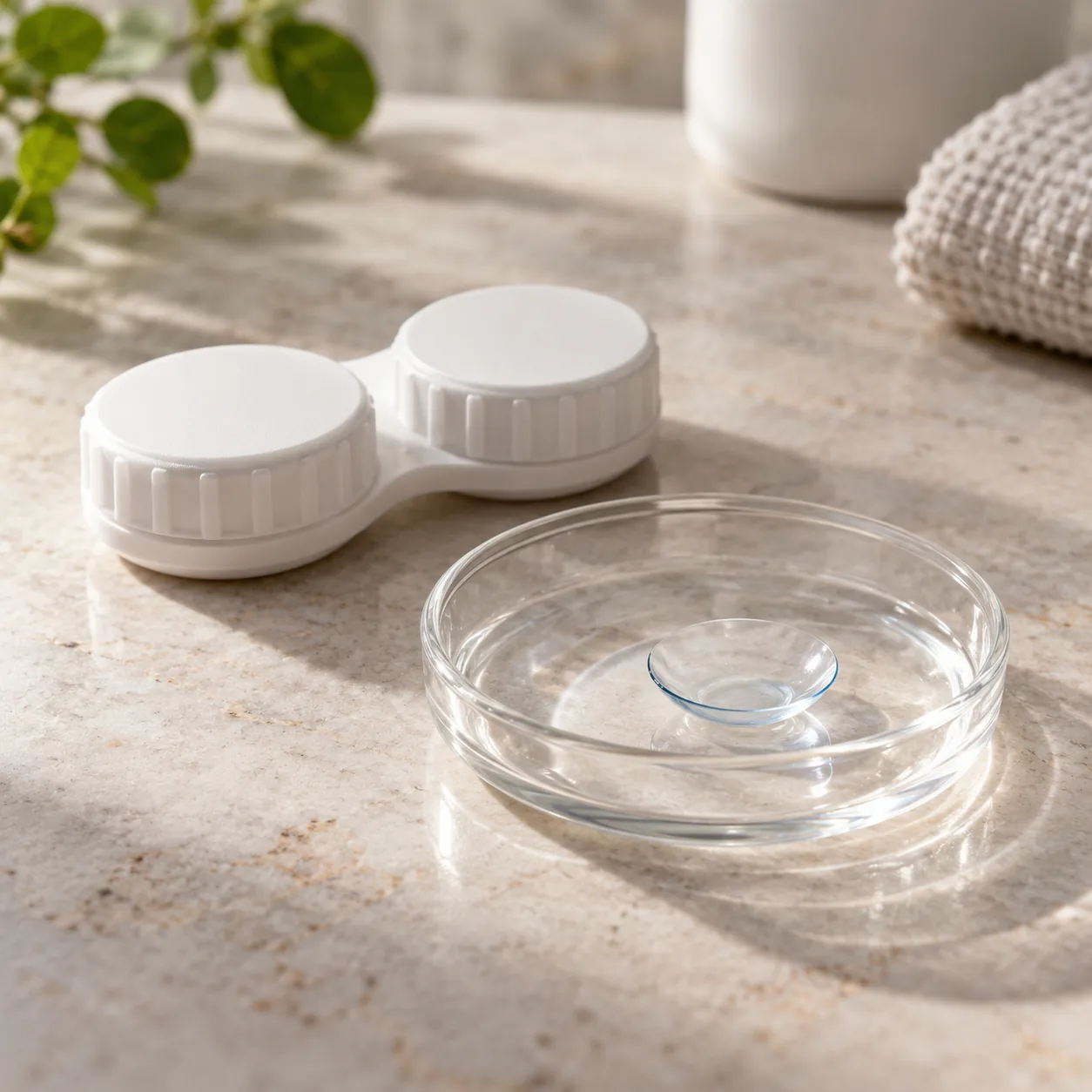
Generated interpretation, not documentary evidence. An invented transparent lens displayed beside a closed plain lens case.
Credit: AI-generated for Culture Ark using OpenAI image generation Reuse/status: Generated content; no exclusive ownership or underlying-work rights claimed Lens and case readable; apparent scale and dish are illustrative, not clinical handling or storage guidance. No authentic-reference or endorsement claim.
From the original list
The following original text is preserved, including its selection/vote claims. Preservation is not independent verification of every assertion.
Why: Vision correction worn on the eye itself.
What to preserve: Fick's glass lens, soft lenses
Year and origin: 1888 · Germany
Vote: 3/9 (historian 1 · future kid 1 · curator 1)
Learn more: Contact lens on Wikipedia
Supplemental context
The College of Optometrists distinguishes early protective glass shells from optically corrective contact lenses. Its museum history places independent fitting work by Fick in Zurich and Kalt in Paris in 1888, followed by many changes in materials and fitting practice. This is a history of multiple contributions, not an object that arrived fully formed. As a cultural selection, contact lenses connect the design of a vision aid with choices about appearance, daily routine and specialist care. The separate modern-looking lens and case in the illustration evoke that later everyday presence without depicting a patient or historical experiment.
Creator/community: Adolf Eugen Fick, Eugene Kalt and many subsequent optical practitioners and makers Place/era: Late nineteenth-century European developments; later international use
Context and limits
The archived Germany label is incomplete: the cited 1888 work includes Zurich and Paris. Early glass lenses differ substantially from modern soft lenses. This is history, not fitting, hygiene or treatment advice. The displayed lens is enlarged for visibility and its dish is a display prop, not recommended storage.
Where to learn more
- https://apiarybee.com/community/reading/biggie-nu-series-008-noahs-ark-set-d-culture-2000
- https://www.college-optometrists.org/the-british-optical-association-museum/the-history-of-contact-lenses
Apiary library | Original Culture Ark article
Public ID and individual routes: pending publisher allocation. Internal source ID: D-1392
Part of the Culture Ark: 2,000 things people should still be able to see in 2,000 years, picked by AI research teams. This page keeps the original list entry for D-1392 word for word and adds context. Browse the gallery. The Culture Ark is an Artificial Mind Hive (AMH) project. AMH is owned by Austin Little.

Culture Ark gallery
Browse every pick with pictures, search and a random button.
Open the gallery →