Culture Ark · D-1398 · Inventions · Browse the gallery · The full 2,000-pick list
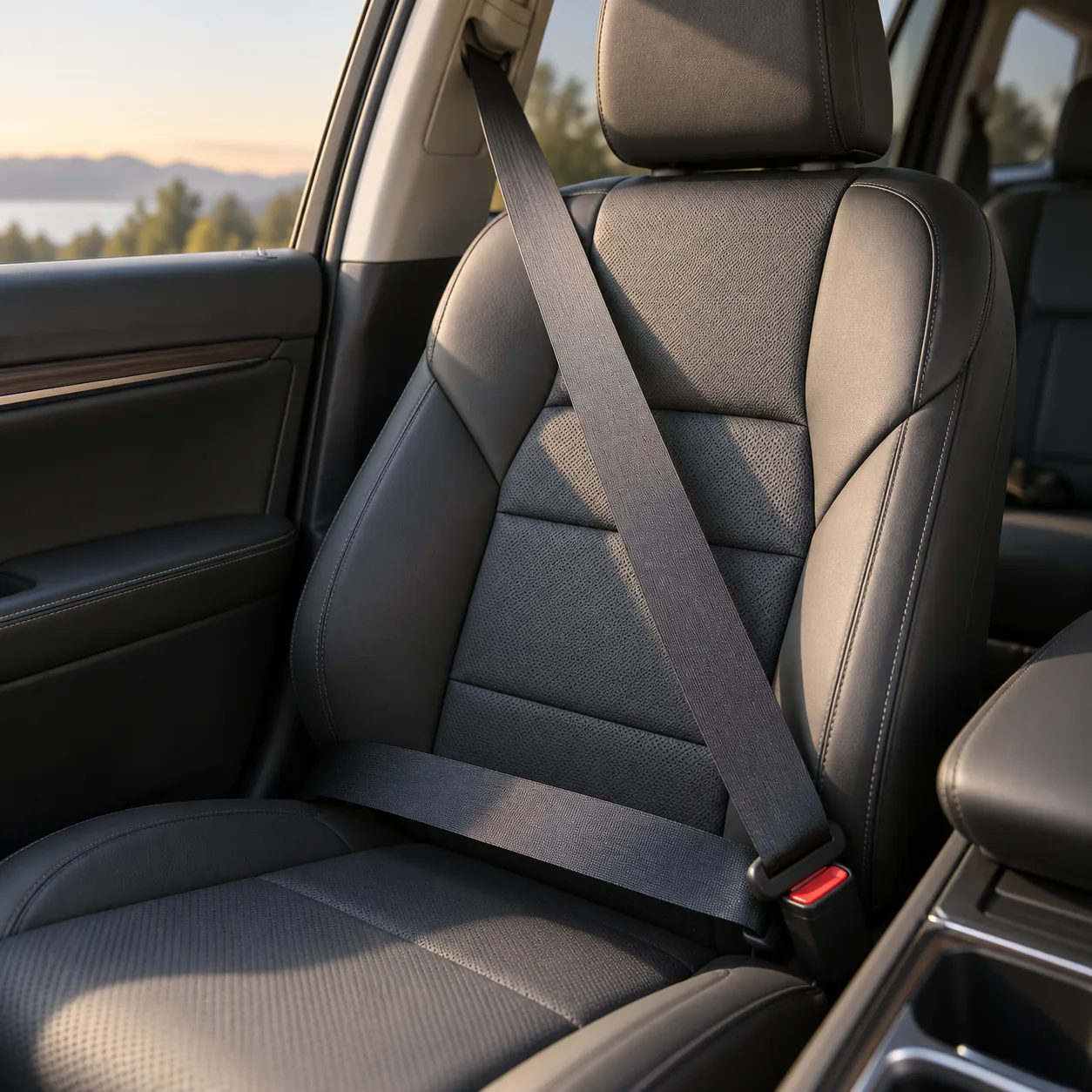
Generated interpretation, not documentary evidence. An invented empty car seat with a diagonal-and-lap belt and red buckle release.
Credit: AI-generated for Culture Ark using OpenAI image generation Reuse/status: Generated content; no exclusive ownership or underlying-work rights claimed Recognizable belt arrangement on empty seat; no occupant fit, crash-test or engineering certification. No authentic-reference or endorsement claim.
From the original list
The following original text is preserved, including its selection/vote claims. Preservation is not independent verification of every assertion.
Why: Volvo's three-point belt saved over a million lives; patent given away free.
What to preserve: Bohlin's design, open patent decision, click-it campaigns
Year and origin: 1959 · Sweden
Vote: 3/9 (historian 1 · future kid 1 · curator 1)
Learn more: Seat belt on Wikipedia
Supplemental context
Sweden’s intellectual-property office identifies 1959 as the year Bohlin’s belt began appearing in Volvo cars and notes that other three-point designs already existed. Volvo’s own anniversary account explains that its patented design was made available for free use. These details distinguish a particular widely influential refinement from the invention of all seat belts. Culturally, the belt joins a material object with habits, public messaging and expectations about responsibility in a car. The empty-seat illustration makes the familiar diagonal-and-lap arrangement visible without staging a collision or presenting a claim about a particular occupant’s fit.
Creator/community: Nils Bohlin and Volvo safety teams; other restraint designers and road users Place/era: Sweden, 1959 Volvo adoption of Bohlin’s three-point design
Context and limits
Volvo’s lives-saved figures are manufacturer estimates, not an independently audited count here. Free use of a patented design is more precise than saying no patent existed. This article is not legal advice, an installation plan or a restraint-fitting guide; the generated buckle and anchorage details are illustrative.
Where to learn more
- https://apiarybee.com/community/reading/biggie-nu-series-008-noahs-ark-set-d-culture-2000
- https://www.prv.se/en/patents/the-advanced-patent-guide/examples-of-what-patents-cost/examples-of-patents/life-saving-invention/
- https://www.volvocars.com/us/media/press-releases/AB6920962B1525C9/
Apiary library | Original Culture Ark article
Public ID and individual routes: pending publisher allocation. Internal source ID: D-1398
Part of the Culture Ark: 2,000 things people should still be able to see in 2,000 years, picked by AI research teams. This page keeps the original list entry for D-1398 word for word and adds context. Browse the gallery. The Culture Ark is an Artificial Mind Hive (AMH) project. AMH is owned by Austin Little.

Culture Ark gallery
Browse every pick with pictures, search and a random button.
Open the gallery →