Culture Ark · D-1386 · Inventions · Browse the gallery · The full 2,000-pick list
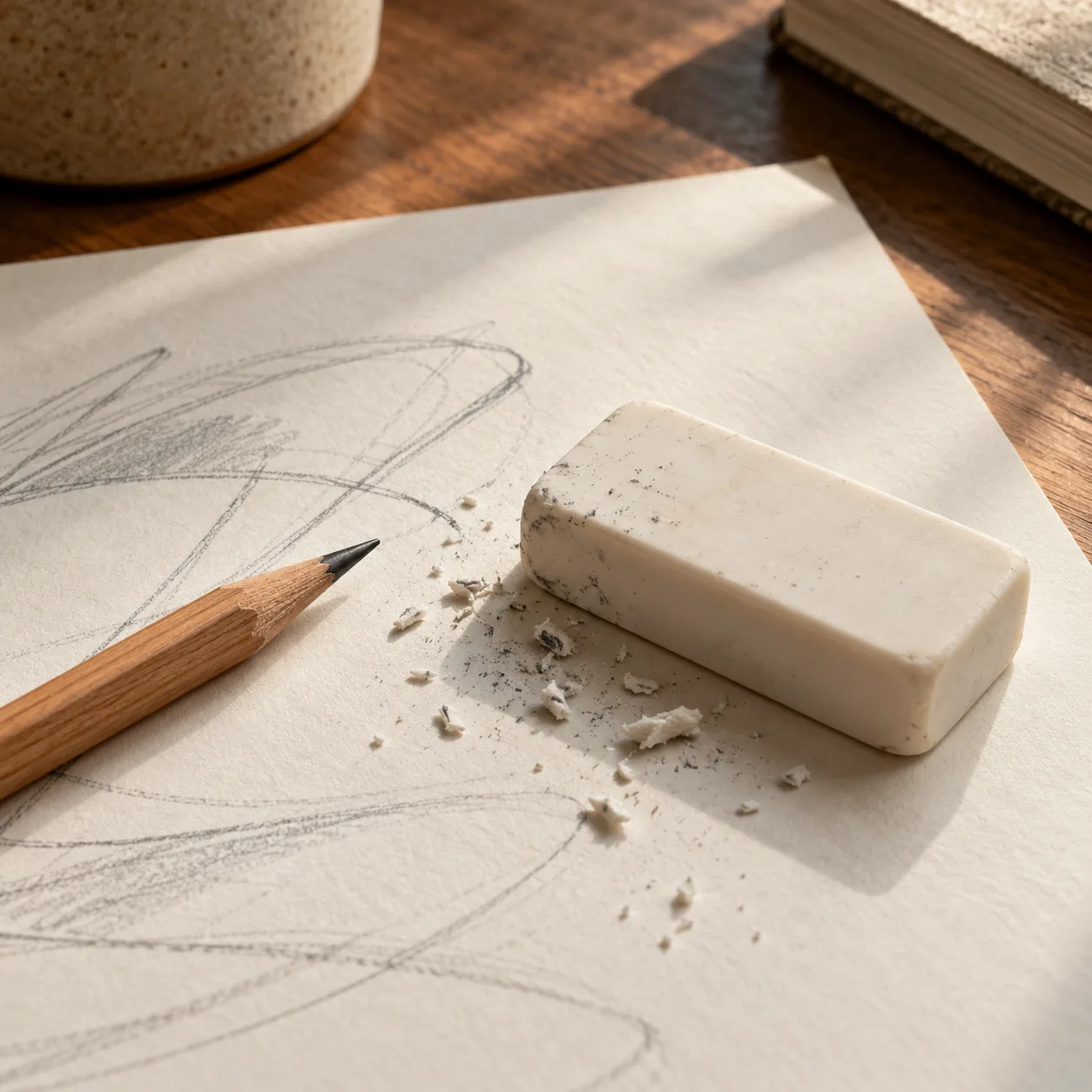
Generated interpretation, not documentary evidence. Invented white eraser, pencil, crumbs and abstract graphite strokes; not historic specimens or conservation instructions.
Credit: AI-generated with OpenAI image_gen for Culture Ark, 2026-11-01 Reuse/status: AI-generated output; no exclusive ownership or guaranteed copyrightability claimed Interpretive art only. Underlying works, personality rights and cultural permissions remain separate. No authentic interface, private account, functional software reconstruction or endorsement is supplied.
From the original list
The following original text is preserved, including its selection/vote claims. Preservation is not independent verification of every assertion.
Why: Made mistakes forgivable.
What to preserve: Rubber discovery by Priestley, pencil-top eraser
Year and origin: 1770 · England
Vote: 3/9 (historian 1 · future kid 1 · curator 1)
Learn more: Eraser on Wikipedia
Supplemental context
Erasers make revision visible as a physical activity: marks can be reduced, paper changed and crumbs left behind. Priestley described a substance sold by Nairne in 1770, which is more precise than crediting one person with discovering rubber itself. Future readers can explore the relationship between writing, drawing and correction, including the contrast between material traces and seemingly effortless digital undoing.
Creator/community: Edward Nairne, Joseph Priestley and later eraser makers and users Place/era: England-linked rubber-erasing accounts in 1770; earlier erasing methods and later materials
Context and limits
The eraser, pencil and abstract strokes are invented study props, not eighteenth-century specimens or chemically verified rubber. The original Priestley wording is preserved but qualified; his account does not establish sole discovery of the material. No document-restoration method is supplied, and the moral idea that mistakes become forgivable is interpretation rather than a technical property.
Where to learn more
- https://apiarybee.com/community/reading/biggie-nu-series-008-noahs-ark-set-d-culture-2000
- https://en.wikipedia.org/wiki/Eraser
Apiary library | Original Culture Ark article
Public ID and individual routes: pending publisher allocation. Internal source ID: D-1386
Part of the Culture Ark: 2,000 things people should still be able to see in 2,000 years, picked by AI research teams. This page keeps the original list entry for D-1386 word for word and adds context. Browse the gallery. The Culture Ark is an Artificial Mind Hive (AMH) project. AMH is owned by Austin Little.

Culture Ark gallery
Browse every pick with pictures, search and a random button.
Open the gallery →