Culture Ark · D-1275 · Inventions · Browse the gallery · The full 2,000-pick list
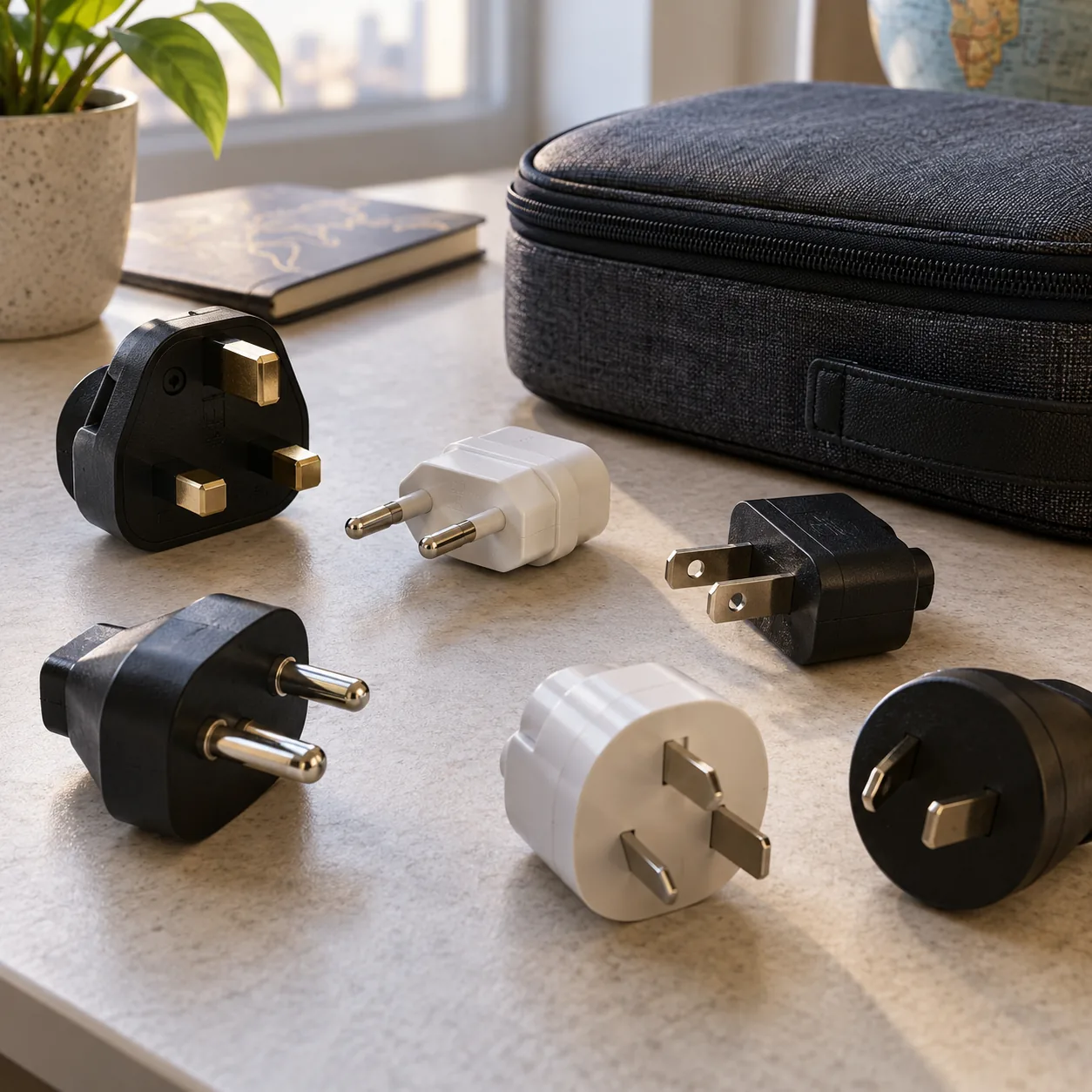
Generated interpretation, not documentary evidence. Disconnected generic plugs beside a travel case, representing differing infrastructures.
Credit: AI-generated for Culture Ark using OpenAI image generation Reuse/status: Generated content; no exclusive ownership or underlying-work rights claimed Multiple pin shapes visible and disconnected. Simplified shapes, proportions and missing certification markings make this unsuitable as an electrical reference. No authentic-reference or endorsement claim.
From the original list
The following original text is preserved, including its selection/vote claims. Preservation is not independent verification of every assertion.
Why: Thirteen incompatible plug types show how the world failed to agree.
What to preserve: Plug types A-N, travel adapters
Year and origin: 1904 · United States
Vote: 6/9 (historian 2 · future kid 2 · curator 2)
Learn more: AC power plugs and sockets on Wikipedia
Supplemental context
Plugs and sockets turn a vast infrastructure into an everyday household interface. Their different forms reveal how earlier choices persist in buildings and appliances, while travelers make those differences newly visible. The Bureau of Indian Standards’ educational publication explains that regional practices and preferences contributed to the variety. This is a useful cultural example of standards as social agreements: the aim is shared operation within a system, even when systems differ across borders. The ordinary travel adapter thus points beyond itself to industrial history and installed infrastructure.
Creator/community: Electrical manufacturers, standards bodies and household users across many countries Place/era: Late nineteenth- and twentieth-century domestic electrification; continuing regional systems
Context and limits
The archived claim of thirteen types and its A–N range are not a dependable current taxonomy. The BIS publication describes more than fifteen types; classification boundaries differ. The 1904 marker is not the origin of all plugs. Illustration shapes are generic, not a compatibility chart; this entry supplies no wiring or equipment-selection instructions.
Where to learn more
- https://apiarybee.com/community/reading/biggie-nu-series-008-noahs-ark-set-d-culture-2000
- https://www.bis.gov.in/wp-content/uploads/2023/08/Plugs-and-Sockets-20.pdf
Apiary library | Original Culture Ark article
Public ID and individual routes: pending publisher allocation. Internal source ID: D-1275
Part of the Culture Ark: 2,000 things people should still be able to see in 2,000 years, picked by AI research teams. This page keeps the original list entry for D-1275 word for word and adds context. Browse the gallery. The Culture Ark is an Artificial Mind Hive (AMH) project. AMH is owned by Austin Little.

Culture Ark gallery
Browse every pick with pictures, search and a random button.
Open the gallery →