Culture Ark · D-1189 · Language and humor · Browse the gallery · The full 2,000-pick list
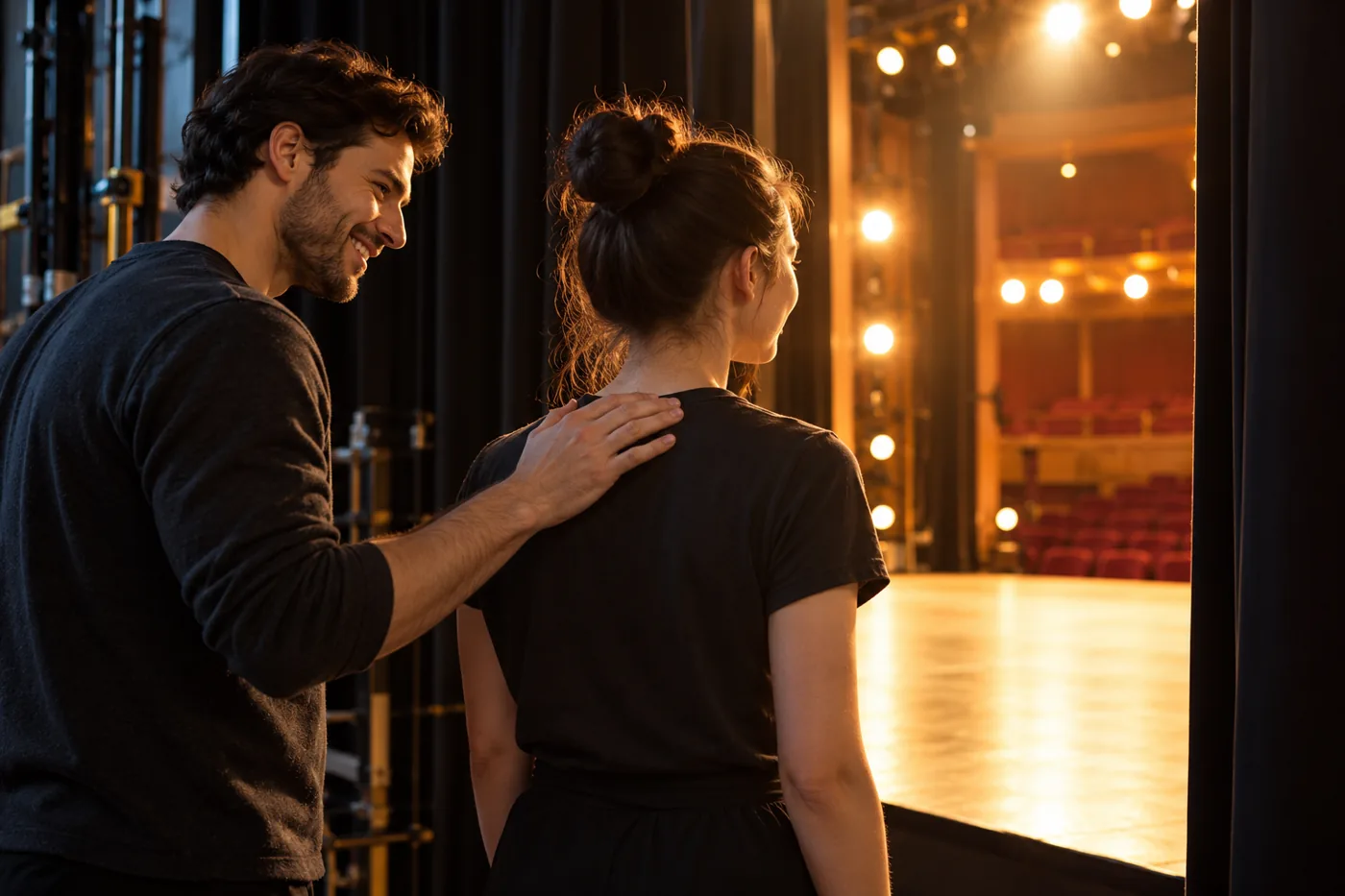
Generated interpretation, not documentary evidence. Fictional performer receiving encouragement in a theatre wing; no injury, real production or documented conversation.
Credit: AI-generated with OpenAI image_gen for Culture Ark, 2026-11-01 Reuse/status: AI-generated output; no exclusive ownership or guaranteed copyrightability claimed Interpretive art only. Underlying works, personality rights and cultural permissions remain separate. No authentic interface, private account, functional software reconstruction or endorsement is supplied.
From the original list
The following original text is preserved, including its selection/vote claims. Preservation is not independent verification of every assertion.
Why: Theater's good-luck wish.
What to preserve: usage
Year and origin: 1921 · United States
Vote: 4/9 (historian 1 · future kid 2 · curator 1)
Learn more: Break a leg on Wikipedia
Supplemental context
Break a leg is an ironic expression of good wishes before a performance or audition, not a literal desire for injury. Its exact origin is uncertain, despite the many explanations repeated about it. Future readers can examine how community conventions reverse literal meaning and how shared context makes a seemingly hostile sentence supportive.
Creator/community: English-language theatrical and other performing communities Place/era: Twentieth-century documented usage with disputed earlier origins
Context and limits
The fictional performers and theatre wing are invented, not a named production or a recorded use of the phrase. No injury is shown or encouraged. The original 1921 United States label does not settle the origin: early evidence and related expressions involve several contexts, and competing etymologies should not be presented as established fact.
Where to learn more
- https://apiarybee.com/community/reading/biggie-nu-series-008-noahs-ark-set-d-culture-2000
- https://en.wikipedia.org/wiki/Break_a_leg
Apiary library | Original Culture Ark article
Public ID and individual routes: pending publisher allocation. Internal source ID: D-1189
Part of the Culture Ark: 2,000 things people should still be able to see in 2,000 years, picked by AI research teams. This page keeps the original list entry for D-1189 word for word and adds context. Browse the gallery. The Culture Ark is an Artificial Mind Hive (AMH) project. AMH is owned by Austin Little.

Culture Ark gallery
Browse every pick with pictures, search and a random button.
Open the gallery →