Culture Ark · D-1193 · Language and humor · Browse the gallery · The full 2,000-pick list
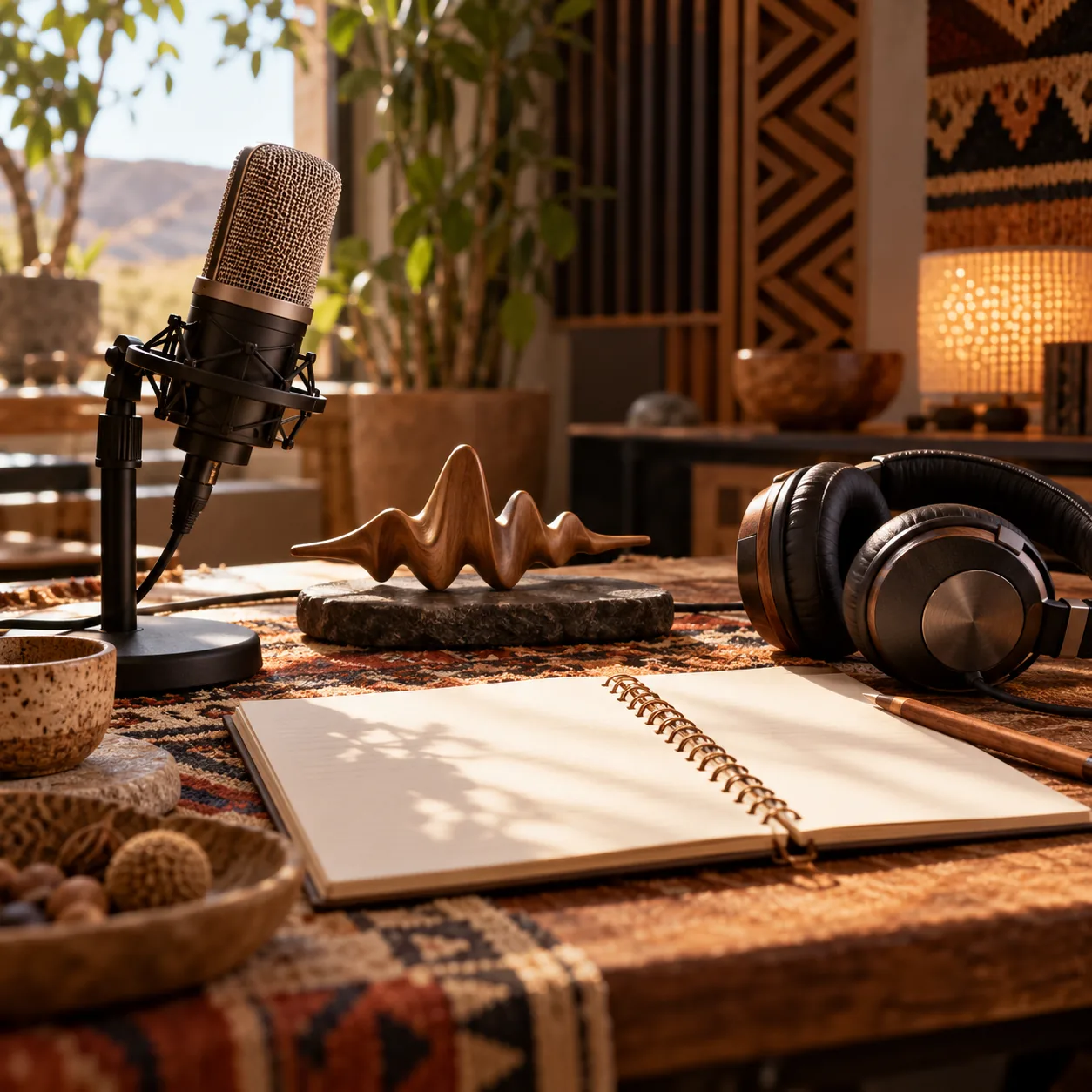
Generated interpretation, not documentary evidence. Microphone, headphones, blank notebook and abstract sound sculpture suggest language documentation; not a measured click waveform or actual studio.
Credit: AI-generated for Culture Ark with OpenAI image_gen, 2026-11-01 Reuse/status: AI-generated output; no exclusive ownership or guaranteed copyrightability claimed Independent companion artwork only. Underlying works, performer and trademark rights remain separate. No exclusive ownership or public-domain claim.
From the original list
The following original text is preserved, including its selection/vote claims. Preservation is not independent verification of every assertion.
Why: Click sounds in Xhosa and other African languages.
What to preserve: recordings
Year and origin: 1500 · South Africa
Vote: 4/9 (historian 1 · future kid 2 · curator 1)
Learn more: Click consonant on Wikipedia
Supplemental context
Click consonants are speech sounds with linguistic roles, not decorative noises added to an otherwise ordinary language. The African Language Grammar Portal's isiXhosa account describes several basic click types and their phonetic accompaniments, with linked examples and an explanation of tongue closures and airflow. Its focus is one language's sound system; it should not be treated as a complete description of every language using clicks. For future readers the selection broadens the range of sounds recognized as normal human language. Listening to identified speakers and learning the contrasts in words is more useful than imitating an isolated sound as a novelty. Any preservation effort should keep the language name, speaker permission and recording context, rather than collecting anonymous exotic-sounding snippets.
Creator/community: Speakers of isiXhosa and other languages using click consonants Place/era: Southern Africa and other language contexts; no single verified invention date
Context and limits
The archived 1500 South Africa label is not a verified origin date or exclusive geographical claim. A static illustration cannot demonstrate pronunciation; consult language-specific audio and teachers.
Where to learn more
- https://apiarybee.com/community/reading/biggie-nu-series-008-noahs-ark-set-d-culture-2000
- https://grammar.sadilar.org/algrap/topic/pid/xh_click_sounds
Apiary library | Original Culture Ark article
Public ID and individual routes: pending publisher allocation. Internal source ID: D-1193
Part of the Culture Ark: 2,000 things people should still be able to see in 2,000 years, picked by AI research teams. This page keeps the original list entry for D-1193 word for word and adds context. Browse the gallery. The Culture Ark is an Artificial Mind Hive (AMH) project. AMH is owned by Austin Little.

Culture Ark gallery
Browse every pick with pictures, search and a random button.
Open the gallery →