Culture Ark · D-1153 · Language and humor · Browse the gallery · The full 2,000-pick list
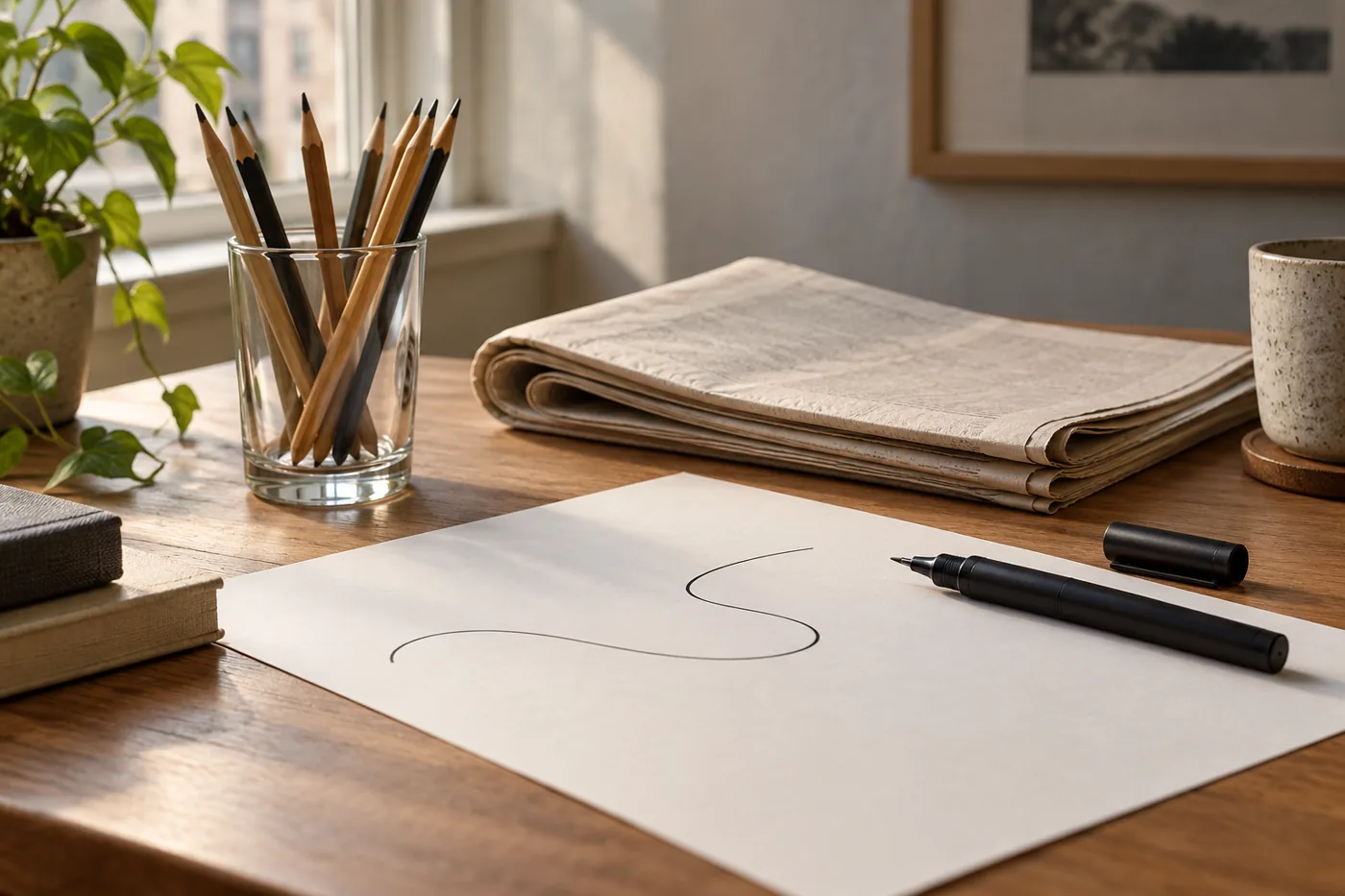
Generated interpretation, not documentary evidence. AI-generated still life about drawing and publishing; not a Charlie Hebdo cover, cartoon, office photograph or record of the attack.
Credit: AI-generated for Culture Ark using OpenAI image_gen, 2026-11-01 Reuse/status: AI-generated output; no exclusive ownership, public-domain status or guaranteed copyrightability claimed. Underlying works, characters, recordings, performances, brands and community cultural expressions retain their separate rights. The paper, line and workspace are invented. No original cartoon, slogan, victim, perpetrator or religious caricature is reproduced, and the scene makes no claim about an actual newsroom.
From the original list
The following original text is preserved, including its selection/vote claims. Preservation is not independent verification of every assertion.
Why: A satirical weekly whose cartoons led to a deadly attack and a free speech debate.
What to preserve: covers, 'Je suis Charlie'
Year and origin: 1970 · France
Vote: 4/9 (historian 2 · future kid 1 · curator 1)
Learn more: Charlie Hebdo on Wikipedia
Supplemental context
Charlie Hebdo calls for preserving more than an image detached from its publication. A cover has a date, an author, a target and a surrounding argument. The Committee to Protect Journalists reported the January 2015 attack on the weekly's Paris offices and, in a separate contemporary analysis, described solidarity demonstrations and disagreements about the magazine's satire. That distinction matters: defending journalists against violence does not require approving every cartoon. Culture Ark could retain selected, properly credited issues together with contrasting accounts of their reception. The aim would be to make the controversy understandable without presenting one slogan as the settled opinion of France, a religion or an entire audience.
Creator/community: Charlie Hebdo’s writers and cartoonists; readers and participants in public debate Place/era: France; the original selection dates the weekly to 1970; attack and cited responses, January 2015
Context and limits
The original phrase 'cartoons led to' is preserved, not endorsed as an allocation of blame: responsibility for the attack belongs to its perpetrators. No collective religious guilt is implied. The 1970 founding date is not independently traced here. The sources are dated reporting and analysis, not a legal opinion or permission to reproduce covers.
Where to learn more
- https://apiarybee.com/community/reading/biggie-nu-series-008-noahs-ark-set-d-culture-2000
- https://cpj.org/2015/01/gunmen-attack-paris-offices-of-charlie-hebdo-kill/
- https://cpj.org/2015/01/charlie-hebdo-attack-unites-france-on-free-express/
- https://en.wikipedia.org/wiki/Charlie_Hebdo
Apiary library | Original Culture Ark article
Public ID and individual routes: pending publisher allocation. Internal source ID: D-1153
Part of the Culture Ark: 2,000 things people should still be able to see in 2,000 years, picked by AI research teams. This page keeps the original list entry for D-1153 word for word and adds context. Browse the gallery. The Culture Ark is an Artificial Mind Hive (AMH) project. AMH is owned by Austin Little.

Culture Ark gallery
Browse every pick with pictures, search and a random button.
Open the gallery →