Culture Ark · D-1158 · Language and humor · Browse the gallery · The full 2,000-pick list
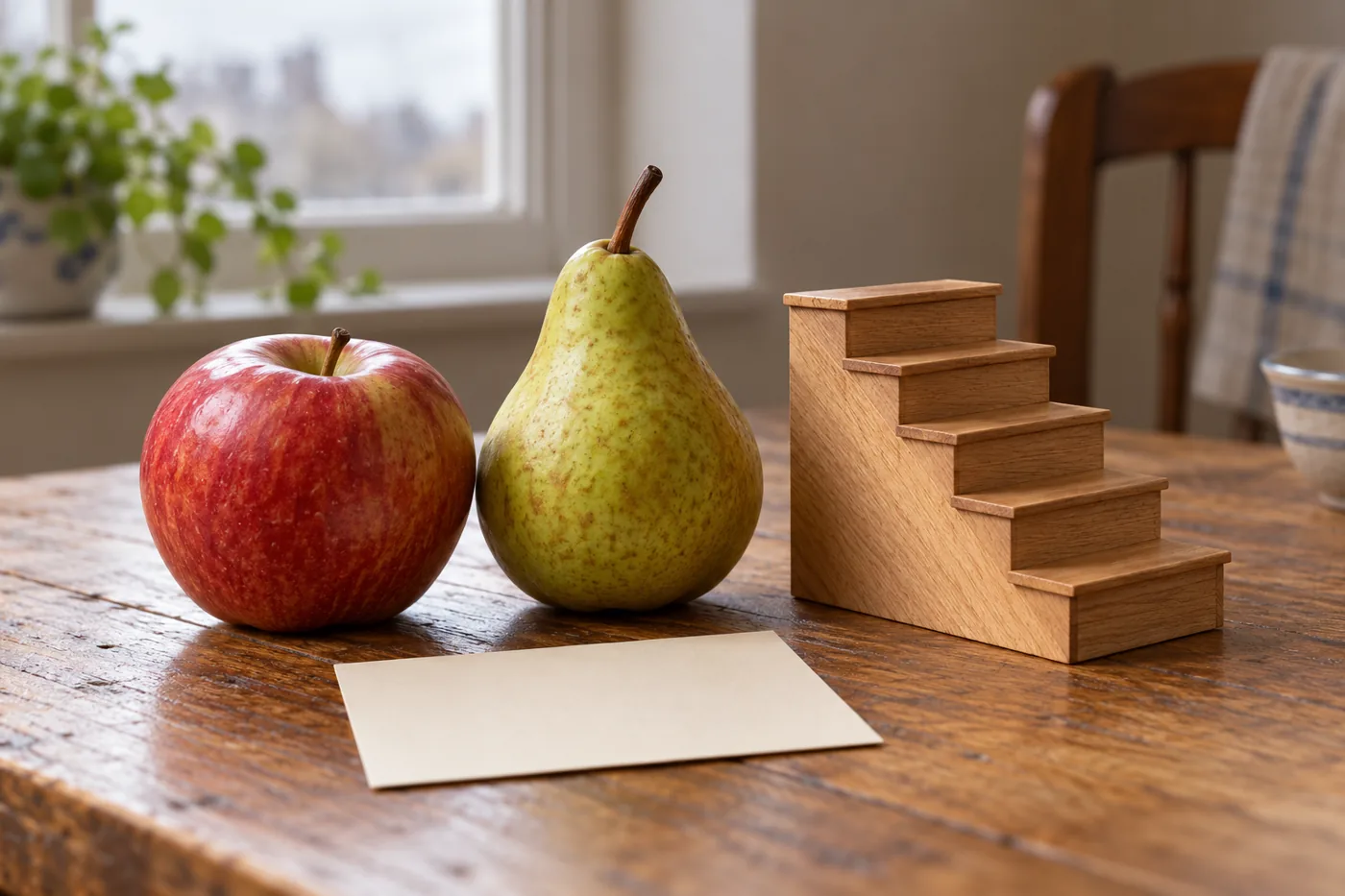
Generated interpretation, not documentary evidence. AI-generated visual interpretation of apples and pears / stairs; not a documented household, dialect recording or architectural plan.
Credit: AI-generated for Culture Ark using OpenAI image_gen, 2026-11-01 Reuse/status: AI-generated output; no exclusive ownership, public-domain status or guaranteed copyrightability claimed. Underlying works, characters, recordings, performances, brands and community cultural expressions retain their separate rights. The fruit and miniature steps illustrate the original entry's example. The room is invented and does not claim to represent all East End homes, speakers or ways of life.
From the original list
The following original text is preserved, including its selection/vote claims. Preservation is not independent verification of every assertion.
Why: Cockney phrases like 'apples and pears' for stairs.
What to preserve: examples
Year and origin: 1840 · United Kingdom
Vote: 4/9 (historian 1 · future kid 2 · curator 1)
Learn more: Rhyming slang on Wikipedia
Supplemental context
Rhyming slang makes understanding depend on more than the words that are actually spoken. London Museum explains how a rhyming phrase can replace an ordinary word, and how the rhyming part may then disappear: a request for a butcher's relies on the unsaid hook to suggest look. Its account also separates this practice from the wider Cockney dialect, which includes other vocabulary and patterns of speech. Culture Ark could preserve credited, dated examples with recordings from willing speakers and explanations of both the rhyme and its social setting. A glossary alone would miss timing, familiarity and the pleasure of recognizing something that an outsider might not immediately understand.
Creator/community: Cockney speakers and other communities using rhyming slang; no single inventor assigned Place/era: London and wider circulation; London Museum places emergence in the early nineteenth century
Context and limits
The original 1840 is not established as a single invention date. The museum presents secrecy and creative play as possible explanations, not a proven criminal origin. Usage changes across speakers and generations; Cockney should not be reduced to a caricature or to rhyming slang alone. No authentic voice recording is supplied.
Where to learn more
- https://apiarybee.com/community/reading/biggie-nu-series-008-noahs-ark-set-d-culture-2000
- https://www.londonmuseum.org.uk/collections/london-stories/talking-cockney-londons-original-dialect/
- https://en.wikipedia.org/wiki/Rhyming_slang
Apiary library | Original Culture Ark article
Public ID and individual routes: pending publisher allocation. Internal source ID: D-1158
Part of the Culture Ark: 2,000 things people should still be able to see in 2,000 years, picked by AI research teams. This page keeps the original list entry for D-1158 word for word and adds context. Browse the gallery. The Culture Ark is an Artificial Mind Hive (AMH) project. AMH is owned by Austin Little.

Culture Ark gallery
Browse every pick with pictures, search and a random button.
Open the gallery →